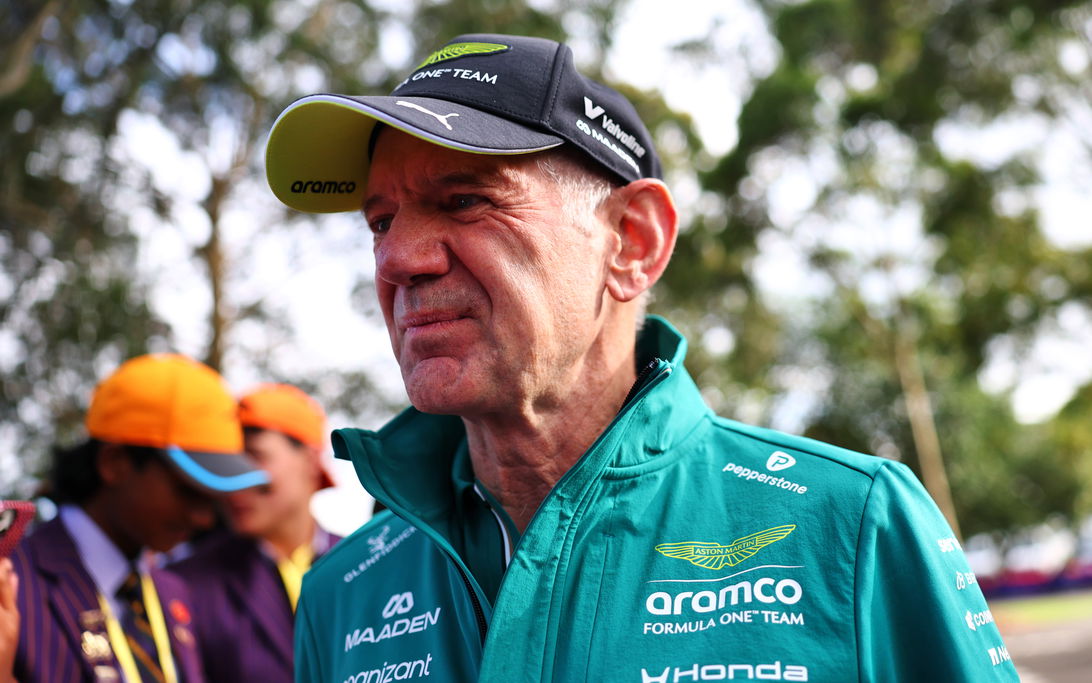
Adrian Newey reveals Honda's workforce exodus behind 2026 F1 struggles
Adrian Newey discloses that Honda's disastrous 2026 F1 season start stems from losing most of its experienced F1 workforce during its brief exit. Aston Martin was unaware of the scale of the brain drain until late 2025, leaving the partnership struggling with an inexperienced team developing a new engine under a budget cap.
Adrian Newey has revealed that Honda's troubled start to the 2026 F1 season is largely due to a significant exodus of its experienced workforce during its brief exit from the sport, leaving its new partnership with Aston Martin on the back foot. The team only became aware of the scale of the personnel loss late last year, compounding issues from a delayed development start under the new budget cap.
Why it matters:
Honda's return as a power unit supplier was seen as a major coup for Aston Martin, offering a proven championship-winning pedigree. The severe loss of institutional knowledge and experience undermines that advantage from the outset, putting Aston Martin's competitive ambitions for the new regulatory era at immediate risk and highlighting the fragility of F1's technical supply chain.
The details:
- Newey explained that when Honda formally left F1 at the end of 2021, a large portion of its original F1 engineering team disbanded and moved to other projects, such as sustainable energy.
- Upon its re-entry in late 2022, the reformed Honda Racing Corporation (HRC) operation was staffed with many personnel new to Formula 1, lacking the deep experience from its previous successful stint with Red Bull.
- Late Discovery: Aston Martin's leadership, including Lawrence Stroll and Andy Cowell, only learned of the full extent of the workforce issue during a trip to Tokyo in November 2025, well after the partnership was signed.
- Development Handicap: Honda's late commitment meant it began developing its 2026 power unit just as the engine budget cap took effect. Rivals like Mercedes and Ferrari had been developing their next-generation units for over a year prior without such financial restrictions.
- Newey estimates only about 30% of the original team returned, creating a perfect storm of inexperience, tight budgets, and a compressed timeline, leading to the reliability and vibration problems that hampered pre-season testing.
What's next:
The focus for the Honda-Aston Martin alliance is now on a massive recovery operation. The team must rapidly overcome its power unit deficit while also developing the AMR26 chassis. Honda's ability to attract talent and accelerate development under the budget cap will be critically tested. While the long-term contract suggests a commitment to work through the issues, the rocky start has already conceded significant ground to established frontrunners like Red Bull and Ferrari in the 2026 championship battle.
Don't miss the next lap
Get the deep dives and technical analysis from the world of F1 delivered to your inbox twice a week.
Zero spam. Only high-octane analysis. Unsubscribe anytime.
Join the inner circle
Get the deep dives and technical analysis from the world of F1 delivered to your inbox twice a week.
Zero spam. Only high-octane analysis. Unsubscribe anytime.
Continue Reading
View More News