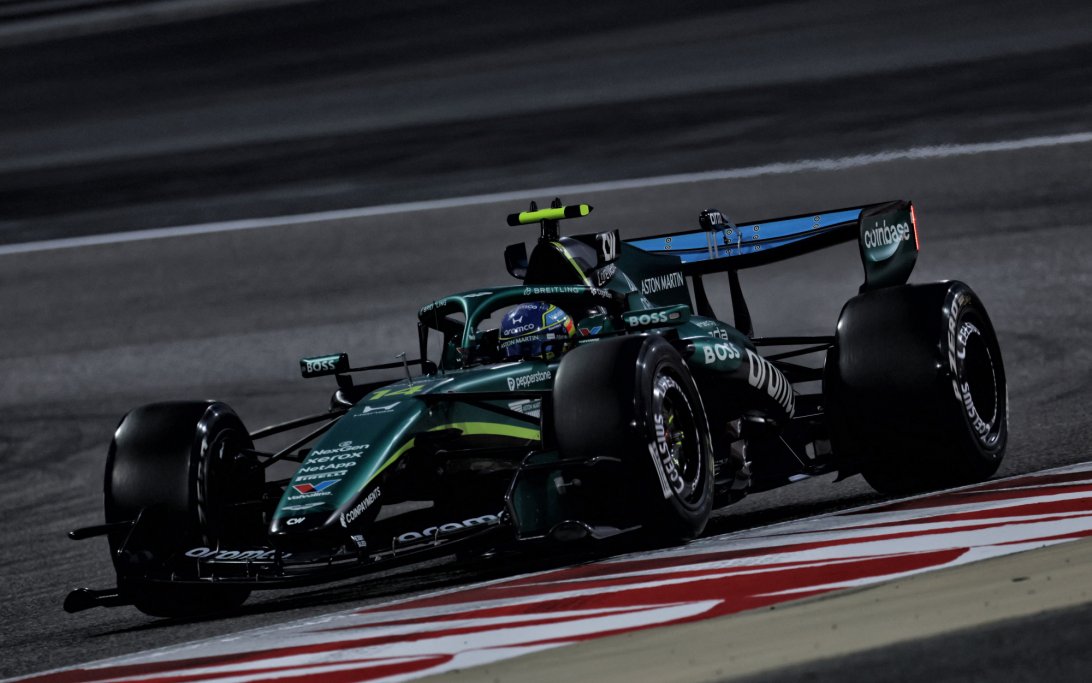
Alonso: New F1 Energy Management Makes Corners So Slow 'The Chef Could Drive It'
Fernando Alonso humorously claims F1's new 2026 energy management rules have slowed cornering speeds so much that "the chef could drive" the car, highlighting a major shift from pure cornering skill to strategic battery deployment. He acknowledges Max Verstappen's criticisms but frames it as the latest technical challenge in F1's evolution.
Fernando Alonso joked that Aston Martin's chef could drive through some Formula 1 corners due to dramatically reduced speeds caused by the sport's new energy management demands. The two-time champion highlighted how the 2026 power unit regulations, which equalize battery and combustion engine output, are fundamentally changing how drivers approach a lap, prioritizing energy harvesting over pure cornering speed.
Why it matters:
The shift represents a fundamental philosophical change in what defines driver skill in F1. Where speed through corners was once the ultimate differentiator, races are now increasingly dictated by strategic energy deployment. This technical pivot has drawn criticism from purists and champions like Max Verstappen, who feel it diminishes the raw driving challenge, signaling a potential culture clash within the sport's future direction.
The Details:
- Alonso used Turn 12 at the Bahrain International Circuit—traditionally a flat-out, high-skill corner—as a prime example. Drivers now take it approximately 50 km/h slower to conserve energy for deployment on the straights.
- A New Skill Set: Alonso explained the driver's role is now heavily dictated by energy management. "You are dictated by how much energy your engine will have on the next straight," he said, contrasting it with the previous era where downforce and car setup were the limiting factors.
- Understanding the Criticism: While acknowledging Verstappen's frustration that drivers can no longer make a significant difference by carrying more speed through a corner, Alonso framed it as simply the latest evolution of F1's technical challenge.
- Historical Perspective: The Spaniard put the change in context, noting that competitive advantages have always been defined by technology. "Last year or two years ago, when he won all the races, it was the downforce... At the end of the day, this is F1, we close the visor, we go motor racing."
The Big Picture:
Alonso's humorous yet pointed comment underscores a larger debate about the soul of Formula 1. The 2026 regulations, aimed at increasing sustainability and road-relevance, are successfully shifting the performance paradigm but at the cost of traditional driving spectacle. The sport now faces the ongoing challenge of balancing technical innovation with the visceral, driver-centric competition that has long been its core appeal, ensuring engineers don't completely eclipse the stars behind the wheel.
Don't miss the next lap
Get the deep dives and technical analysis from the world of F1 delivered to your inbox twice a week.
Zero spam. Only high-octane analysis. Unsubscribe anytime.
Join the inner circle
Get the deep dives and technical analysis from the world of F1 delivered to your inbox twice a week.
Zero spam. Only high-octane analysis. Unsubscribe anytime.
Continue Reading
View More News