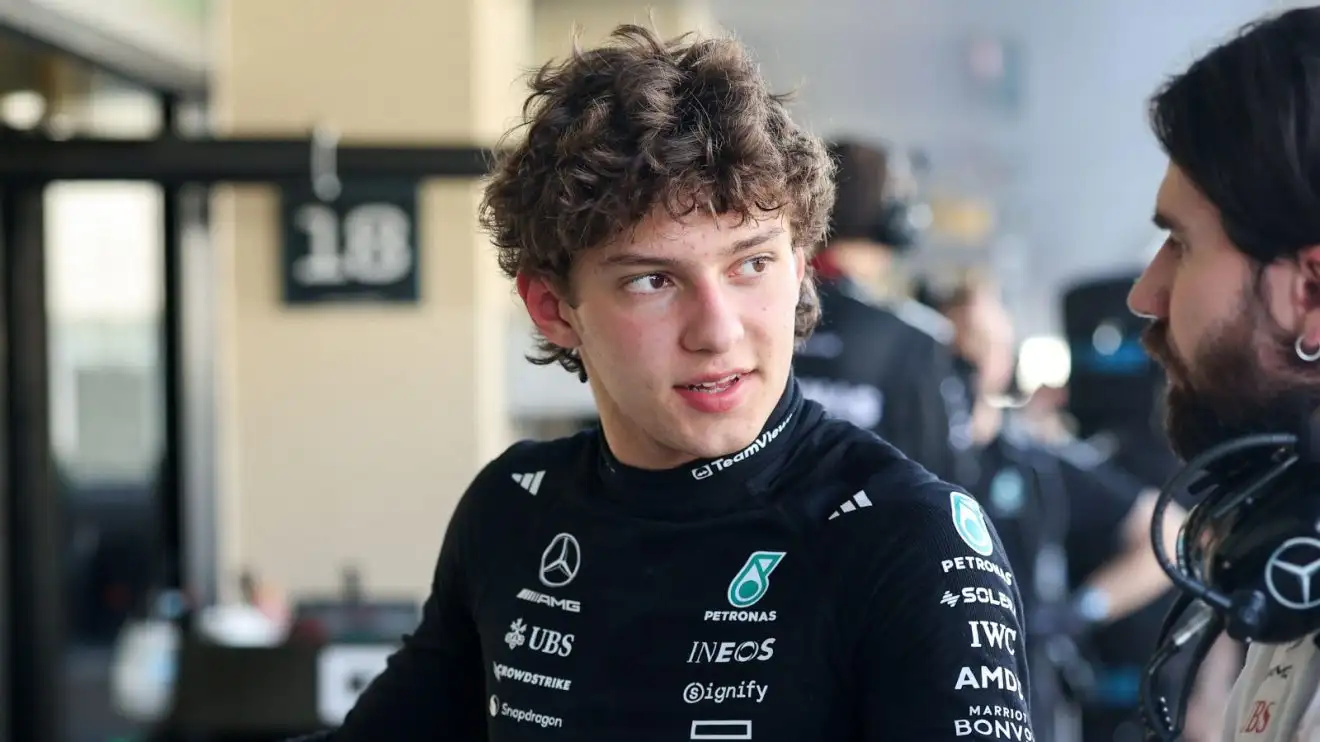
Antonelli: Battery management is F1 2026's 'biggest element'
Kimi Antonelli pinpoints battery power deployment as the defining challenge of F1's 2026 rules. With electrical power tripling to create a 50-50 split with the ICE, perfecting energy management software will be crucial. Team bosses agree it will demand unprecedented driver-engineer integration and that strategic mistakes will be glaringly visible and costly.
Mercedes junior driver Kimi Antonelli has identified the strategic deployment of electrical power as the single most critical challenge teams will face under Formula 1's 2026 technical regulations. With a new 50-50 power split between the internal combustion engine and a significantly more powerful battery, mastering energy management software and strategy will become a decisive performance differentiator.
Why it matters:
The 2026 rules represent the most fundamental shift in F1's power unit philosophy since the hybrid era began. Moving to an equal reliance on battery and ICE power transforms race strategy from a fuel-management exercise into a complex, lap-by-lap electrical deployment puzzle. Success will require unprecedented integration between driver and engineer, potentially reshuffling the competitive order based on which teams can optimize this new software-driven discipline first.
The details:
- The 2026 power units will feature a 350 kW battery, providing three times the electrical power of the current units and creating a true 50-50 split with the 1.6-liter V6 turbo hybrid engine.
- Antonelli, working closely with Mercedes' HPP division, emphasized that perfecting the software for race and qualifying deployment will be paramount. He stated that having "the right deployment and a consistent deployment every lap" is what will make the difference.
- The challenge extends beyond pure engineering. Haas Team Principal Ayao Komatsu highlighted that mistakes will be highly visible and costly, estimating that mismanagement could cost significantly more than a tenth of a second per lap.
- Komatsu also noted that this regulation change forces a deeper collaboration, stating drivers and engineers "need to work together in a much more integrated way than before" to develop both the car and the in-race strategies.
- The visibility of errors will increase for fans, with incorrect deployment likely being obvious on track, especially during qualifying runs on long straights.
What's next:
The 2026 season, starting in Bahrain, will serve as a public unveiling of each team's mastery—or struggles—with the new energy paradigm. Early qualifying simulations will immediately highlight which teams have developed the most effective and consistent software deployment strategies. This technological leap shifts the development battleground significantly toward software and real-time strategic computation, setting the stage for a new era where energy management IQ could be as important as outright car pace.
Don't miss the next lap
Get the deep dives and technical analysis from the world of F1 delivered to your inbox twice a week.
Zero spam. Only high-octane analysis. Unsubscribe anytime.
Join the inner circle
Get the deep dives and technical analysis from the world of F1 delivered to your inbox twice a week.
Zero spam. Only high-octane analysis. Unsubscribe anytime.
Continue Reading
View More News