Are F1 Drivers More Skilled Now Than Ever Before?
McLaren's Andrea Stella claims the 2025 F1 grid is the most competitive ever, featuring multiple world champions and rising stars. Experts debate this, comparing it to talent-packed eras like 2012 with six world champions, the iconic Senna vs. Prost era of the late 1980s, and the 1965 season dominated by Jim Clark but also featuring a pantheon of legends. While modern drivers benefit from advanced training, the discussion highlights the subjective nature of comparing talent across F1's storied history.
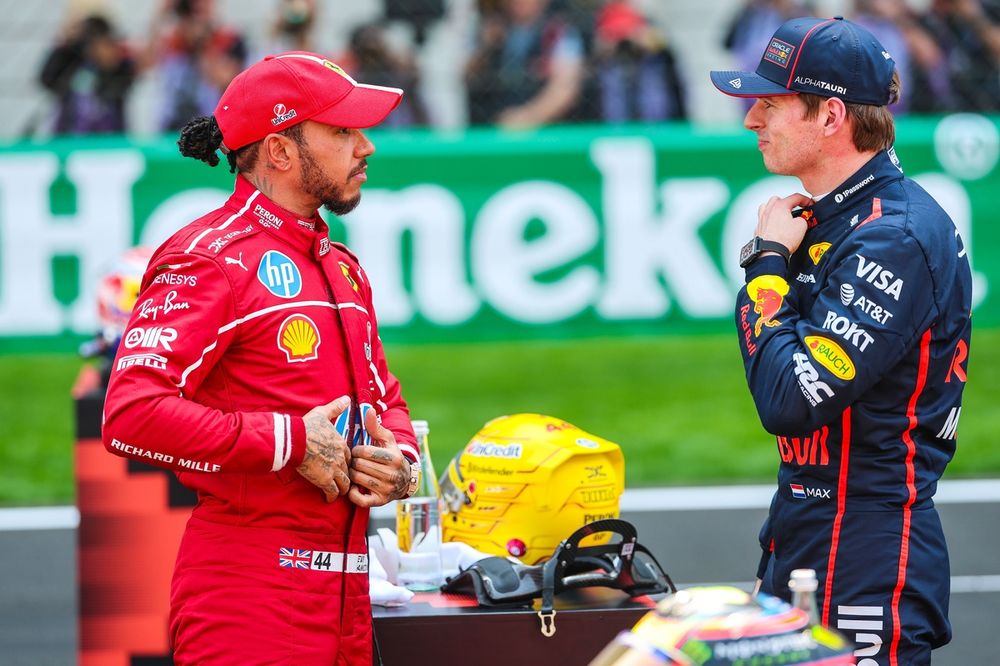
McLaren team principal Andrea Stella sparked debate by claiming the 2025 F1 driver lineup is the most competitive in history, featuring multiple world champions and numerous grand prix winners. While comparing eras is challenging, experts weigh in on whether modern drivers truly surpass their predecessors or if past generations still hold an edge in sheer talent and legendary rivalries.
Why it matters:
Andrea Stella's assertion that the current F1 grid is the most competitive ever challenges traditional views on driver quality across different eras. This debate is crucial for understanding the evolution of Formula 1, including the impact of advancements in sports science, driver development programs, and car technology on the skills and competitiveness of the athletes. It also reflects on what defines a "great" generation of drivers: raw talent, competitive parity, or the presence of multiple champions.
The details:
- Modern Drivers' Skill Level: Ben Vinel argues that F1 drivers, like athletes in most sports, continuously improve due to advances in sports science. Modern cars are faster and more complex, requiring higher skill and physical conditioning than ever before. He points out that current qualifying gaps between teammates rarely exceed six-tenths of a second, a stark contrast to the one-to-two-second differences seen in the 1990s with drivers like Riccardo Patrese and Nigel Mansell.
- Impact of Superlicence Points: Post-2015 superlicence requirements have significantly reduced the number of drivers reaching F1 solely due to financial backing, ensuring a higher baseline of talent on the grid.
- 2012 Grid Comparison: Haydn Cobb highlights the 2012 grid, which featured a record six F1 world champions (Michael Schumacher, Kimi Raikkonen, Jenson Button, Sebastian Vettel, Fernando Alonso, and Lewis Hamilton), plus future champion Nico Rosberg and multiple race winners. While 2025 has strong potential, 2012 currently edges it in terms of proven champions.
- Senna vs. Prost Era: Ed Hardy contends that nothing quite matches the quality and competitiveness of the late 1980s, an era defined by the legendary rivalry between Ayrton Senna and Alain Prost. This period also boasted multiple world champions like Nelson Piquet and Nigel Mansell, along with several other Grand Prix winners, all in their prime.
- 1965 Grid Perspective: Stuart Codling offers 1965 as a strong contender, an era overwhelmingly dominated by the peerless Jim Clark. Despite Clark's supremacy, the grid included a pantheon of past and future champions such as Graham Hill, Jack Brabham, John Surtees, Jackie Stewart, and Denny Hulme, alongside other highly talented drivers like Dan Gurney and Bruce McLaren.
The big picture:
While the 2025 grid undoubtedly features an exceptionally talented pool of drivers, with three world champions and numerous future prospects, the debate reveals that past eras also showcased incredible depth and legendary rivalries. The definition of "most competitive" can vary—whether it's about the sheer number of champions, the closeness of the field, or the presence of generational talents at their peak. Modern advancements in training and driver development ensure a high baseline of skill, but some past eras might offer a stronger case for an unparalleled concentration of legendary figures in their prime.
What's next:
As the 2025 season approaches, the performance of current contenders like Lando Norris, Oscar Piastri, George Russell, and Charles Leclerc will be under scrutiny. Their ability to consistently challenge proven champions and potentially secure their own titles will determine if this generation can truly stand shoulder-to-shoulder with, or even surpass, the legendary grids of F1's rich history. The ongoing evolution of driver development and car technology ensures that future grids will continue to fuel this fascinating debate.