Aston Martin's blue warning light explained
Aston Martin used a flashing blue rear light on its 2026 car during initial Barcelona runs to warn other drivers it was on a unique, speed-limited test program for data collection. The temporary measure, not a regulatory breach, was a safety solution for non-standard running before the team resumed normal testing.
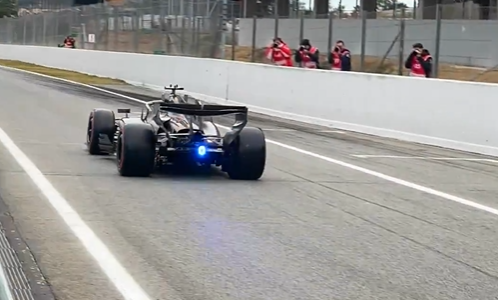
Aston Martin debuted its 2026 F1 car with a flashing blue central rear warning light during the Barcelona shakedown, a stark departure from the standard red lights used by the rest of the grid. The unusual color was a deliberate signal to other drivers that the AMR26 was running a restricted, non-representative test program, specifically limiting its top speed on straights for initial data gathering and component preservation.
Why it matters:
In the high-speed, close-quarters environment of pre-season testing, clear and immediate communication between cars is critical for safety. Aston Martin's ad-hoc use of a blue light—a color typically reserved for rookie drivers without a superlicence—highlights the teams' need for flexible solutions to signal non-standard running conditions, especially when a car's livery (in this case, bare carbon fiber) makes quick identification difficult.
The details:
- The blue light was observed on the central rear crash structure during Lance Stroll's and Fernando Alonso's initial installation laps, as the team began its 2026 testing program.
- The Reason: Aston Martin informed rival teams that its early run plan involved not running at maximum speed on the straights. The blue light served as a clear warning to following drivers that the AMR26 would have an atypical speed profile and could accelerate less aggressively out of corners.
- Regulatory Context: The 2026 technical regulations mandate rear warning lights, which are typically red and flash in low-grip conditions or during energy harvesting. The sporting regulations stipulate blue lights for drivers without a superlicense, a rule not applicable to Stroll or Alonso.
- Program Evolution: The special light was temporary. By Friday morning, Alonso's car was seen running with the standard red endplate lights flashing, indicating the team had progressed past the speed-limited phase of its test schedule and was running at more conventional paces.
What's next:
The blue light experiment was a short-lived, practical measure for a specific phase of testing and is not expected to continue. As Aston Martin completes its initial shakedown and systems checks, its focus will shift to standard testing procedures and performance runs. The incident underscores how teams creatively adapt within the regulatory framework to ensure safety during the critical and often chaotic pre-season period, where cars and programs can vary wildly from team to team.
Don't miss the next lap
Get the deep dives and technical analysis from the world of F1 delivered to your inbox twice a week.
Zero spam. Only high-octane analysis. Unsubscribe anytime.
Join the inner circle
Get the deep dives and technical analysis from the world of F1 delivered to your inbox twice a week.
Zero spam. Only high-octane analysis. Unsubscribe anytime.
Continue Reading
View More News