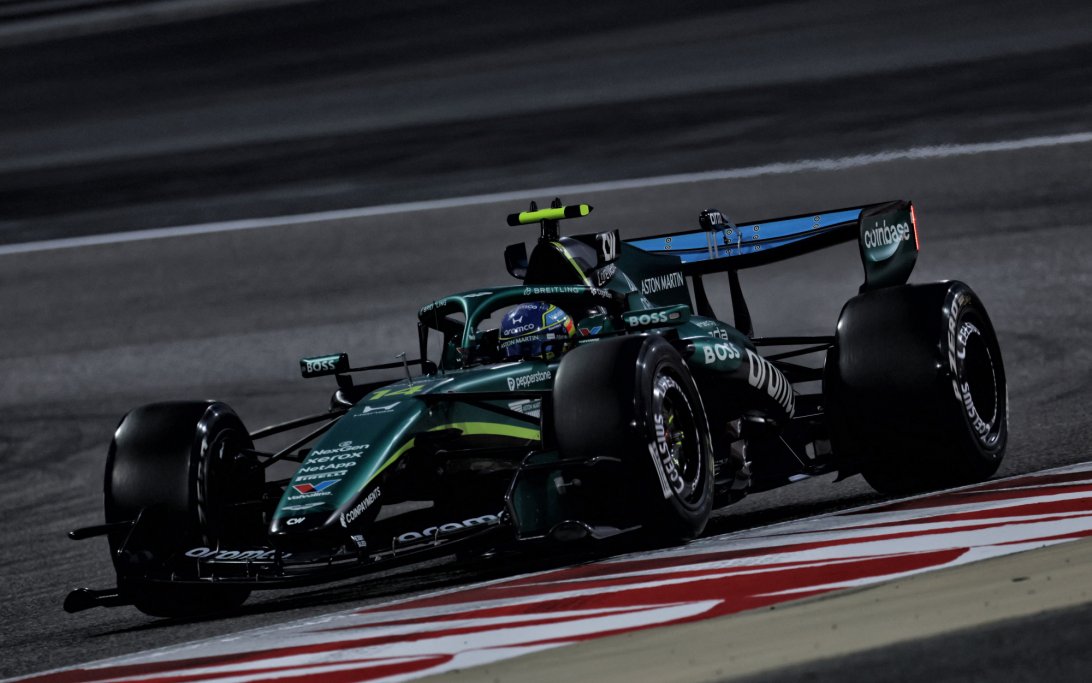
Aston Martin takes unique tire strategy into second Bahrain F1 test
Aston Martin has chosen a unique and extreme tire strategy for the final F1 pre-season test, being the only team to completely avoid Pirelli's harder compounds. Instead, they will run exclusively on softer rubber, focusing 20 of their 24 sets on the C3 tyre. This move highlights the team's urgent need to find performance and understand its struggling AMR26 car after a difficult first test.
Aston Martin has made a radical and isolated tire selection for the second pre-season test in Bahrain, opting to run exclusively on the softer end of Pirelli's range while completely avoiding the harder C1 and C2 compounds. This strategy starkly contrasts with the rest of the grid as the team seeks to maximize its limited track time and understand its struggling AMR26 car.
Why it matters:
Tire selection is a critical strategic component of testing, directly influencing the data teams gather about car performance, degradation, and setup. Aston Martin's decision to ignore the harder, more durable compounds suggests a focused, perhaps desperate, effort to extract immediate lap time and find a baseline setup for a car that has been alarmingly off the pace, rather than conducting long-run race simulations that are typical at this stage.
The details:
- For the second three-day test, each team was allowed to select 24 sets of tyres from Pirelli's full range (C1 to C5, with C1 being the hardest).
- Aston Martin is the only team that will not run the C1 or C2 compound at all.
- The team's allocation is heavily skewed toward the softer rubber: 20 sets of the C3 (the middle compound), two sets of the C4, and two sets of the C5 (the softest).
- This makes Aston Martin one of only four teams (along with Williams, Alpine, and Audi) to even bring the C5 tyre to Bahrain.
- The C3 is the most popular choice across the grid, though teams like McLaren, Audi, and Cadillac have taken a more balanced approach with only eight sets each.
The big picture:
This unconventional choice comes against a backdrop of a troubled start to 2024 for Aston Martin. The team completed the fewest laps of any squad in the first test, and driver Lance Stroll has publicly stated the AMR26 is significantly off the pace, reportedly citing a gap as large as four seconds to the front-running cars. With such a performance deficit, the team's priority has clearly shifted from simulating grand prix conditions to simply understanding the car's fundamental behavior and trying to unlock any latent performance in a short timeframe.
What's next:
All eyes will be on Aston Martin's garage in Bahrain to see if this aggressive tire strategy yields valuable data or simply highlights the car's limitations on high-degradation rubber. The real test will come at the season-opening Australian Grand Prix, where the team must translate any test findings into a competitive package. If the performance gap remains, this radical tire choice will be seen as a symptom of a team in crisis, scrambling for answers before the season properly begins.