Audi revises rear wing design for 2026 F1 season, following Alpine's lead
Audi has changed the design of its 2026 F1 car's rear wing, adopting a downward-moving flap concept similar to Alpine's after initial testing. This move underscores a broader trend of extreme aerodynamic innovation driven by new efficiency-focused regulations, with Ferrari's 180-degree rotating wing representing the most radical approach seen so far.
Audi has fundamentally changed the operating concept of its 2026 Formula 1 car's rear wing, abandoning its initial 'oblique' opening mechanism to adopt a downward-moving flap design pioneered by Alpine. This shift highlights how the new technical regulations are pushing teams toward extreme aerodynamic efficiency and sparking a wave of creative engineering solutions, with Ferrari's 180-degree rotating wing representing the most radical interpretation so far.
Why it matters:
The 2026 regulations place a premium on aerodynamic efficiency due to strict energy management limits from the new hybrid power units. Active aerodynamics, used extensively on straights to reduce drag and save energy, has become a critical battleground. The rapid design evolution seen in testing—from Alpine's initial concept to Audi's pivot and Ferrari's extreme approach—shows teams are aggressively exploring this new freedom, which could create significant performance gaps from the very first race of the new era.
The details:
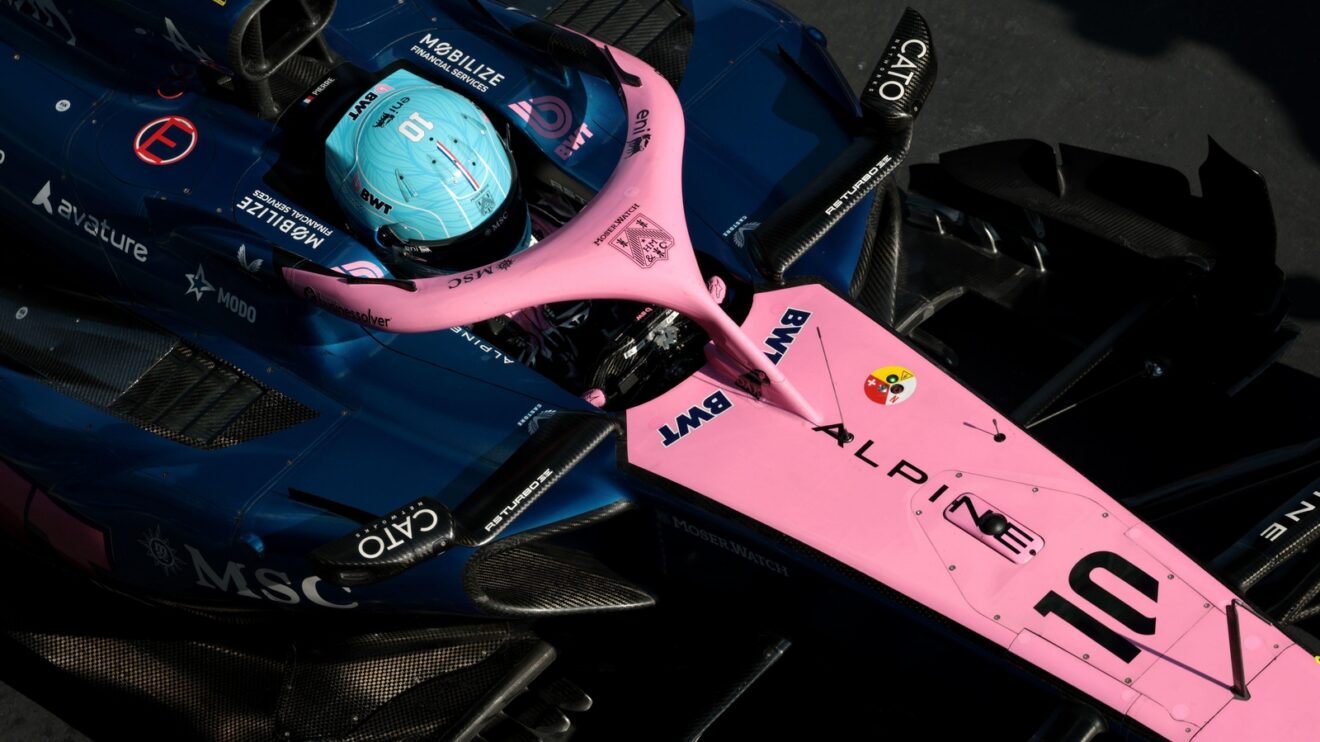
- Alpine set the new conceptual standard by being the first team to move away from the traditional DRS paradigm, implementing a system where the rear wing flap rotates downward.
- Audi initially tested a unique solution where the wing's first element raised at an angle, with the second element following passively. After the Barcelona shakedown and during the second week of testing in Sakhir, the team switched to Alpine's downward-movement philosophy.
- Technical Pivot: The change was achieved by modifying the actuator controlling the mobile wing. In Audi's new configuration, the actuator pushes the second element down while the first element remains passive, a reversal of its original mechanism.
- Design Simplicity: Audi's execution appears mechanically simpler than Alpine's complex multi-attachment system. Audi's wing rotates on a pivot placed on the first flap and uses a single attachment point to the upper flap.
- The redesign offers aerodynamic benefits, particularly in providing greater stability during the initial braking phase, but introduces new challenges as the actuator must now work against significant aerodynamic drag to move the flap.
The big picture:
The 2026 rules have successfully stimulated engineering creativity, moving beyond incremental updates to foster genuinely novel concepts. Ferrari's fully rotating wing is the standout example, but the chain reaction from Alpine to Audi proves ideas are spreading quickly. This focus on active aerodynamics is a direct response to the challenge of managing a fixed energy allowance per lap, making efficient straight-line speed more valuable than ever.
What's next:
Pre-season testing has revealed the first wave of innovation, but the real-world performance and reliability of these complex systems remain unproven.
- Teams will now enter a crucial development phase, refining their concepts based on track data and likely exploring further iterations.
- The variety of solutions promises a fascinating technical duel in 2026, where a well-executed aerodynamic concept could deliver a decisive advantage, making the launch season a potential reset of the competitive order.
Don't miss the next lap
Get the deep dives and technical analysis from the world of F1 delivered to your inbox twice a week.
Zero spam. Only high-octane analysis. Unsubscribe anytime.
Join the inner circle
Get the deep dives and technical analysis from the world of F1 delivered to your inbox twice a week.
Zero spam. Only high-octane analysis. Unsubscribe anytime.
Continue Reading
View More News