Audi's radical sidepods, Alpine's clever flap system headline Bahrain test innovations
F1's Bahrain test revealed major technical splits, with Audi debuting radical vertical-sidepod inlets that rewrite airflow management rules, and Alpine showcasing a clever rear-flap pivot system for diffuser efficiency. These high-concept designs define the early-season development battle.
The opening Formula 1 test in Bahrain has unveiled the first major technical divergences of the new season, with Audi's shockingly radical sidepod design and Alpine's unique rear-wing flap mechanism leading the conversation. These innovations signal a bold departure from established concepts as teams search for a crucial performance edge.
Why it matters:
Pre-season testing is where conceptual philosophies are put to the test, and radical designs can either set a new standard or prove to be a costly misstep. Audi's aggressive approach to sidepod design represents a fundamental challenge to the aerodynamic status quo, while Alpine's solution targets a very specific performance loophole. The success or failure of these ideas will shape the early competitive order and could influence development directions across the grid.
The Details:
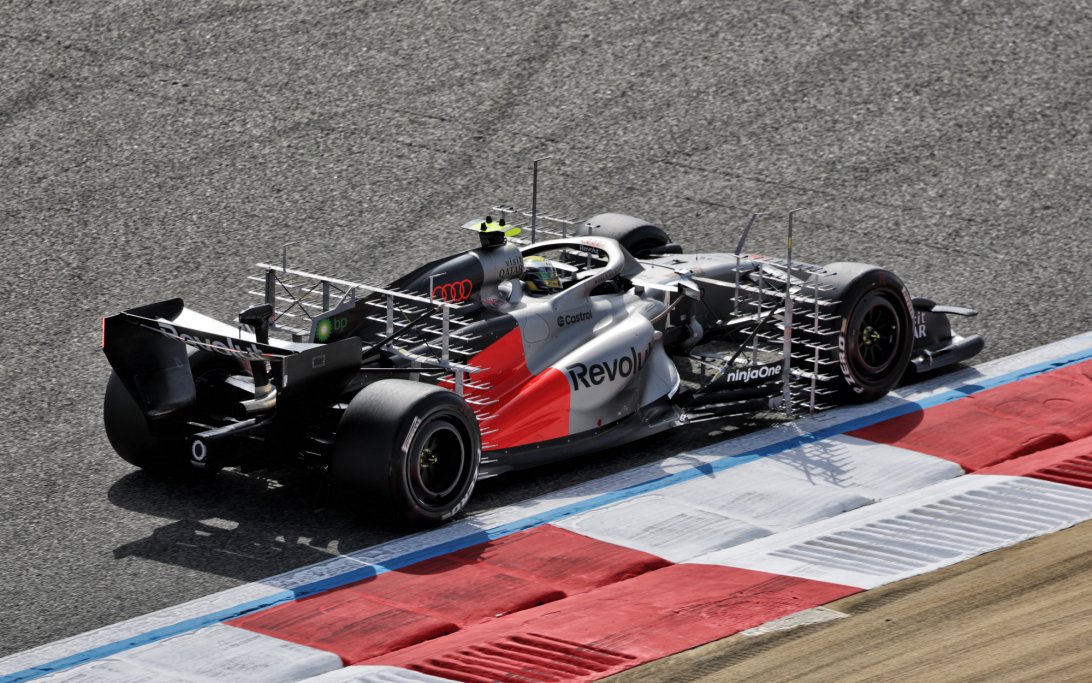
- Audi's Conceptual Revolution: The most visually striking innovation is Audi's sidepod, which features vertical air inlets reminiscent of the 1989 Ferrari 640. This design abandons the prevalent 'undercut' philosophy, instead using increased frontal area to push turbulent air outward and manage flow toward the car's rear completely differently.
- Measurement Tells a Story: Audi's unique aerodynamic approach was further highlighted by its testing methodology. While most teams placed measurement rakes behind the front wheels, Audi positioned its major rake array ahead of the rear wheels, underscoring the different airflow management challenges its design creates.
- Alpine's Clever Flap Pivot: Alpine has refined a rear-wing flap mechanism first seen in Barcelona. Its system pivots from the center of the two movable elements, which lowers the trailing edge of the final flap rather than raising the leading edge of the first.
- This design is philosophically geared toward optimizing air extraction from the diffuser during straight-line running, particularly in a 'diffuser stall' condition used for reducing drag.
- Aston Martin's Tight Packaging: The Aston Martin AMR26 also showcased notable detail with a prominent engine cover air vent, highlighting the extremely tight packaging of its rear end and a carefully sculpted bodywork profile for managing airflow.
The Big Picture:
The 2026 regulation overhaul is already casting a long shadow, forcing teams to explore high-risk, high-reward concepts earlier in the current rule cycle. Audi's extreme sidepod is a clear statement of intent and a gamble that its novel airflow management will pay dividends. Alpine's focused innovation on the rear wing shows a team targeting specific efficiency gains. These early reveals set the stage for a development war where divergent concepts will clash, and the first races will determine which bold idea has truly unlocked performance.
Don't miss the next lap
Get the deep dives and technical analysis from the world of F1 delivered to your inbox twice a week.
Zero spam. Only high-octane analysis. Unsubscribe anytime.
Join the inner circle
Get the deep dives and technical analysis from the world of F1 delivered to your inbox twice a week.
Zero spam. Only high-octane analysis. Unsubscribe anytime.