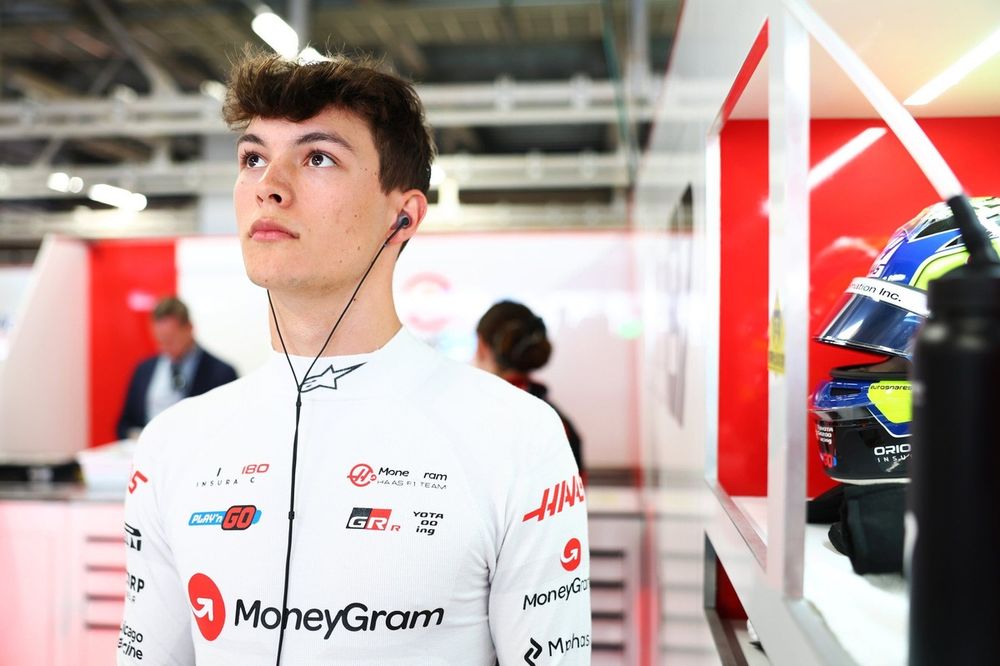
Bearman cautious about F1's new rules at 'worst-case' Australian GP
Haas F1 rookie Oliver Bearman warns that the Australian Grand Prix's layout, with its limited braking zones, may be the "worst-case scenario" for F1's 2024 energy-recovery regulations. He anticipates teams will have no energy surplus, forcing extreme efficiency, but believes the early-season chaos could also create major opportunities for savvy competitors.
Haas rookie Oliver Bearman is tempering expectations for the Australian Grand Prix, suggesting the Albert Park circuit could present the "worst-case scenario" for Formula 1's new 2024 regulations. The young driver points to the track's lack of major braking zones as a critical challenge for energy management, but remains optimistic that early-season chaos could create unexpected opportunities for his team.
Why it matters:
The comments from one of the grid's newest drivers offer a candid, on-the-ground assessment of how the latest technical regulations are playing out on a specific circuit type. Albert Park's flowing nature tests the limits of the energy recovery systems and efficiency demands that are central to this year's rules, making it a key data point for teams still learning their new cars. Bearman's perspective highlights the strategic tightrope teams will walk between managing scarce energy and capitalizing on race-day incidents.
The details:
- Bearman explicitly linked the challenge to the circuit layout, grouping Albert Park with Monza, Austria, and Jeddah as one of the more demanding tracks for the new rules.
- The core issue is energy recovery. With few heavy braking zones, drivers have fewer opportunities to harvest energy via the MGU-K, leaving them operating with minimal surplus.
- This creates a compounded challenge for midfield teams like Haas, who Bearman notes will be "running at the bottom of the pack" in terms of available energy during the race.
- Despite the hurdles, Bearman sees a silver lining: "With chaos comes opportunity." He believes the opening races, before all teams fully optimize their packages, present the best chance for unexpected results.
What's next:
Bearman emphasized that he does not want to "draw any conclusions" based solely on the Australian GP, acknowledging it as an extreme example. His focus, and that of Haas, will be on executing a clean weekend—managing efficiency, strategy, and reliability perfectly within the tight constraints. The real test of the regulations will come over the broader span of the season as teams visit a wider variety of circuits. For now, Bearman's outlook suggests the opening rounds may reward adaptability and smart risk-taking as much as pure car performance.