Cadillac's Asymmetrical F1 Livery Echoes a Historic Warning
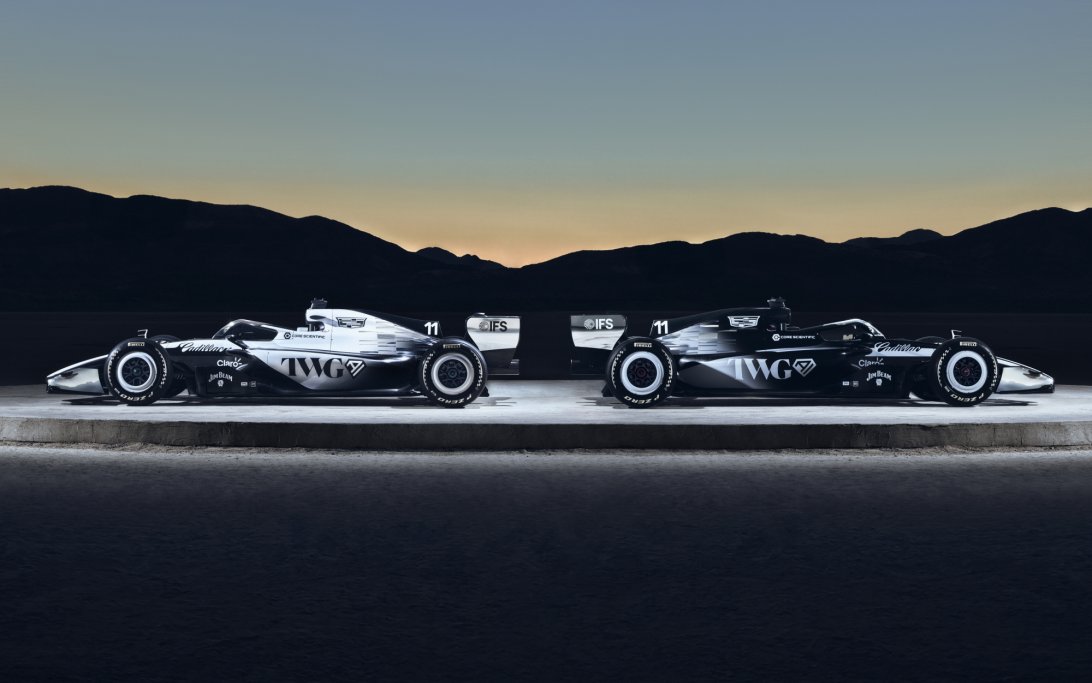
Cadillac's striking asymmetrical F1 livery has evoked memories of BAR's infamous 1999 design, which became a symbol of one of the sport's most disastrous debut seasons. The historical parallel serves as a warning that bold visual statements can backfire if not backed by on-track performance, shifting the immediate pressure onto the team's technical package.
Cadillac's bold, asymmetrical livery for its Formula 1 debut has drawn immediate comparisons to British American Racing's infamous 1999 design—a visual gimmick that preceded one of the most disastrous rookie seasons in championship history. While attention-grabbing, the historical parallel serves as a stark reminder that in F1, fundamentals and performance ultimately matter far more than a striking paint job.
Why it matters:
For a new team, the first impression is everything, and the car's livery is its most visible statement. Choosing such an unconventional design inherently links Cadillac's debut narrative to BAR's catastrophic failure, creating an immediate psychological hurdle. It shifts the focus from technical substance to stylistic risk before the car has turned a wheel, placing immense pressure on the team to deliver results that can rewrite the historical script.
The details:
- The last comparable asymmetrical livery was introduced by BAR in 1999. The team was forced to merge two sponsor schemes (Lucky Strike and 555) into a single car split down the middle after the FIA rejected its plan to run two completely different liveries.
- BAR entered with immense hype, a champion driver (Jacques Villeneuve), vast funding, and a technical director (Adrian Reynard) who suggested a win at the season opener was possible.
- The reality was a brutal collapse. The BAR 01 proved fundamentally flawed and unreliable.
- Jacques Villeneuve suffered 11 consecutive retirements to start the season.
- The team failed to score a single point in 1999, finishing last in the constructors' championship behind even the perennial backmarkers.
- BAR abandoned the split livery for 2000, adopting a clean, traditional design. Performance improved immediately, with both cars scoring points in the first race of the new season.
The big picture:
The BAR story evolved from a cautionary tale into a successful legacy. The team eventually found its footing, claimed podiums, and through various iterations (Honda, Brawn GP) evolved into the modern Mercedes works team. This proves that a poor debut does not define a team's ultimate destiny. However, the initial period of humiliation and failure, inextricably linked to its garish livery, remains a powerful lesson. For Cadillac, the risk is that its visual identity becomes synonymous with early struggle rather than innovation. The team's long-term success will depend entirely on the unseen engineering beneath the paint, not the paint itself.
What's next:
All eyes will be on pre-season testing to see if the Cadillac challenger shows genuine pace and reliability. The narrative will be swift: any early technical troubles will be magnified and framed through the lens of the BAR comparison. Conversely, competitive lap times will instantly deflate the historical omen and allow the team to build its own identity. The livery has guaranteed Cadillac will be the talk of the paddock at the season opener; it's now up to the engineers and drivers to ensure the conversation is about performance, not precedent.
Don't miss the next lap
Get the deep dives and technical analysis from the world of F1 delivered to your inbox twice a week.
Zero spam. Only high-octane analysis. Unsubscribe anytime.
Join the inner circle
Get the deep dives and technical analysis from the world of F1 delivered to your inbox twice a week.
Zero spam. Only high-octane analysis. Unsubscribe anytime.