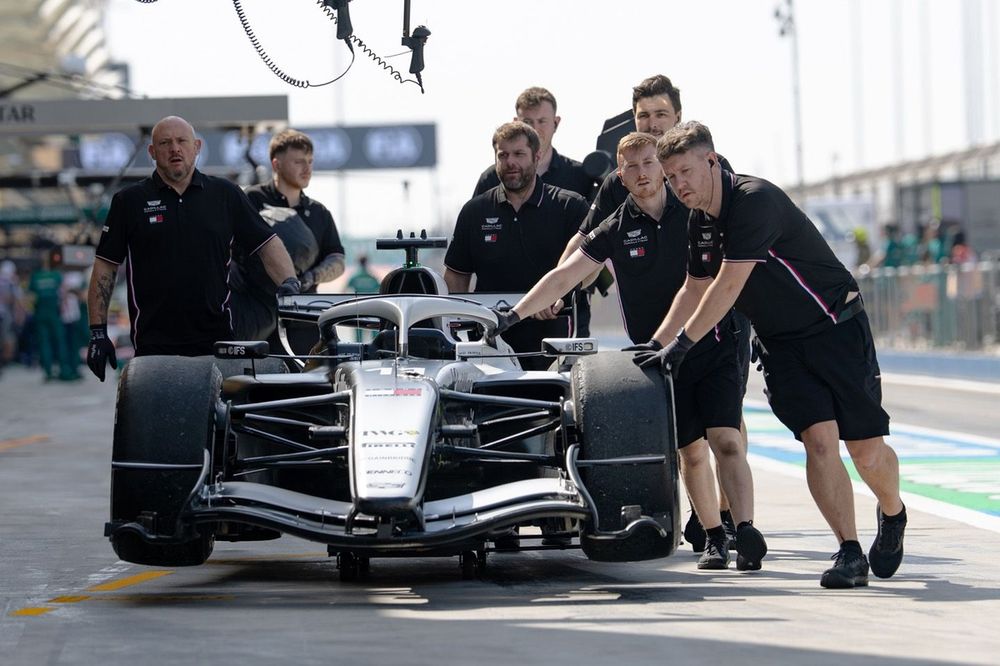
Cadillac's F1 debut on track despite early wind tunnel tyre setback
Cadillac's new F1 team overcame an early wind tunnel tyre setback to complete its first pre-season test on schedule, logging over 1,700km in Bahrain. The American outfit successfully navigated initial development challenges as it prepares for its competitive debut under the major 2026 technical regulations.
Cadillac successfully completed its first Formula 1 pre-season test in Bahrain, a significant milestone for the new American team despite facing an early technical hurdle with custom-made wind tunnel tyres that later required re-optimization. The team hit all its critical development timelines, accumulating over 1,700 kilometers of valuable track data in just three days as it prepares for the 2026 season under radically new technical regulations.
Why it matters:
Cadillac's entry marks the first new constructor to join the F1 grid since Haas in 2016, expanding the championship to 11 teams. Its ability to overcome initial setbacks and complete testing on schedule demonstrates the team's operational capability and provides a crucial foundation for its long-term competitiveness. The 2026 season introduces the biggest regulatory overhaul in recent history, making a successful debut even more challenging and significant for the General Motors brand's global motorsport ambitions.
The details:
- Wind Tunnel Challenge: Engineering consultant Pat Symonds revealed the team had to create its own tyres for initial wind tunnel development because it lacked a Pirelli supply contract at the start of 2025. When the official Pirelli tyres arrived later in January, their shape differed from Cadillac's estimates, forcing a re-optimization of early aerodynamic work.
- Timeline Achievement: Team Principal Graeme Lowdon emphasized the team hit every major milestone on schedule, including firing up the car in early December, completing virtual dyno tests, and executing shakedowns at Silverstone and Barcelona. This is a notable feat for a completely new organization.
- Data Accumulation: The Bahrain test provided the team with its largest-ever dataset, covering over 1,700 kilometers. While this volume is standard for established teams, it represents a massive information gain for a new entrant building its knowledge from scratch.
- Regulatory Context: Cadillac's development coincides with the 2026 regulation changes, featuring cars that are approximately 32kg lighter with reduced downforce and a power unit with a greater electrical energy contribution.
What's next:
The immediate focus shifts to deeply analyzing the data gathered from Bahrain to understand the car's characteristics and performance trajectory. Cadillac has proven it can build and operate a car to a strict timeline; the next challenge is evolving that package into a competitive race car. The team's progress will be closely watched as it aims to establish itself as a credible midfield contender from its first race in 2026.