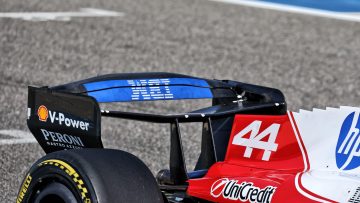
Comparing F1's Ingenious Rear Wing Innovations
Formula 1 teams deploy vastly different rear wing designs, from high-downforce multi-element concepts to sleek low-drag profiles, as a key area for performance differentiation. These innovations balance downforce, drag reduction, and DRS efficiency, directly impacting qualifying pace, overtaking ability, and race strategy across varied circuits.
F1 teams are constantly pushing aerodynamic boundaries with unique and ingenious rear wing designs, each tailored to specific circuit demands and car philosophies. These innovations are not just about raw downforce; they represent a complex balance of drag reduction, DRS efficiency, and overall car balance, making the rear wing a critical differentiator in performance.
Why it matters:
In the tightly regulated world of Formula 1, the rear wing is one of the last major areas where teams can find significant performance gains through creative interpretation of the rules. A well-optimized wing can provide a crucial advantage in qualifying trim and dictate race strategy through its effect on straight-line speed and tire management. The differences between teams highlight their core aerodynamic philosophies and development priorities.
The Details:
- High-Downforce vs. Low-Drag Concepts: Teams like Red Bull and Ferrari often employ complex, multi-element designs with pronounced curvature for maximum downforce at circuits like Monaco or Hungary. In contrast, Mercedes and Aston Martin have experimented with sleeker, less draggy profiles for high-speed tracks like Monza or Spa.
- DRS Mechanism Optimization: The design of the rear wing's mainplane and flap is heavily influenced by the Drag Reduction System (DRS). Teams engineer the gap and movement of the flap to achieve the largest possible reduction in drag when DRS is activated, a key factor in overtaking.
- Endplate Design Evolution: While simplified by the 2022 regulations, endplates remain a point of detail. Teams use subtle shaping and vertical strakes to manage vortex generation and control the wake coming off the rear tires, which affects the car's stability and the following car's ability to race closely.
- Beam Wing Interaction: The lower beam wing, reintroduced in 2022, works in tandem with the main rear wing. Its angle and position are crucial for sealing the diffuser and managing the airflow under the car, making the entire rear assembly a interconnected system.
What's next:
As the 2024 season progresses, rear wing development will continue to be a focal point, especially with the upcoming races on vastly different circuit layouts.
- Expect teams to bring circuit-specific wing packages, with major upgrades often debuting at traditional development benchmarks like the Spanish Grand Prix.
- The ongoing battle between maximizing qualifying performance and preserving race tire life will drive further innovation, particularly in how the wing interacts with turbulent air.
- With a major regulatory change slated for 2026, the concepts tested and proven in these current wing designs will directly inform the next generation of cars, making today's innovations a window into F1's aerodynamic future.