The Data Archaeologist's Garage: What Coulthard's Collection Reveals About the Lost Art of Driver Memory

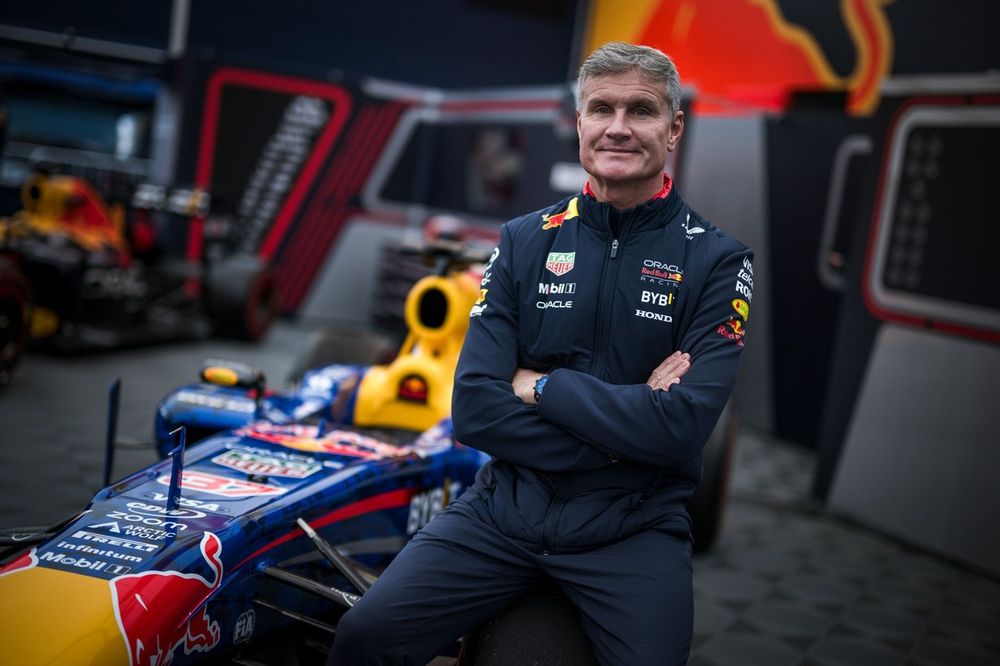
David Coulthard has shared details of his private car collection, which traces his entire racing career from his first kart in 1982 to multiple Formula 1 cars from Williams, McLaren, and Red Bull. The collection, initiated by his father's belief, forms a unique personal museum of his journey through the motorsport ranks.
I don't trust stories. I trust timestamps. So when I read about David Coulthard’s private garage, my analyst’s brain didn’t see a sentimental collection of metal and carbon fiber. I saw a physical dataset, a three-dimensional scatter plot mapping one man’s journey from a child’s kart to the pinnacle of motorsport. In an era where a driver’s career is reduced to gigabytes of telemetry, this garage is a defiant, analog artifact. It’s a museum of feel, of mechanical memory, of a time when a driver’s intuition wasn’t just data to be overruled by a pit wall algorithm.
The Chronological Imperative: A Dataset You Can Touch
The article states the collection is "chronological," and that word is a trigger for me. Chronology is the first principle of data integrity. Coulthard’s father, by preserving that first 1982 kart, wasn’t just being sentimental. He was archiving the first data point. He was creating a baseline. Every car that follows is another node in a performance curve.
Look at the progression laid out, a near-perfect ladder:
- Formula Ford 1600 (1989)
- Opel Lotus (1990)
- Formula 3 challenger (1991)
- Formula 3000 car (1992)
This isn't a random assortment of cool cars. This is the developmental API for a Formula 1 driver. Each machine represents a leap in horsepower, downforce, and, critically, required feedback sensitivity. The data here isn't in the lap times, which are lost to history, but in the physical evolution of the machinery itself. You could, in theory, correlate the increasing complexity of the suspension on these cars with the neural pathways being forged in the driver. This is the antithesis of today’s sim-to-reality pipeline, where drivers are trained on digital models before touching the real thing. Coulthard’s collection is the real thing, in sequence.
The F1 Era: When Machine Feedback Was the Primary Telemetry
The representation of his F1 career—the Williams (1995), McLaren (1996), and Red Bulls—is where my skepticism of modern narratives flares. Coulthard’s 246-race career yielded 13 wins, 62 podiums, and 535 points. Solid, front-running consistency, especially at McLaren. But the story isn't in the aggregate points. It's in what these specific cars represent.
"The garage is a curated museum of a life dedicated to speed."
This line from the original piece is telling, but I see it differently. It’s a museum of tactile feedback. The Williams FW17 from 1995 communicated through its hands and seat in a language specific to that car’s aero platform and Renault V10. The 1996 McLaren MP4/11, with its Mercedes engine, spoke a different dialect. Today, drivers are translators for a unified digital language streamed from thousands of sensors. The car’s "feel" is just one input among hundreds, often discounted if it contradicts the predicted model.
Think about it. Could Michael Schumacher in the F2004—a car so responsive it was an extension of his cerebellum—have operated under the strategic rigidity we see now? His near-flawless 2004 season wasn't just about pace; it was about a symbiotic, real-time conversation with the machine, where his intuition was the strategy. Coulthard, racing in that same era, would have operated on similar principles. His collection is a library of those forgotten mechanical languages.
The Modern Paradox: A Broadcaster’s Garage in a Data-Drowned Sport
Here’s the delicious irony the original article glosses over. Coulthard now works as a broadcaster and podcaster, professions built on narrative. Yet, he has preserved the physical evidence of a career built on non-verbal, sensory data. Since retiring in 2008, he’s transitioned to media, co-hosting Formula For Success and joining Up To Speed.
But what is he commenting on? A sport hurtling toward my predicted 'robotized' racing. Within five years, driver intuition will be fully supplanted by predictive algorithms for pit stops, tire management, and even overtaking. The sport will become a sterile, high-speed execution of pre-calculated scenarios. What value will there be in a broadcaster’s anecdote about "how the car felt" when the pit wall’s data model says the feeling is irrelevant?
Coulthard’s garage, then, becomes more than a personal museum. It’s a sanctuary for driver sovereignty. Each car is a monument to a race won or lost by the man in the cockpit, based on information processed through his hands and backside, not a server farm.
Conclusion: The Heartbeat in the Histogram
So, what’s the data archaeologist’s take? Coulthard’s collection is the ultimate critique of modern F1’s direction. It’s a timeline you can walk through, each car a chapter written in vibrations, G-forces, and mechanical grip. It underscores what we’re losing: the human as the primary sensor.
When I look at the stats—535 points, 62 podiums—I don't just see numbers. I see thousands of laps where the critical data stream ended at the driver’s spine. We now hyper-analyze drivers like Charles Leclerc, blaming "errors" while ignoring the chaotic data noise of Ferrari’s strategic blunders. We forget that consistency is born from a clean, trustworthy feedback loop, whether it's from a 1996 McLaren or a 2024 Ferrari.
Coulthard’s garage is a backup of that original, organic data. In a world of cloud analytics, he’s kept the local files. And as we race toward a predictable, algorithmically-managed future, that private collection may soon be the only place left where you can hear the true heartbeat of the sport, echoing off cold metal and remembered feel.