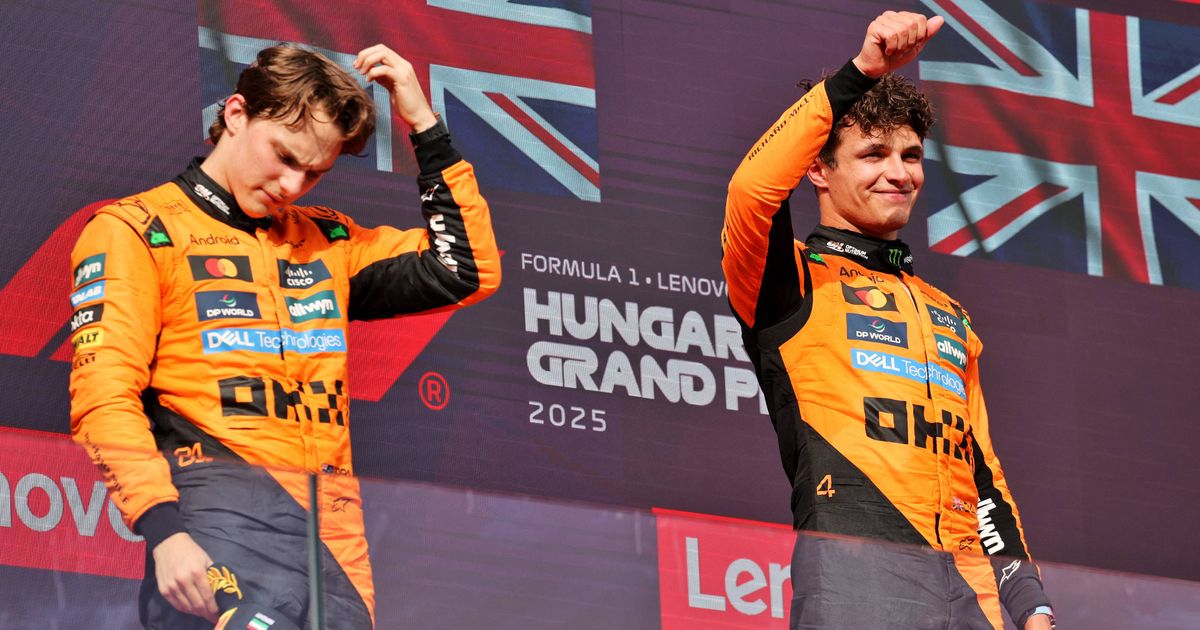
Ex-Williams Boss Defends McLaren's 'Papaya Rules' Driver Management
Former Williams team principal Claire Williams has defended McLaren's 'papaya rules,' allowing Lando Norris and Oscar Piastri to race freely, despite occasional on-track incidents. Williams emphasized the drivers' natural competitiveness and McLaren's good intentions, highlighting the challenge of managing such a dynamic policy. As the season nears its end, the 'papaya rules' remain a key factor in McLaren's championship pursuit.
Former Williams team principal Claire Williams has publicly defended McLaren's controversial 'papaya rules,' which allow Lando Norris and Oscar Piastri to race each other freely on track. This stance, aimed at fostering competitive spirit while prohibiting collisions, has occasionally led to incidents, but Williams believes McLaren always acts with its drivers' best interests at heart.
Why it matters:
McLaren's approach to driver management is a rare example of a team allowing its two drivers to compete directly for position, often seen as a purist's dream but a team principal's nightmare. In an era where team orders are common, McLaren's 'papaya rules' underscore a commitment to letting talent dictate outcomes, even at the risk of internal clashes. This philosophy could shape future team dynamics if proven successful, or serve as a cautionary tale if it ultimately hinders their championship ambitions.
The Details:
- Free Racing Policy: McLaren's 'papaya rules' dictate that both Lando Norris and Oscar Piastri are free to race each other without team orders, provided they do not make contact or compromise the team's overall result.
- Incidents and Scrutiny: This policy has led to on-track contact in races such as the Singapore and Canadian Grand Prix, drawing scrutiny from fans and pundits regarding its sustainability.
- Williams' Defense: Claire Williams emphasized the inherent competitiveness of F1 drivers, stating, "Both of their dreams for many, many years will have always been to win a drivers' championship, and they will take that fight to each other on the race track." She acknowledged the difficulty in managing such dynamics, especially when unforeseen circumstances arise during a race.
- Team Intentions: Williams firmly believes that despite any on-track incidents, McLaren's pit wall always operates with the best intentions for its drivers, striving for optimal outcomes on race day.
- Current Standings: As the season draws to a close, Norris leads Piastri by 24 points with three rounds remaining. Max Verstappen remains a factor, only 25 points behind Piastri in the fight for second place in the Drivers' Championship, highlighting the tight competition within the team and against rivals.
The Big Picture:
Managing two highly competitive drivers is one of the most significant challenges in Formula 1. While some teams prioritize clear number one/number two dynamics or strict team orders to maximize constructor points, McLaren's 'papaya rules' reflect a different philosophy. This approach, while risking internal strife, aims to extract the maximum performance from both drivers by allowing them to push each other. The success or failure of this strategy will heavily influence McLaren's long-term competitive standing and could either solidify their position as a top team or expose vulnerabilities.
What's next:
With three races left in the season, the 'papaya rules' will continue to be tested. The ongoing battle between Norris and Piastri, coupled with Verstappen's close proximity to Piastri in the standings, means every on-track decision and interaction will be under intense scrutiny. How McLaren navigates the remaining races will be crucial in determining the ultimate success of their bold driver management strategy and their final position in the Constructors' Championship.