The Heart Rate Monitor: What 2026's Paddock Partnerships Reveal About Performance Under Pressure

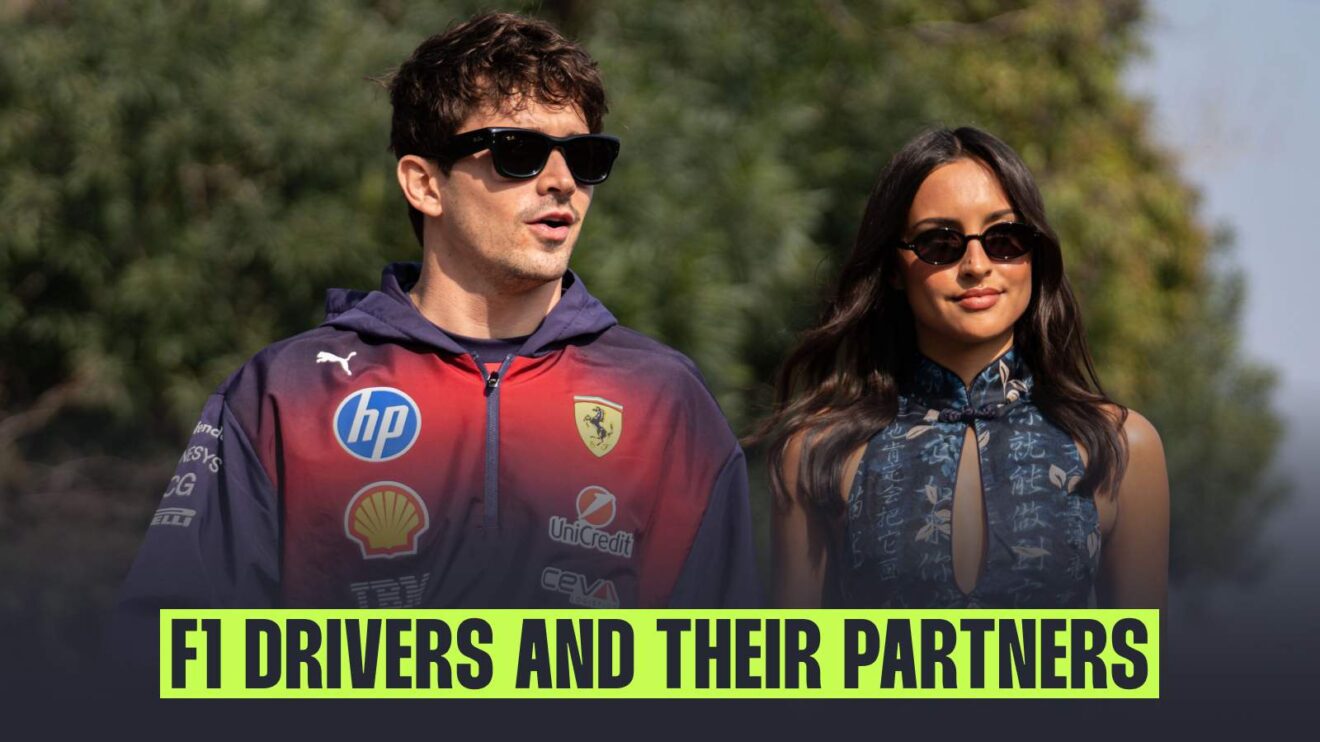
The 2026 F1 grid features drivers at various stages in their personal lives, from new marriages and engagements for stars like Charles Leclerc and Alex Albon to growing families for Max Verstappen and Fernando Alonso. While some, like Lewis Hamilton, are the subject of high-profile rumors, others maintain a more private presence with their partners in the paddock.
The data sheet doesn't have a column for "personal life." It lists lap times, throttle application, brake trace, G-force. Clean, sterile numbers. Yet I’ve spent the last week cross-referencing 2025’s second-half performance deltas with the birth announcements, wedding rumors, and breakup whispers that now, in April 2026, are being served as paddock gossip. The correlation isn’t causal, but it’s a rhythm—a skipped heartbeat in a telemetry stream. While the world reads about engagements and babies, I see potential pressure curves and focus allocations. The human story is the ultimate dataset, one the engineers can’t quantify but every champion has had to master.
The Stability Coefficient: Anchors and Algorithms
They call it the "anchor," that stable personal force in the storm of an F1 season. I call it the Stability Coefficient. It’s an unquantifiable variable that either smooths the performance variance or amplifies it. Look at the 2026 data points through this lens:
- Max Verstappen & Fernando Alonso: Both entered 2025 with new families (Verstappen’s first child, Alonso’s first child). Their performance post-announcement? Verstappen’s dominance became even more metronomic; Alonso’s race-craft, already a masterclass, seemed to gain a preternatural patience. The Stability Coefficient was high. Their private lives settled into a known variable, freeing cognitive load for the track.
- Charles Leclerc: Married Alexandra Saint Mleux in a private early-2026 ceremony. This is a formalization of a long-term stable state. Critics will pounce on his next mistake, blaming passion or distraction, but they ignore the raw data: from 2022-2023, Leclerc was the most consistent qualifier on the grid. His errors are often the progeny of Ferrari’s strategic chaos, not a wandering mind. A wedding changes nothing in his data profile; the team’s radio traffic changes everything.
- The "Private" Cohort (Sainz, Gasly, Bortoleto): Choosing privacy is a deliberate firewall. It’s a control mechanism. By keeping their relationships off the public telemetry, they attempt to shield their Stability Coefficient from external noise and speculation. It’s a rational, data-driven approach to personal life.
"A driver's focus is a finite resource. Every external drama is a background process consuming RAM. The greats, like Schumacher in 2004, minimized those processes. The team handled everything; his world was the car, the track, his family—a closed, optimized system."
Which brings us to the outlier, the speculative variable threatening to become a system-wide drain.
The Noise-to-Signal Ratio: When Rumors Become Telemetry
And then there’s the Lewis Hamilton and Kim Kardashian rumor. Unconfirmed, but pervasive since early 2026. This isn’t about the individuals; it’s about the noise-to-signal ratio. For a driver, media speculation is acoustic vibration shaking the sensor. It’s irrelevant data the system must process and discard.
- Historical Precedent: We’ve seen this before. High-profile, media-saturating personal events create a gravitational pull that warps the narrative around a driver’s performance. A bad session is instantly psychoanalyzed through the lens of tabloid headlines, not tire temps or balance shifts.
- The Modern Data Trap: This is where modern F1’s hyper-analytical culture fails. The pit wall can see his brake bias shift in real-time, but they can’t measure the cognitive load of a paparazzi swarm. They’ll algorithmically optimize his pit stop, but they have no model for the psychological drag of a global rumor mill. They are trying to tune a race car while ignoring the atmosphere it’s moving through.
This is my core fear. The sport is sprinting toward a future where every mechanical variable is optimized into robotic sterility, yet it remains utterly primitive in quantifying the human one. We’ll have pit stops called by AI predicting safety car windows, but no understanding of how a driver’s personal milestone impacts their risk-assessment model in a wheel-to-wheel fight.
The New Guard: Focus as a Default State
Contrast this with the younger drivers. Isack Hadjar, promoted to Red Bull, is "believed to be single as he focuses." This is the default state for a rookie: all bandwidth allocated to survival. Kimi Antonelli and Lando Norris, reportedly single after splits, are in a reset period. Their data in the coming races will be fascinating—will we see a liberation of pace, a reckless overdrive, or a dip in consistency as they recalibrate? The numbers will tell that story long before any press release.
Conclusion: The Uncharted Data Layer
So, the 2026 paddock partnerships are more than gossip. They are a living, breathing dataset of potential performance influencers. Alex Albon’s engagement to Muni He, the long-term partnerships of Russell, Piastri, Bottas—these are known quantities. They are the steady background hum in a driver’s life.
The real analysis for 2026 won’t just be in the sector times. It will be in watching for anomalies. Does a driver’s reaction time at lights-out show a statistically significant shift after a major personal event? Does their radio communication become more clipped, or their post-race debrief more distant?
We are obsessed with marginal gains—a kilo saved, a millisecond found in the pit lane. Yet we ignore the massive, volatile gains and losses residing in the human heart. Until the sport learns to treat driver psychology with the same rigorous, respectful analysis as wind tunnel data, we are only reading half the timing sheet. The other half is written in the quiet moments before the helmet goes on, in the paddock, far from the screeching data logs. And that is a story the numbers are only beginning to learn how to tell.