F1 Champion Jacques Villeneuve defends Max Verstappen against critics
1997 F1 champion Jacques Villeneuve defends Max Verstappen against critics who claim Red Bull builds its car solely for him. Villeneuve argues the car is built purely for speed and that Verstappen's unique skill is his ability to handle a challenging machine others cannot, comparing this trait to legends like Schumacher and Senna.
Former F1 world champion Jacques Villeneuve has pushed back against the widespread narrative that Red Bull builds its cars exclusively around Max Verstappen, arguing that it is the driver's exceptional talent—not a tailored car—that explains his dominance. Villeneuve contends that Verstappen's ability to handle a challenging car is a unique skill, drawing comparisons to legends like Michael Schumacher and Ayrton Senna.
Why it matters:
The debate over whether Verstappen's success is due to a car built for him or his sheer skill is central to assessing his legacy. Villeneuve's perspective challenges a popular theory used to downplay Verstappen's achievements and shifts the focus to driver adaptability, a crucial trait as F1 heads into a new era of technical regulations in 2026 where all teams and drivers will start from a fresh slate.
The details:
- Villeneuve directly refutes the idea that Red Bull's engineering priority is Verstappen, stating, "The car is not built for Max. It is built to be as fast as possible."
- He explains that engineers seek lap time, not a car only one driver can handle, and that Verstappen's skill lies in driving a car that others struggle with.
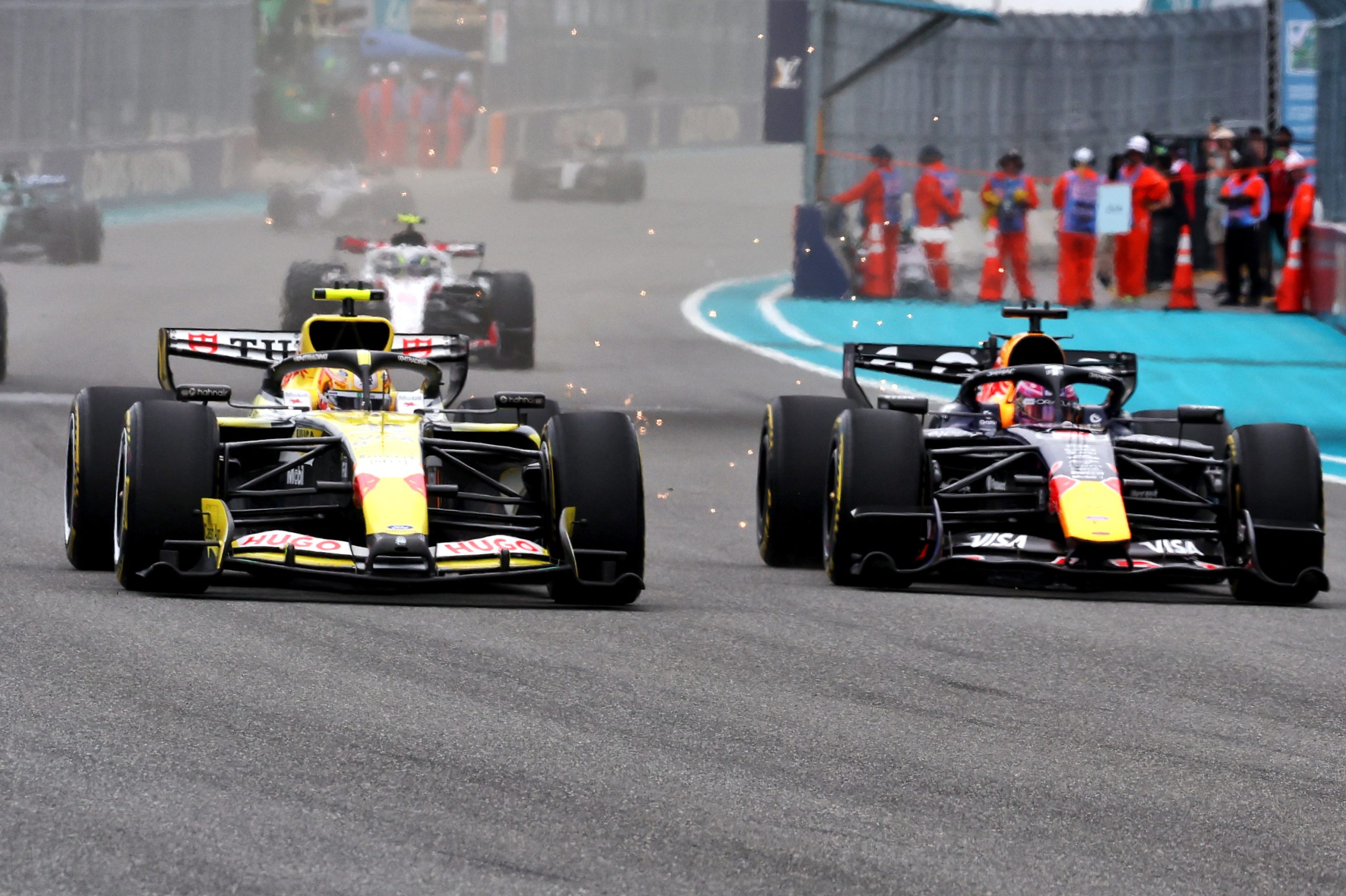
- The discussion often centers on the Red Bull's reported stable front and loose rear-end setup, a characteristic former teammates like Pierre Gasly and Alex Albon found difficult to master, leading to significant performance gaps.
- Villeneuve notes that many teammates fail by trying to copy Verstappen's aggressive style, which leads to mistakes and makes the car seem undrivable for them.
The big picture:
Villeneuve places Verstappen in the historical context of F1's greats, suggesting his talent makes a difficult car look easy—a trait he shared with icons like Schumacher and Senna. This flips the common criticism on its head: rather than the car being built for Verstappen, his true class is revealed by his ability to extract performance from a car pushed to its competitive limit. The arrival of new teammate Isack Hadjar in 2026, and his early testing incident, will provide the next real-world data point in this ongoing debate about car adaptation versus specialization.
What's next:
The 2026 technical reset will be a key test for Verstappen and Red Bull. It will either reinforce Villeneuve's argument—if Verstappen quickly masters the new car while others struggle—or provide fresh ammunition for critics if the performance gap closes. For now, the champion's defense from a fellow world champion adds significant weight to the argument that Verstappen's supremacy is fundamentally driver-led.
Don't miss the next lap
Get the deep dives and technical analysis from the world of F1 delivered to your inbox twice a week.
Zero spam. Only high-octane analysis. Unsubscribe anytime.
Join the inner circle
Get the deep dives and technical analysis from the world of F1 delivered to your inbox twice a week.
Zero spam. Only high-octane analysis. Unsubscribe anytime.