The Grid's New Heartbeat: F1's Five-Second Pause and the Data That Will Decide It

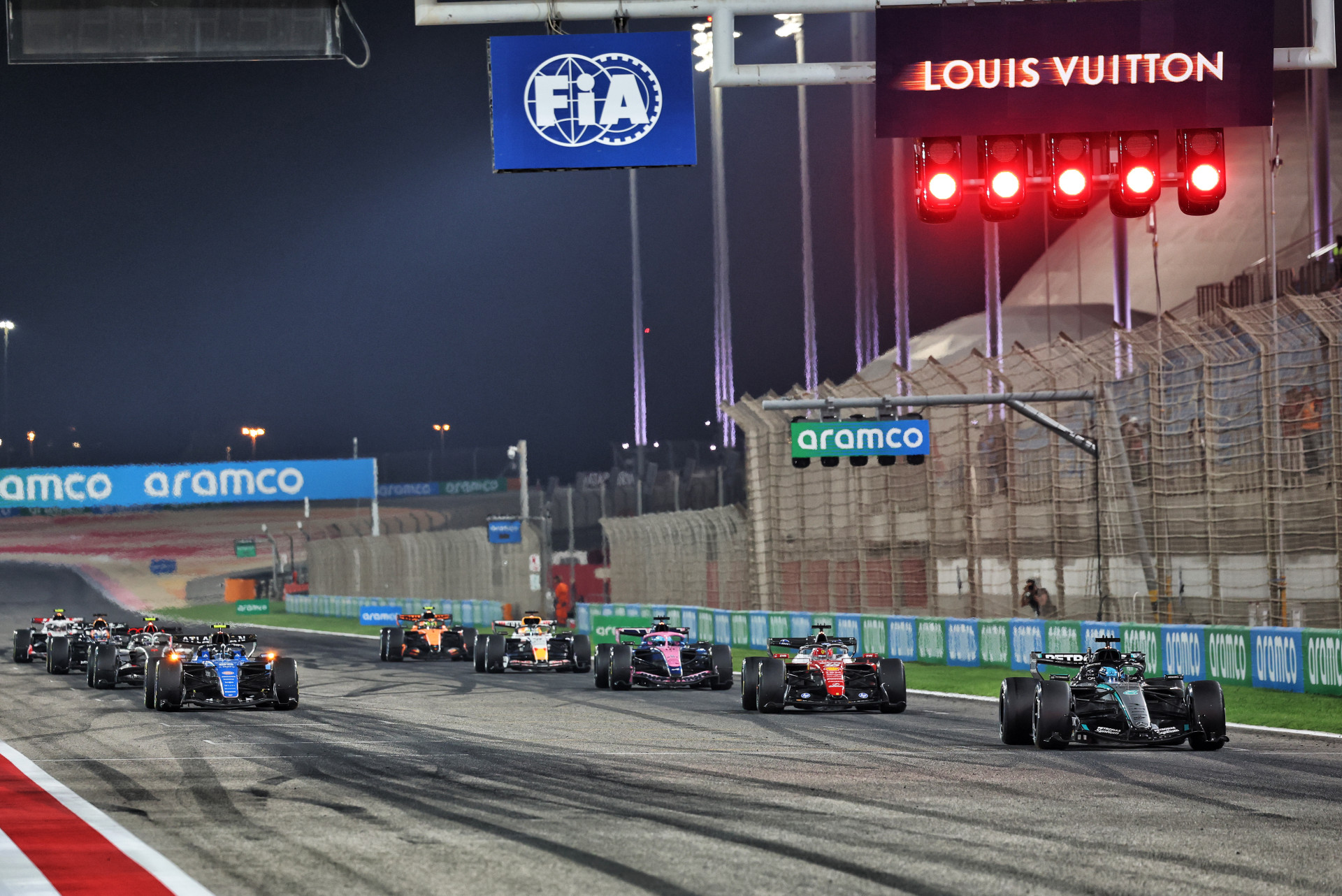
F1 will debut a new start procedure in Melbourne, adding a five-second 'Pre-Start' phase before the lights go out. The change addresses turbo lag issues caused by the 2026 power unit regulations, giving drivers a consistent window to prepare their launch. The Australian GP will be the first true test of this system designed to improve safety and fairness off the line.
I stared at the timing sheet from Bahrain testing, the column of reaction times looking less like a list and more like an EKG of anxiety. The variance was a jagged cliff face. Then the new procedure data came in. The cliff smoothed into a gentle hill. Another variable quantified, another human tremor ironed out. Formula 1’s confirmation of a revised start procedure for Melbourne isn't just a tweak for turbo lag. It’s the latest, most literal pre-programming of a moment that used to belong solely to the lizard brain and the clutch foot. They’re adding five seconds of blue light before the red. Five seconds for the algorithm to confirm optimal parameters. Five seconds less for the heart to pound.
## The Pre-Start Sequence: Engineering the Human Out of the Launch
The facts are sterile, as data points often are before I give them a story. On March 6, 2026, Speedcafe reported that the FIA will mandate a five-second "Pre-Start" phase at the Australian Grand Prix. Blue lights. A gantry message. All a direct, logical response to the 2026 power units, which, shorn of their MGU-H, require drivers to manually pre-spool turbos at higher revs. The stated goal is noble: safety and competitive integrity, especially for those mid-grid cars choking on the exhaust of unpredictability.
But let's read between the data lines.
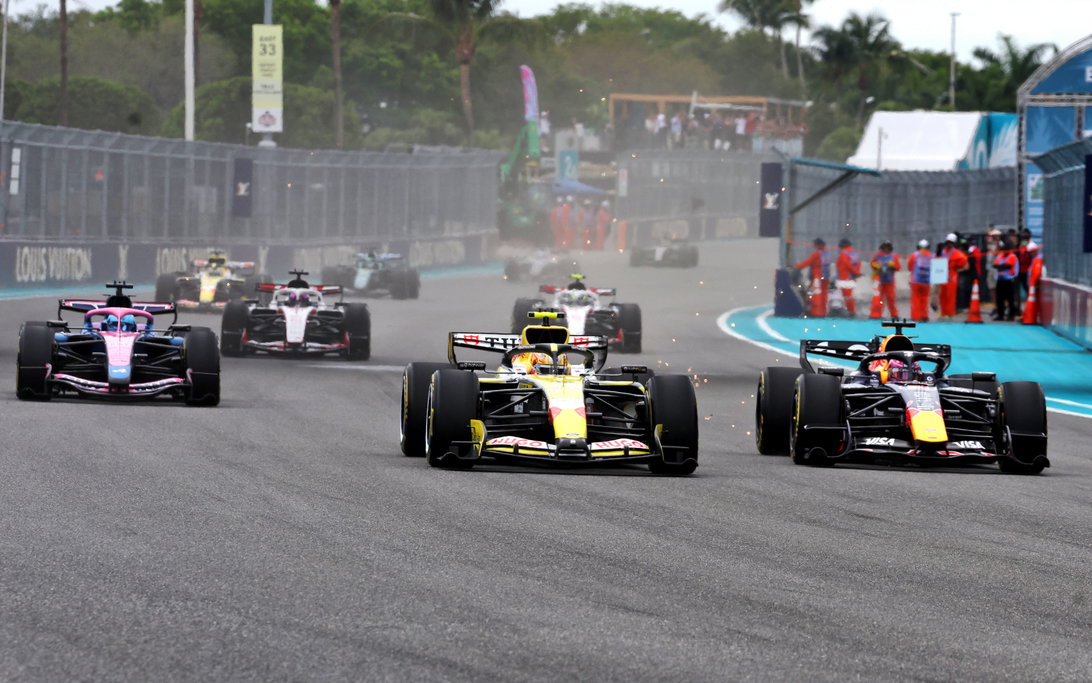
- The Procedure: Formation lap ends. Cars are stationary. Instead of the imminent threat of red lights, a five-second blue-light countdown begins.
- The Purpose: A consistent window for drivers to find the perfect rev plateau, to set the clutch bite point, to turn their launch into a repeatable procedure.
- The Precedent: It was trialed in Bahrain. It received "broad support from teams." Of course it did. Teams worship consistency; it’s the altar upon which they sacrifice spontaneity.
This is where my skepticism bleeds through the timing sheets. They’ve identified a problem—unpredictable turbo spool—and their solution is to remove the time pressure around managing it. They’re not asking drivers to master a new, more difficult skill in the same white-knuckle window. They’re extending the window. It sanitizes the risk. Think of Michael Schumacher in 2004. His starts weren't just good; they were predictably dominant because they emerged from a sublime, un-quantifiable fusion of car feel, risk assessment, and predatory instinct. Today, we don't cultivate that instinct. We design a procedure to circumvent the need for it.
"This procedural tweak is a preemptive measure to maintain competitive integrity and safety from lights out, showcasing F1's adaptive approach to new regulations."
Adaptive, yes. But toward what? A future where the start is a synchronized data transfer, not a explosion of human reaction. The "Pre-Start" is a buffer for the software. The driver becomes a system operator, waiting for the green light from his own dashboard.
## The Data Archaeology: What We Lose in the Five-Second Silence
Here is the emotional archaeology. What stories will be buried in those five seconds of standardized preparation?
The old start, the chaotic heartbeat of red lights out, was a raw data mine for pressure. You could correlate reaction times with a driver's position in a contract negotiation. You could see the micro-hesitation of a driver who’d binned it the week before. Charles Leclerc’s 2022 Monaco pole is a fossil record of this. The raw, staggering pace data was there—the most consistent qualifier on the grid, bar none. Yet the narrative became "error-prone" because Ferrari’s strategic blunders forced him into high-risk recoveries. The start was his one chance to rewrite a script that was already failing. Now, even that moment is being given a script.
- Active Aero Lock: They’ve also clarified that active aero is banned until after Turn 1. No "Straight Mode" for the sprint. This, paired with the pre-start, means the launch phase is being hermetically sealed. Every car will be in identical aerodynamic configuration, with an identical preparatory window. The variables are being systematically eliminated.
This is the path to robotized racing. It begins with something as sensible as a five-second buffer for turbo lag. It continues with algorithmically determined pit stops that no driver can overrule. It culminates in a sterile, predictable procession where the winner is decided in the simulation long before the lights… well, before the blue-then-red lights go out. We are trading the visceral, flawed, human drama of the start for a cleaner, safer, more equitable procedure. I have the data that proves it will be fairer. My gut tells me it will be less alive.
## The Melbourne Lab: A Test of Procedure, Not Passion
Melbourne won’t be a test of bravery. It will be a test of procedure compliance. The FIA and teams will be monitoring stall rates, launch consistency, and incident reports. They will collect beautiful, clean data sets that show a marked improvement. They will declare it a success.
But watch the drivers in those five seconds. Watch their helmets, motionless. Listen for the uniform shriek of engines held at a prescribed rpm. The story of the 2026 Australian GP start won’t be about who reacted fastest to the extinction of red. It will be about who best executed the pre-programmed launch sequence. The artistry is being replaced with administration.
Schumacher’s 2004 season was a masterpiece painted with feel, in conditions that changed by the second. Our modern approach is to give every driver the same, better brush, and five extra seconds to plan their first stroke. It’s progress, quantified. But as I look at the smoothed-out reaction time data from Bahrain, I don’t see greater skill. I see a smaller space for the human to be gloriously, catastrophically, memorably human. The numbers will tell a story of increased safety and fairness. I just hope we still know how to listen for the heartbeat underneath.