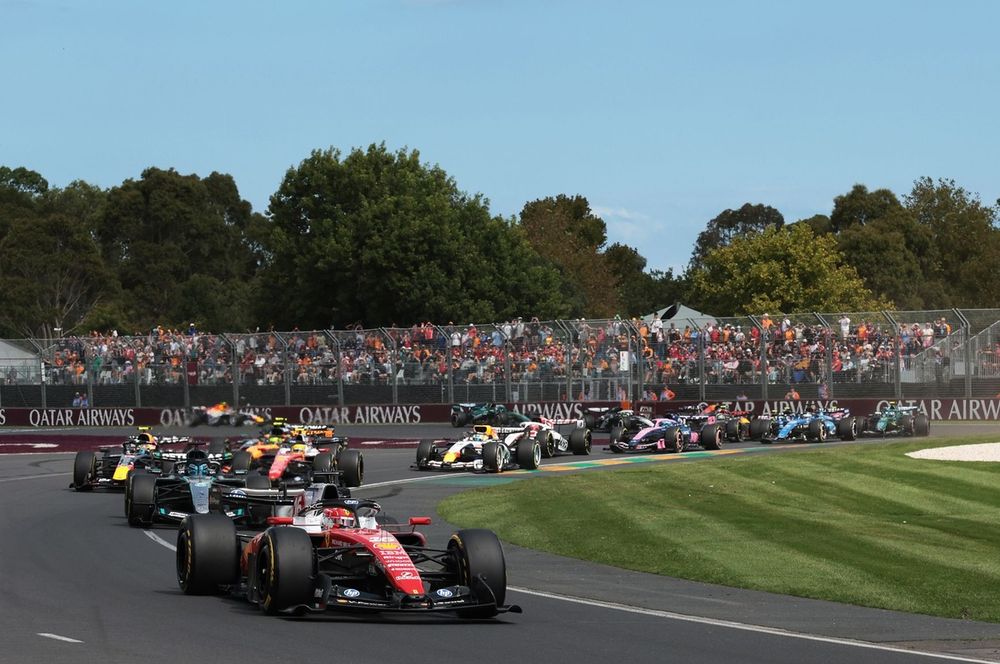
F1 Drivers Divided Over 2026 Regulations After Chaotic Australian GP
The first race under F1's radical 2026 regulations sparked intense debate, with drivers split on the new era. While Lewis Hamilton enjoyed the "fun" challenge, rivals like Max Verstappen and Lando Norris criticized the "chaotic" and "artificial" racing created by the powerful boost mode and complex energy management, setting the stage for a season of adaptation and potential controversy.
The 2026 Formula 1 season opener in Melbourne delivered a chaotic race won by George Russell, but the new technical regulations—featuring smaller cars, active aerodynamics, and a powerful 'boost mode'—have left the grid sharply divided on the future of the sport. While some drivers praised the increased action, others criticized the racing as overly artificial, frustrating, and dangerously unpredictable.
Why it matters:
The polarized reaction highlights a fundamental tension in F1's evolution: the push for closer racing and overtaking versus the preservation of driver skill and natural competition. The 2026 rules represent the most significant technical shift in a generation, and if a majority of drivers remain unhappy, it could force the FIA to consider mid-season adjustments or rethink the long-term direction of the sport's engineering philosophy.
The Details:
Driver feedback from Melbourne fell into three clear camps: the critics, the pragmatists, and the supporters.
- The Critics voiced strong concerns about artificiality, safety, and fun.
- Lando Norris (McLaren): Called the boost mode "chaos" and predicted a "big accident," describing the racing as "very artificial" and at times leaving drivers powerless as they get overtaken by multiple cars.
- Max Verstappen (Red Bull): Simply labeled the experience "chaos" and urged the FIA to focus on the rules, stating he cares about the sport and "want[s] it to be better than this."
- Sergio Perez (Cadillac): Said it's "a lot less fun" than before, calling the amount of energy management "not great" and the racing "too artificial."
- Esteban Ocon (Haas): Found it "very frustrating," describing a ping-pong effect where overtakes are immediately reversed on the next straight due to energy depletion.
- Carlos Sainz (Ferrari): Expressed safety worries, calling the first lap "really sketchy" and difficult to control with everyone using the boost mode.
- The Pragmatists acknowledged the challenges but urged patience or focused on adaptation.
- Charles Leclerc (Ferrari): Admitted it changes racing to a more strategic, multi-step-ahead game, where every boost activation comes with a heavy future price.
- Pierre Gasly (Alpine): Suggested "we need to give it some time," noting the unique challenge of Melbourne and that "we're taking quite a bit away from the pure driving."
- George Russell (Mercedes): Noted it's "definitely different" but argued critics should "give it a shot," pointing out that fan reaction to the race itself was positive.
- Gabriel Bortoleto (Audi): Said he was "still a bit confused," explaining that overtakes are no longer predictable and require calculating energy states for several subsequent straights.
- The Supporters found positives in the new challenge and the racing it produced.
- Lewis Hamilton (Mercedes): Stood apart, saying he "personally loved it," thought the race was "really fun to drive," and enjoyed watching the battles ahead.
- Kimi Antonelli (Mercedes): Felt it was "better than what we all anticipated," creating a lot of action in the opening laps, and advised waiting a few more races before judging.
What's Next:
The debate is far from settled. Melbourne's street circuit layout may have amplified the regulations' extremes, and the true test will come at a variety of tracks like Imola, Monaco, and Silverstone.
- The vocal criticism from top stars like Verstappen and Norris will put pressure on the FIA and F1 to review the implementation of the boost mode and energy management rules, potentially leading to in-season clarifications or adjustments.
- Teams and drivers will continue their steep learning curve, optimizing strategies for when to deploy and harvest energy. As understanding deepens, racing may become more nuanced and less chaotic.
- The central question remains: Can the sport find a balance where the technology creates exciting competition without undermining the core skill of the driver? The next few races will be crucial in shaping the answer and the long-term reception of the 2026 era.