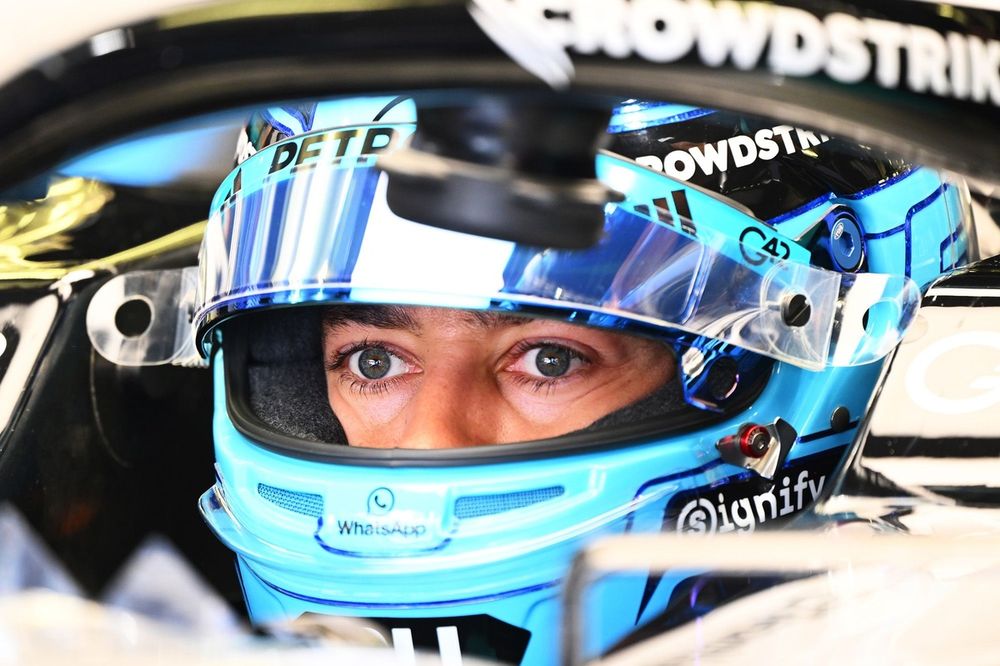
F1 drivers grapple with 'worse than worst ever' race starts under new 2026 procedure
F1's new 2026 race start procedure, requiring a 10-second turbo spool, is causing major headaches. George Russell labeled his practice starts as the worst of his career, while Ferrari shows an early advantage. Drivers warn that botched launches could cost multiple positions, making starts a critical and unpredictable factor in the early season races.
Formula 1's new race start procedure for the 2026 season is proving to be a significant and divisive challenge, with Mercedes' George Russell calling his practice attempts "worse than my worst ever start in F1." While Ferrari appears to have adapted strongest so far, drivers and teams are scrambling to master the complex process, which could dramatically shuffle the order in the opening laps of early races.
Why it matters:
The revamped start sequence, necessitated by the removal of the MGU-H from the power units, has become the early focal point of the new season. A procedure that was once smooth and instantaneous is now a high-stakes, multi-step operation where a tiny mistake can trigger anti-stall and cost multiple grid positions. This elevates race starts from a routine skill to a potential race-defining variable, especially in the opening rounds.
The Details:
- A New Hurdle: Drivers must now rev their engines for at least 10 seconds to spool up the turbo, a stark contrast to the near-instant power delivery of the previous hybrid era. Russell emphasized this, stating, "At this stage, I don't think it matters how quick you are. The thing that's going to trip you up is going to be that tallest hurdle."
- Ferrari's Early Edge: Observations from testing indicate the Ferrari power unit has shown particular strength on starts. Kimi Antonelli, Russell's teammate, confirmed, "The Ferrari power unit looked very strong on starts," after seeing Lewis Hamilton's practice start vault from P11 to P1.
- Driver Consensus on Difficulty: The sentiment is universal among drivers that starts are now vastly more complicated.
- McLaren's Oscar Piastri explained the process is "trickier from every single angle," citing the management of power and the specific engagement point of the MGU-K.
- Piastri also noted the potential for huge losses, previously estimating a bad start could cost "up to seven spots," a view supported by the dramatic position swaps seen in testing.
- A Safety Debate: The change has sparked a safety discussion among team principals. McLaren's Andrea Stella has called for "imperative" tweaks, while Lewis Hamilton has countered, stating the starts are not "dangerous."
What's Next:
The chaotic practice starts seen in Bahrain testing are likely a preview of the opening races, where mastering the procedure will be as critical as raw car pace.
- Drivers like Piastri predict early races could feature similar dramatic launches and stalls as everyone is on a steep learning curve. "We're all kind of learning what makes a good start, what makes a bad start," he said.
- However, the field is expected to converge on solutions and techniques as the season progresses. Teams like Mercedes are already working on fixes, with Antonelli noting a "good step forward" after setup changes on Friday.
- The FIA is monitoring the situation and has already scheduled a trial of a tweaked procedure during the test, indicating the governing body is prepared to intervene if safety or competition concerns persist.