F1 reveals six potential fixes for 2026 regulations ahead of crucial summit
F1 is convening an urgent summit to address critical flaws in the 2026 regulations, with six potential fixes on the agenda. Key issues include safety concerns from dangerous speed differentials, a ruined qualifying format, and severe straight-line speed drop-offs. Solutions range from tweaking energy harvest rules to simplifying the entire rulebook, with changes possible as early as next month.
Formula 1 stakeholders are set for an urgent meeting next week to address critical flaws in the 2026 technical regulations, with six key solutions on the table for discussion. The early races have exposed significant issues with safety, qualifying spectacle, and on-track performance, prompting a push for immediate rule tweaks that could be implemented as soon as the Miami Grand Prix in May.
Why it matters:
The swift move to amend the rules underscores the severity of the problems identified in the new era. With driver safety concerns heightened after Ollie Bearman's high-speed crash in Japan and widespread criticism over the diminished spectacle of qualifying, the sport risks alienating fans and participants if these core issues are not resolved promptly. This summit represents a critical test of F1's ability to adapt its own regulations mid-cycle.
The Details:
The April 9 meeting will focus on three priority areas, with interconnected solutions proposed for each.
- Safety & Closing Speeds: The dangerous speed differentials created by the 2026 cars' energy management, starkly illustrated by Bearman's Suzuka crash, is the top concern. The goal is to reduce the need for extreme "lift and coast" tactics that create huge closing speeds between cars.
- Saving Qualifying: The current format is widely panned, as excessive energy management kills the flat-out, on-the-edge laps that define Q3. Drivers are frustrated by algorithm quirks and a lack of pure pushing.
- The 'Vmax' Problem: A major visual and performance issue is the severe speed drop-off at the end of straights when battery power depletes, which looks terrible on camera and hurts drivability.
Six potential fixes are being evaluated to tackle these problems:
- Increase Super Clipping Power: Raising the energy harvest limit during full-throttle "super clipping" from 250kW to 350kW (matching "lift and coast") would make it the preferred method, reducing the prevalence of risky lift-and-coast scenarios.
- Make the Cars Slower: A counterintuitive fix where reducing the maximum battery deployment power (from 350kW) would stretch the available energy over a longer portion of the straight, preventing the drastic late-straight speed drop and potentially making qualifying more about pushing.
- Stricter Recharge Limits: Dramatically lowering the maximum energy recoverable per lap (from 9MJ to as low as 6MJ) would make it easier for drivers to hit the limit, reducing complex management. This would cost lap time but could trade outright speed for a better show.
- Overhaul Active Aero Rules: A leftfield solution to free up the use of low-drag "straight mode," potentially removing designated activation zones entirely. This would reduce drag and energy consumption, allowing battery charge to last longer.
- Engine Power Tweaks (Future): Shifting the power balance from the current 55%-45% ICE-battery split towards more internal combustion engine power would ease energy management headaches. This is likely a 2027 solution due to current engine reliability limits.
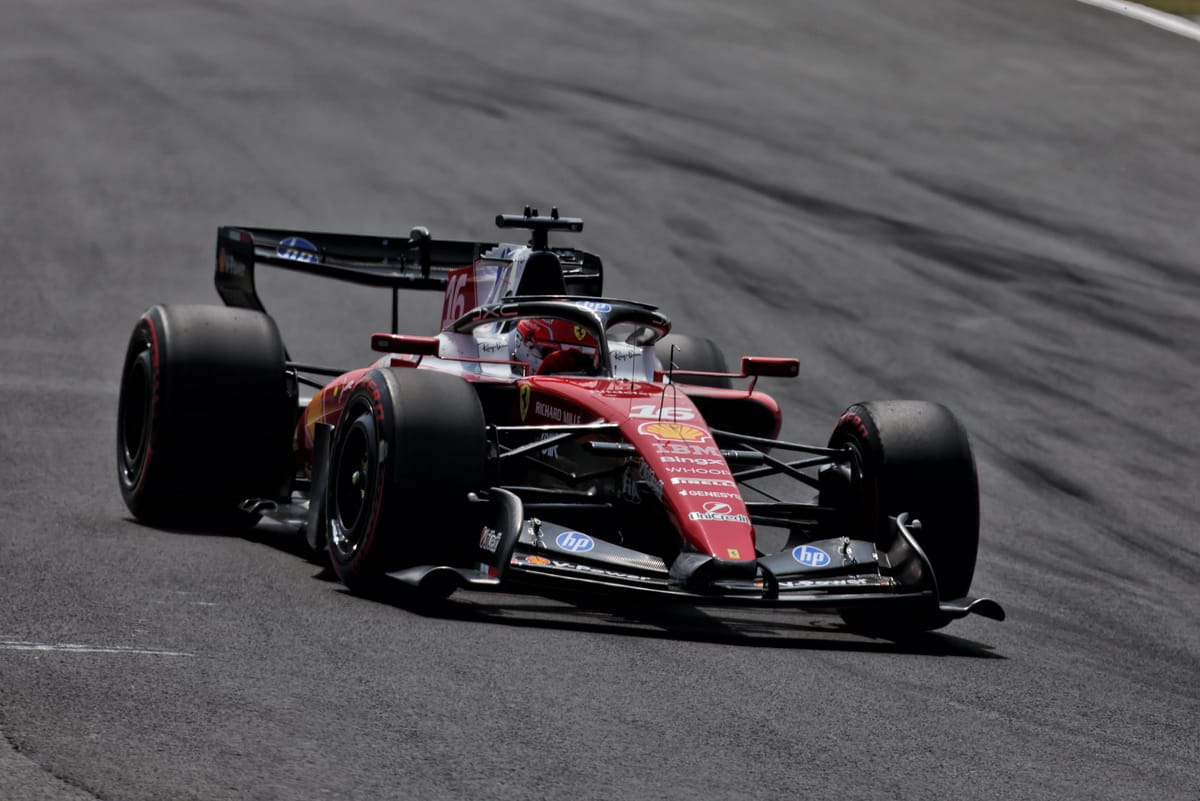
- Simplify the Rulebook: Removing algorithmic complexities and thresholds that currently confuse the cars' systems (as seen with Charles Leclerc in China) would put more control back in the drivers' hands for qualifying.
What's next:
The summit aims to agree on a package of changes for immediate implementation, with safety fixes being non-negotiable. While not all six solutions will be adopted, the meeting signals F1's reactive approach to its new ruleset. The outcome will directly shape the on-track product for the remainder of the 2026 season and could set a precedent for more agile regulation in the future.
Don't miss the next lap
Get the deep dives and technical analysis from the world of F1 delivered to your inbox twice a week.
Zero spam. Only high-octane analysis. Unsubscribe anytime.
Join the inner circle
Get the deep dives and technical analysis from the world of F1 delivered to your inbox twice a week.
Zero spam. Only high-octane analysis. Unsubscribe anytime.