F1's 2026 rules mocked by rival series over safety and 'clipping' concerns
F1's proposed 2026 technical regulations are being publicly mocked by the GT World Challenge Asia series, which criticized the complex battery and "clipping" rules. The jab comes amid serious safety concerns following Oliver Bearman's crash in Japan, linked to the dangerous speed differentials created by the new energy management system, prompting urgent calls for the FIA to revise the rules.
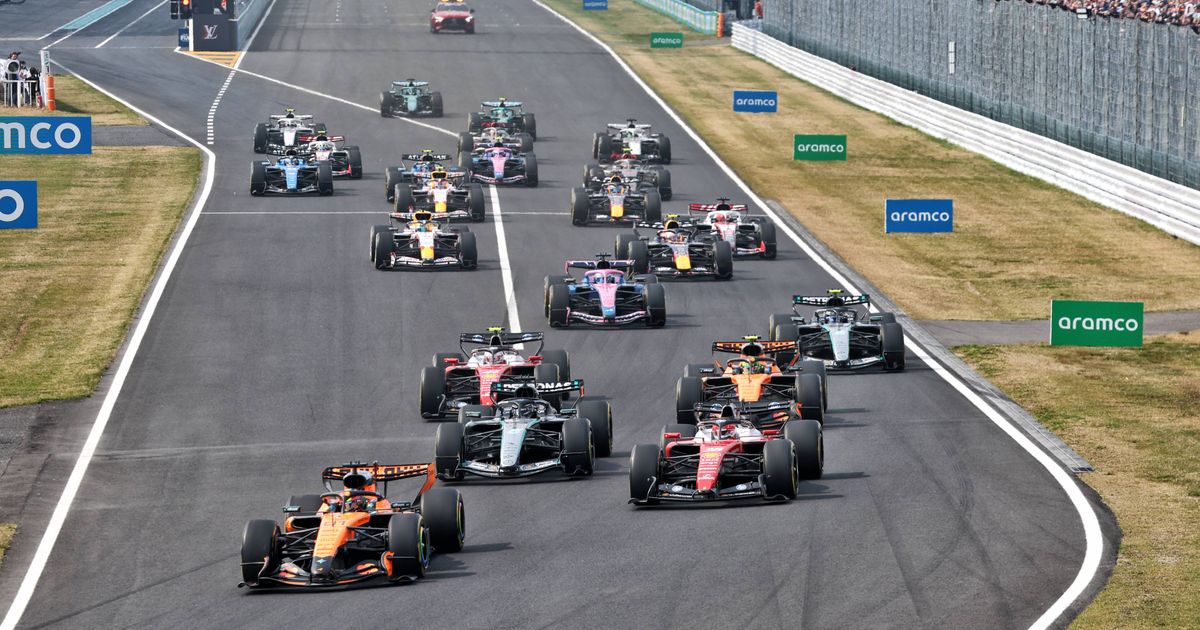
Formula 1's upcoming 2026 technical regulations are facing public mockery from a rival racing series, highlighting growing concerns over the complexity and potential danger of the new energy management rules. The criticism follows a dramatic crash at the Japanese Grand Prix, which experts have directly linked to the current 'super clipping' tactics, prompting urgent calls for the FIA to revise the rules before a fatal accident occurs.
Why it matters:
The public critique from the GT World Challenge Asia underscores a significant perception problem for F1's future direction. As the pinnacle of motorsport seeks to become more sustainable and technologically advanced, it risks alienating purist fans and creating a spectacle perceived as overly engineered and unsafe. The direct link between the new rules and a high-speed crash elevates the issue from theoretical debate to an immediate safety imperative for the governing body.
The details:
- The GT World Challenge Asia series took a direct jab at F1 on social media, posting: "2026. No Battery management. Or clipping (whatever that is). Just straight up pure racing." This public mockery reflects a sentiment among some racing communities that F1 is becoming unnecessarily complicated.
- The criticism is rooted in the visible issues with the current 2026 prototype rules, specifically the practice of "super clipping"—where drivers harvest excessive energy on a straight to deploy later, creating massive speed differentials.
- The Bearman Crash: At the Japanese GP, Haas rookie Oliver Bearman crashed heavily after suddenly encountering the much slower Alpine of Franco Colapinto. Bearman, likely harvesting energy, was traveling at a vastly different speed on the same straight. His evasive maneuver caused a loss of control and a heavy impact with the barriers.
- Expert Warnings: Analysts and former drivers have labeled the situation "dangerous" and are urging the FIA to change the rules. They argue the system, which allows cars on the same piece of track to have speed differences of up to 150 km/h, is fundamentally flawed and creates predictable, avoidable accidents.
- The warning is stark: a similar incident during a crowded start or overtaking move into a heavy braking zone like Turn 1 could result in a catastrophic, multi-car pileup with potentially fatal consequences.
What's next:
The pressure is now on the FIA to act before the 2026 regulations are fully locked in. While the governing body has already made one adjustment—reducing the maximum energy recharge in qualifying—the incident in Japan proves more fundamental changes may be needed. The coming months will be critical for the FIA to analyze data, listen to driver feedback, and potentially redesign the energy deployment rules to ensure they promote racing without compromising the fundamental safety of the competitors. Failure to do so could lead to further ridicule from the motorsport world and, more importantly, a severe safety crisis.
Don't miss the next lap
Get the deep dives and technical analysis from the world of F1 delivered to your inbox twice a week.
Zero spam. Only high-octane analysis. Unsubscribe anytime.
Join the inner circle
Get the deep dives and technical analysis from the world of F1 delivered to your inbox twice a week.
Zero spam. Only high-octane analysis. Unsubscribe anytime.
Continue Reading
View More News