F1's 'mousehole' diffuser trend makes a controversial return for 2026
The 'mousehole', a slot in the diffuser sidewall, has returned on 2026 F1 cars with Mercedes leading the trend. The design aims to control disruptive tire airflow and boost underfloor performance, but its legality under the new technical regulations may be questioned as other top teams quickly adopt their own versions.
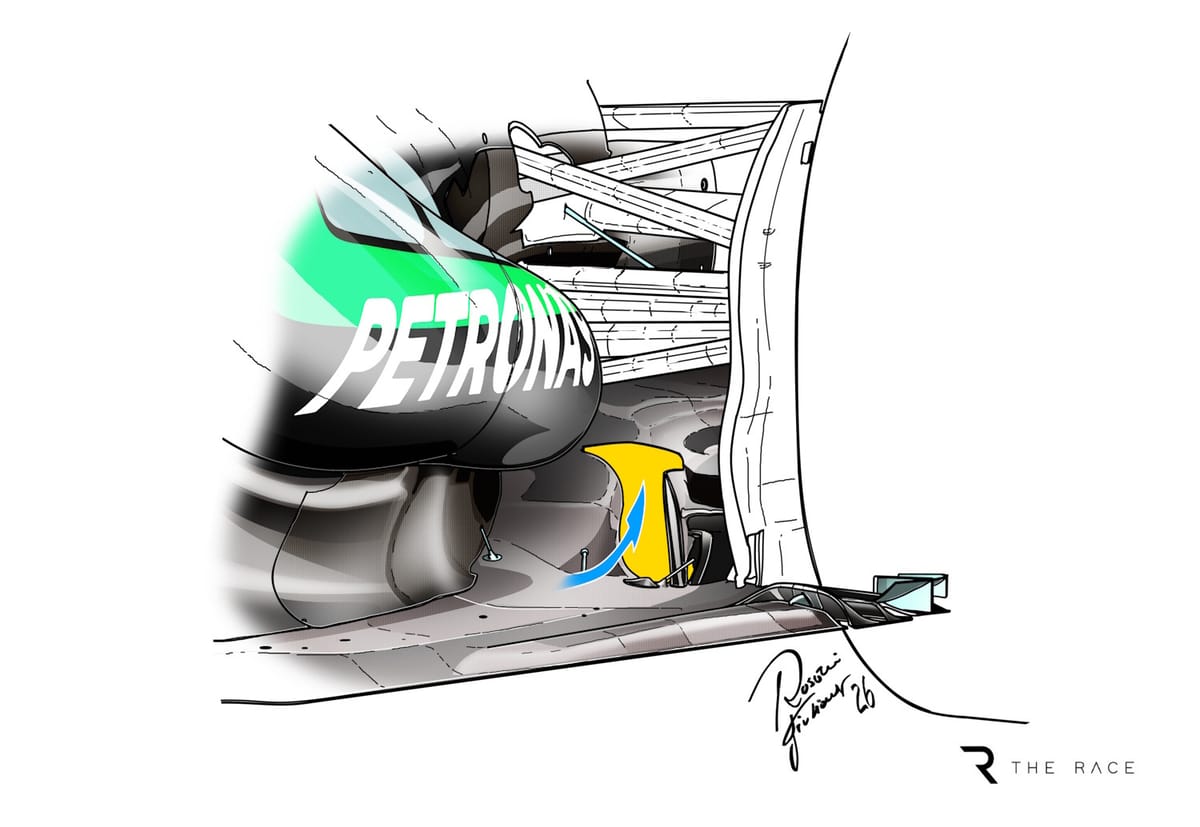
A significant aerodynamic feature from F1's past, the 'mousehole' diffuser inlet, has made a prominent comeback on the 2026 cars, with Mercedes leading a design trend that other top teams are quickly adopting. This enlarged slot in the rear floor, now humorously dubbed a 'rathole', aims to manipulate complex airflow around the rear tires and diffuser to boost overall downforce, though its legality under the new technical regulations may come under scrutiny.
Why it matters:
The reappearance of this concept highlights the relentless innovation within F1's new ground effect era, where teams exploit every possible aerodynamic trick within a tightly regulated box. Its widespread adoption by frontrunners suggests it delivers a tangible performance benefit, potentially shifting the competitive order if some teams have mastered its application better than others. The debate around its legality also reignites the classic F1 tension between ingenious interpretation and the letter of the regulations.
The Details:
- The 'mousehole' is a slot cut into the sidewall of the diffuser, just ahead of its exit. Mercedes' 2026 car features a particularly large version, positioned behind where the diffuser ramp begins.
- Primary Function: The opening is believed to pull airflow into the diffuser's expansion area. This helps manage pressure and optimize flow on the diffuser's inner wall, reducing the risk of airflow separation which would kill downforce.
- Tire Squirt Management: A key battle in ground effect cars is managing 'tire squirt'—disruptive airflow sprayed from the contact patch between the tire and track. The mousehole works in concert with other elements:
- Small louvres on the floor top surface pull air up to connect with and redirect this tire squirt.
- The goal is to maximize 'outwash' (flow pushed outward) and minimize 'inwash' (flow pushed inward), which improves the sealing of the underfloor and increases its efficiency.
- Team Adoption: Ferrari and other leading teams have already incorporated their own versions of this inlet. McLaren was the notable exception during initial testing, but is expected to reveal its interpretation soon.
What's next:
All eyes will be on the FIA's technical department to see if this design feature falls into a regulatory grey area. While the diffuser's height is strictly controlled, the rules may not explicitly define the legality of a 'cutout' versus a 'hole' in its sidewall. As teams converge on this solution, the development race will focus on who can optimize the surrounding airflow structures—like the brake duct vanes and floor louvres—to extract the maximum benefit from this revived concept, making it a critical area for early-season performance gains.
Don't miss the next lap
Get the deep dives and technical analysis from the world of F1 delivered to your inbox twice a week.
Zero spam. Only high-octane analysis. Unsubscribe anytime.
Join the inner circle
Get the deep dives and technical analysis from the world of F1 delivered to your inbox twice a week.
Zero spam. Only high-octane analysis. Unsubscribe anytime.
Continue Reading
View More News