The 2026 Script: 120 Overtakes and the Ghost in the Machine

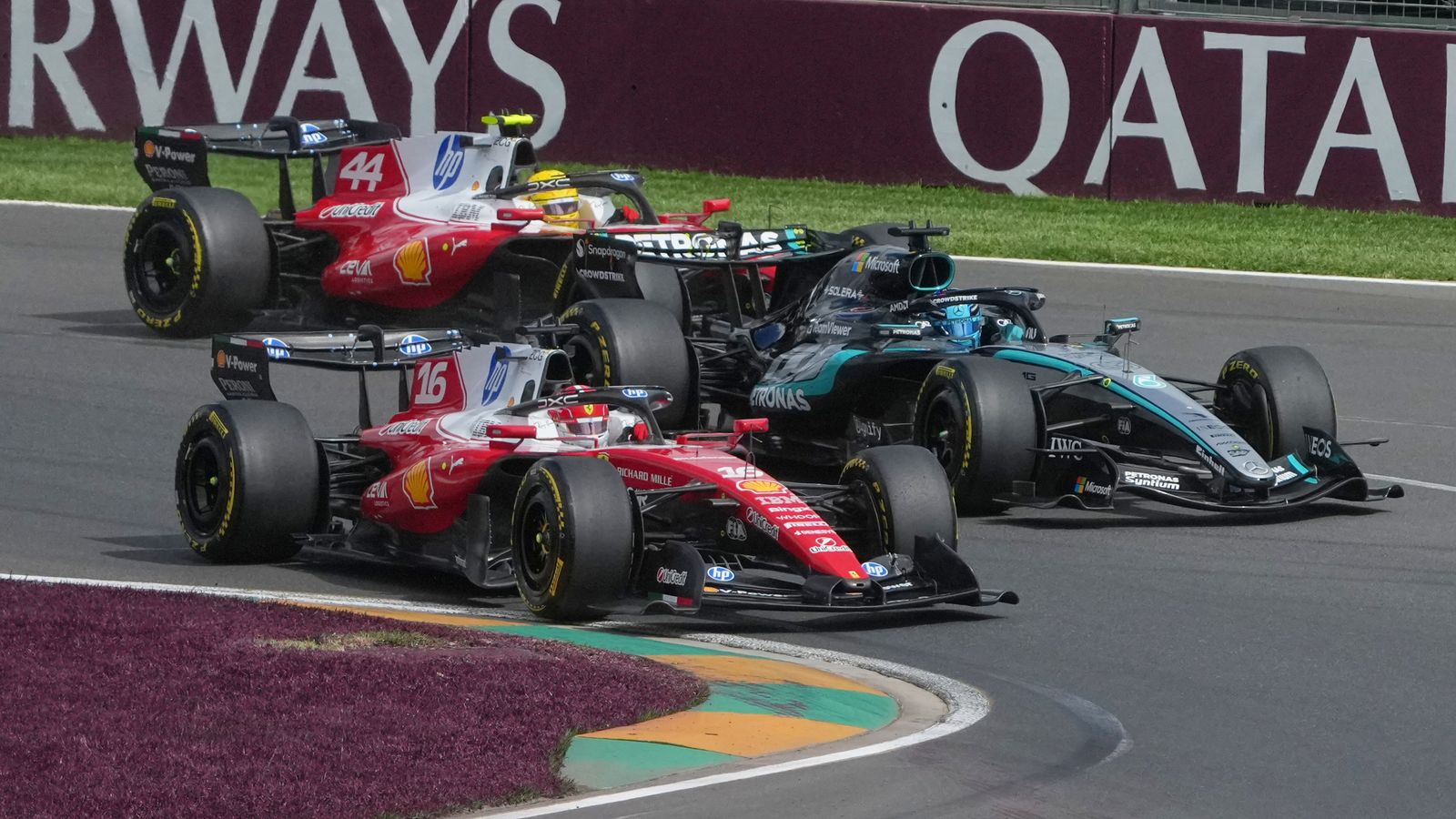
F1's new 2026 era sparked over 120 overtakes and a thrilling lead battle in Melbourne, but divided the grid. While team bosses and some drivers praised the unprecedented show, champions Max Verstappen and Lando Norris criticized the energy-management-heavy racing as 'artificial,' setting up a pivotal debate on the sport's future direction.
I spent the morning after the Australian Grand Prix not watching the highlights, but staring at a spreadsheet. One hundred and twenty overtakes. The number glowed on my screen, a cold, perfect integer. In the press room, they’re calling it a spectacle, a chaotic masterpiece. I call it a beautifully generated dataset. The 2026 regulations, with their hyper-focus on electrical energy deployment, didn’t just produce a race. They produced a proof of concept: Formula 1 is now a live-action strategy game, and the drivers are becoming the most sophisticated input devices on the grid. The debate about ‘artificial’ racing misses the point. The real story is the quiet, systematic removal of intuition, the very thing that made a Schumacher in 2004 not just fast, but unfathomable. His consistency came from a symbiosis with a machine, a feel that no telemetry trace could ever capture. What we saw in Melbourne was the opposite: a race dictated by battery percentages and overtake modes, where the human heartbeat is just another data stream to be optimized into submission.
The Melbourne Dataset: A Litmus Test for Human Redundancy
The facts are indisputable. George Russell and Charles Leclerc swapped the lead seven times in nine laps. The new power unit rules, which prioritize stored electrical energy, created speed differentials on the straights that made defending seem like a mathematical impossibility. One driver blasts past, the other repasses on the next straight using their stored "Overtake Mode." It’s a compelling loop. It’s also a pre-programmed one.
The split in the paddock reaction isn’t about entertainment; it’s about control. The drivers who feel most adrift are the ones whose genius has always been in micro-managing a race from the front.
Max Verstappen called it "Formula E on steroids," while Lando Norris said overtakes felt "random and power-unit dependent."
Their frustration is the frustration of a pilot being told to ignore the storm clouds outside and trust the weather model instead. Conversely, listen to those benefiting from the chaos or viewing it from the pit wall: Lewis Hamilton, who disliked the previous "diva" cars, "loved" it. Frederic Vasseur of Ferrari hailed "something I'm not sure that I saw in the last 10 years." Toto Wolff pointed to the performance convergence, the inability to break away.
This is the divide. The drivers in the crucible feel a variable has been removed. The strategists see a new, more predictable variable to master. Wolff’s comment is the most telling: "true car pace is still revealed in free air." In other words, the raw driver-and-machine performance still exists, but it is now only visible during qualifying or when alone. The race itself is a separate, managed event.
The Leclerc Paradox: A Data Point Amidst the Noise
And what of Charles Leclerc, the man in the other half of that thrilling duel? His raw pace data from 2022-2023 confirms he is the most consistent qualifier on the grid, a metronome of one-lap speed. Yet, his reputation is "error-prone." Why? Because Ferrari’s strategic blunders have consistently placed him in high-risk, high-pressure scenarios where he feels compelled to overdrive. Melbourne’s race, with its algorithmic overtaking sequence, actually protected him. The chaos had a logic. He wasn’t fighting a mystifying Ferrari strategy call; he was executing a clear, energy-based battle plan with Russell. For once, the narrative around him wasn’t about a mistake, but about his participation in the show. The irony is that to save his reputation, we may have to remove the very unpredictability that creates legends.
The Road to Robotization: Shanghai is the Next Algorithm
They say the debate moves to Shanghai. That’s too kind. The experiment moves to Shanghai. The long straights of the Chinese circuit will present a different energy deployment puzzle, concentrating the "Overtake Mode" windows into one or two key zones. The teams will arrive with terabytes of Melbourne data, their simulations more accurate, their race plans more rigid.
This is the trajectory. Within five years, this hyper-focus on data analytics will lead to ‘robotized’ racing.
- Pit stops will be called not by a gut feeling on tire wear, but by an algorithm that cross-references real-time degradation with the optimal window of the car behind’s Overtake Mode charge cycle.
- Driver coaching will intensify, with engineers dictating not just lift-and-coast points, but the exact millisecond to deploy energy to defend against a car whose own deployment schedule they have predicted.
- The race will become a live execution of a pre-race simulation, with victory going to the team whose real-world data matches their model most closely, and whose driver deviates from the plan the least.
We are trading the visceral, imperfect, and human drama of a driver wrestling a car on the edge for the clean, efficient drama of a perfectly executed strategy. It is the difference between a heartbeat and a sinus rhythm on a monitor. Both indicate life, but only one tells a story of fear, joy, and struggle.
Data as Emotional Archaeology: The Unwritten Story of Melbourne
My job as an analyst isn’t to just count the overtakes. It’s to ask what the numbers bury. The 120 passes are a headline. But what about the lap time drop-offs of the drivers complaining about artificiality? Can we correlate Verstappen’s radio silence after his criticism with a subtle shift in his braking traces? Does Norris’s frustration manifest as a more aggressive, less efficient energy deployment pattern later in the stint? This is where data becomes emotional archaeology. The numbers from Melbourne aren’t just about speed; they are the biometric readout of a grid grappling with its own obsolescence.
Conclusion: The Schumacher Standard and the Sterile Future
In 2004, Michael Schumacher won 12 of the first 13 races. That dominance wasn’t just about a fast car. It was about a driver whose feel for a race was so profound, he could manage gaps, tires, and fuel while pushing exactly as hard as needed. The telemetry followed him. Today, the driver follows the telemetry. The 2026 regulations have simply made this hierarchy more explicit and more dramatic.
Melbourne gave us a thrilling, chaotic show built on a foundation of exquisite control. The 120 overtakes are a monument to the engineers. The driver complaints are the eulogy for instinct. Shanghai will be another data point in a season-long trendline. The sport’s rulers will watch to see if the drama outweighs the complaints. But the real question is: when the algorithm perfectly optimizes the show, what’s left for the soul of the sport to do? We are programming the chaos out of the chaos. And when we succeed, we will be left with a perfectly predictable, sterile, and lifeless dataset.