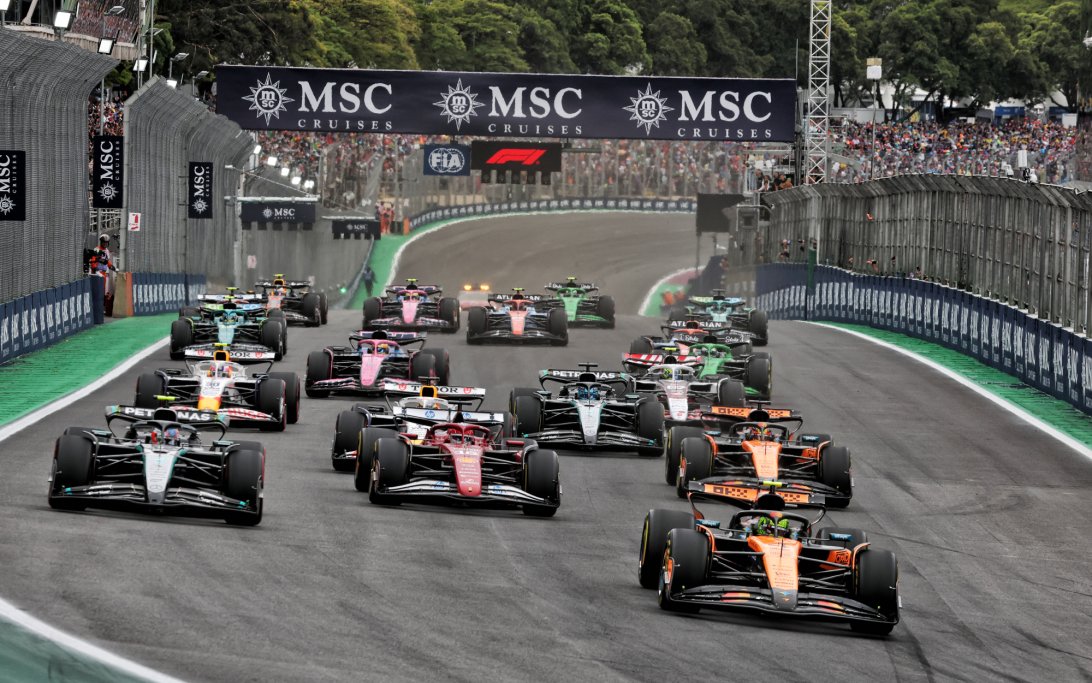
F1 Commission Delays Decision on Mandatory Two-Stop Rule Amid Broader Discussions
The F1 Commission has postponed a decision on a proposed rule mandating two pit stops per race, a move aimed at enhancing race excitement. While discussions with teams and Pirelli focused on strategy, no immediate changes were agreed, with talks continuing into the 2026 season. Other topics discussed included aerodynamic testing, new livery rules requiring 55% painted surfaces, and proposed changes to driver numbering, all awaiting WMSC approval.
The F1 Commission has deferred a decision on mandating two pit stops per race, a proposal aimed at enlivening races by combating the prevalence of one-stop strategies. The discussions involved F1, teams, and the FIA, focusing on extensive feedback and simulations from Pirelli. While no immediate changes were agreed upon, talks are set to continue into the 2026 season.
Why it matters:
- The debate over mandatory two-stop races highlights F1's ongoing efforts to enhance on-track spectacle and unpredictability.
- A rule change of this magnitude could drastically alter race strategies, driver performance demands, and the competitive dynamic, potentially making races more exciting for fans.
The details:
- Pit Stop Proposal: The core idea was to mandate a two-stop strategy for every driver to counter the rising trend of single-stop races.
- Meeting Participants: The F1 Commission meeting in London included all 10 teams, Pirelli, F1 CEO Stefano Domenicali, and FIA single-seater director Nikolas Tombazis.
- Discussions: Focused on feedback, analysis, and simulations from Pirelli and the teams regarding tyre specifications, tyre-life limits, and the use of all three dry-weather compounds.
- Outcome: "No changes were presently agreed," with discussions on this topic set to continue during the 2026 season. This means a mandatory two-stop strategy (excluding Monaco) is unlikely before 2027.
Other key discussions:
- Aerodynamic Testing Restrictions (ATR): Changes are being developed to align F1 with contemporary processing simulation technology while managing costs.
- Liveries and Driver Numbers:
- Liveries: A new rule mandates that 55% of a car's surface area (from side and above) must be covered by painted or stickered liveries, rather than bare carbon fiber. This aims to increase visual differentiation between cars, addressing the trend of unpainted cars used to save weight.
- Driver Numbers: A proposal was agreed upon to allow drivers to change their permanent race number during their career. Currently, numbers are frozen if a driver uses #1 as world champion.
- Driver Cooling System: Discussions continued on a driver cooling system, mandatory from 2026, especially in high-heat races like Singapore and the United States. Redesigns and an increased overall car weight to compensate for the system were proposed, with further talks planned with the Grand Prix Drivers' Association (GPDA).
What's next:
All proposed changes are subject to formal approval by the World Motor Sport Council (WMSC), with their next meeting scheduled for December 10th. The ongoing dialogue regarding pit stop regulations underscores F1's commitment to continuous evolution, aiming to strike a balance between sporting integrity and fan entertainment.