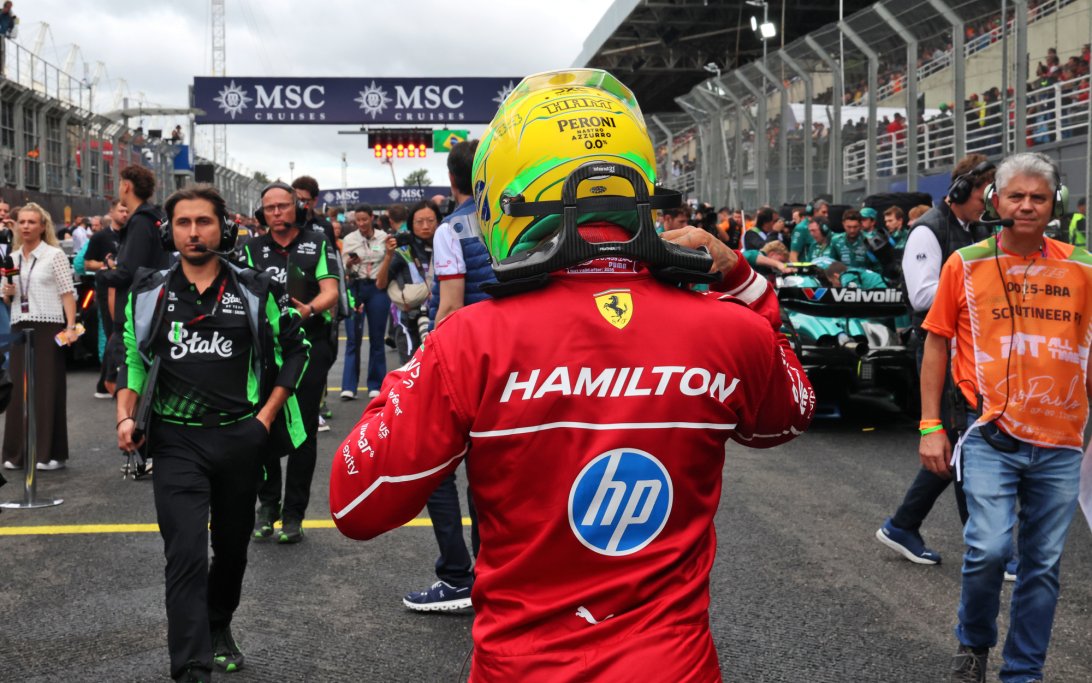
Ferrari Reveals Extent of Lewis Hamilton's Brazil GP Damage
Ferrari has revealed the devastating impact of Lewis Hamilton's opening-lap collisions at the São Paulo Grand Prix, confirming his car lost an "unprecedented 35 to 40 points of downforce." This severe damage to the SF-25's floor forced his retirement and underscored the brutal consequences of race contact in Formula 1.
Ferrari has disclosed the severe damage Lewis Hamilton's car sustained at the São Paulo Grand Prix, which ultimately led to his retirement. The SF-25 suffered significant floor damage after two separate collisions on the opening lap, resulting in a substantial loss of downforce.
Why it matters:
Lewis Hamilton's early retirement in Brazil, stemming from severe car damage, highlights the brutal reality of Formula 1 where even minor contact can have catastrophic consequences for race performance. For Ferrari, understanding the precise impact of such damage is crucial for future car development and strategic decisions during a race.
The Details:
- Double Collision: Hamilton was involved in two incidents on the opening lap. The first was with Carlos Sainz at Turn 1, followed by a clip with Franco Colapinto's Alpine at the end of the first lap, which saw Hamilton lose his front wing.
- Severe Downforce Loss: Team principal Fred Vasseur confirmed that Hamilton's car was "missing 35 to 40 points of downforce." This figure is nearly double the 20 points of downforce lost in Canada earlier in the season when Hamilton hit a groundhog, which had equated to roughly half a second per lap.
- Retirement Decision: After serving a five-second penalty for causing a collision with Colapinto, Ferrari made the strategic decision to retire the car on lap 37. Vasseur noted that with such a significant downforce deficit and no realistic chance of scoring points, continuing the race would only risk further damage to the engine.
- Comparison to Verstappen: Vasseur implicitly contrasted Hamilton's situation with Max Verstappen's performance, who managed to finish third after starting from the pit lane, underscoring that while comebacks are possible with a decent car, two significant crashes make it "too much."
The big picture:
This incident underscores the fragility of modern F1 cars, particularly their floors, which are critical for generating downforce. Even seemingly minor contact can compromise aerodynamic performance to an extent that makes the car uncompetitive. For Ferrari, this adds another learning curve in managing race incidents and optimizing car resilience for future seasons.
What's next:
Ferrari will undoubtedly conduct a thorough analysis of the damage to understand its precise origins and impact on car performance. This information will be vital for ongoing development, particularly as teams look towards refining car designs and materials to withstand the rigors of F1 racing more effectively. The focus will be on ensuring such a significant loss of performance is mitigated in future incidents.