Ferrari rules out protesting Mercedes engine trick at Australian GP
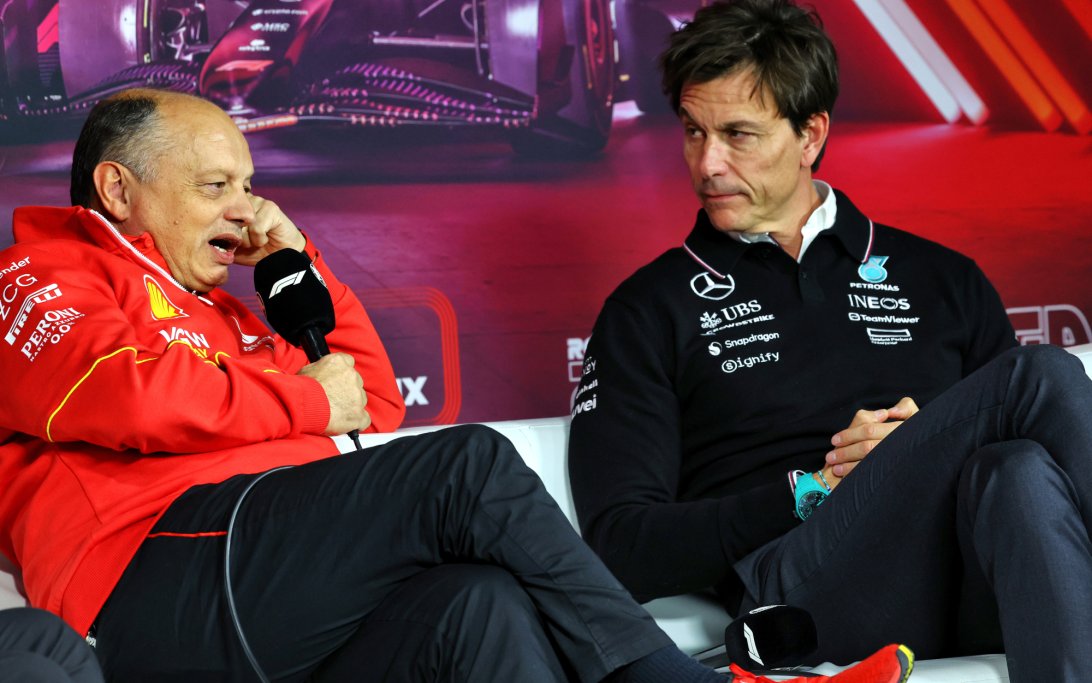
Ferrari will not protest Mercedes' controversial high-compression engine design in Australia, choosing to seek regulatory clarity instead. Team principal Fred Vasseur emphasized resolving differing rule interpretations through technical meetings, as manufacturers race against a March 1st deadline to settle the dispute before 2026 engine homologation.
Ferrari will not launch a formal protest against Mercedes-powered teams at the Australian Grand Prix over a controversial engine trick, with team boss Fred Vasseur emphasizing the need for regulatory clarity instead. The decision comes amid ongoing high-stakes negotiations between Formula 1's power unit manufacturers to resolve a dispute over Mercedes' innovative high-compression ratio design before a key 2026 homologation deadline.
Why it matters:
This move avoids immediate on-track controversy but highlights a significant technical and regulatory battle shaping F1's 2026 engine era. The core issue—whether a clever interpretation of the rules constitutes a fair innovation or an unfair advantage—strikes at the heart of F1's competitive balance. How this dispute is resolved will set a crucial precedent for the new regulatory cycle and could influence the performance hierarchy for years.
The details:
- The controversy centers on a design by Mercedes High Performance Powertrains (HPP) that achieves an increased compression ratio of 18:1 when the engine is hot, generating more power.
- Current regulations only mandate measuring the compression ratio at ambient temperatures in the pits, creating a potential loophole Mercedes has exploited.
- Ferrari, Audi, and Honda are leading an effort to change the technical regulations so the ratio is measured when engines are at operating temperature, a move Mercedes opposes.
- Red Bull Powertrains is seen as the swing vote, reportedly siding with the trio challenging Mercedes' interpretation.
- Changing the rule requires a supermajority from the Power Unit Advisory Committee (PUAC), needing four manufacturers plus support from the FIA and Formula One Management (FOM).
Between the lines:
Vasseur's stance reflects a strategic choice to fight the battle in the technical meetings rather than the stewards' room. His comments point to a broader challenge with new regulations, where "grey areas" and differing interpretations are inevitable. By calling for clarity and a unified understanding, he aims to establish a fair and stable rulebook for 2026, suggesting Ferrari believes a long-term regulatory fix is more valuable than a one-race protest that may not succeed.
What's next:
All eyes are on the ongoing PUAC negotiations ahead of the March 1st deadline for 2026 power unit homologation. The positions of the FIA and FOM remain unclear but will be decisive. While Ferrari has ruled itself out, the threat of a protest in Australia from another of the seven non-Mercedes teams still looms if no agreement is reached. The outcome will either validate Mercedes' innovation or force a last-minute redesign, making the next week critical for the future engine landscape.
Don't miss the next lap
Get the deep dives and technical analysis from the world of F1 delivered to your inbox twice a week.
Zero spam. Only high-octane analysis. Unsubscribe anytime.
Join the inner circle
Get the deep dives and technical analysis from the world of F1 delivered to your inbox twice a week.
Zero spam. Only high-octane analysis. Unsubscribe anytime.
Continue Reading
View More News