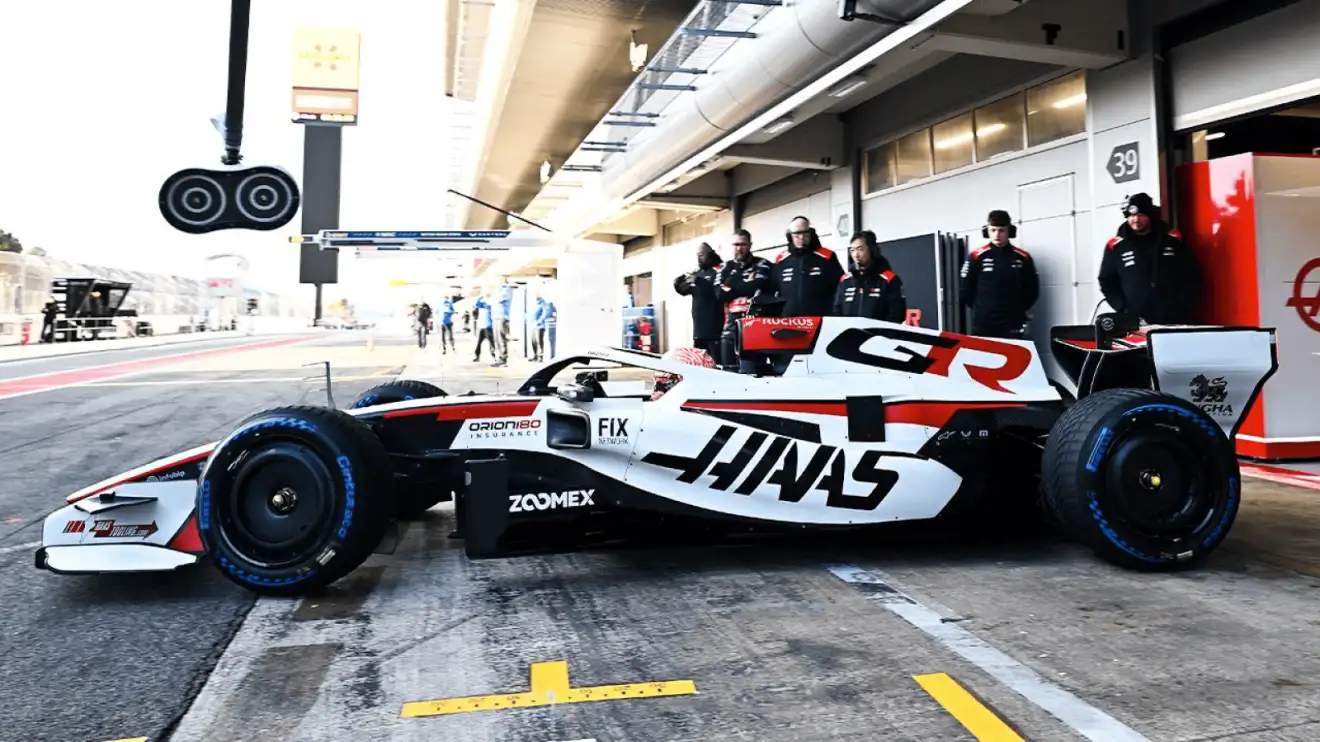
Ferrari's 2026 Race Start Edge Questioned Amid Haas 'Strange' Struggle
Esteban Ocon warns that F1's new 2026 engines could force cars to wait up to 90 seconds on the grid before a race start, citing major turbo lag issues since the removal of the MGU-H. While Ferrari's design may offer an advantage, its customer team Haas is struggling just like rivals, prompting urgent talks for a regulatory fix ahead of the Australian GP.
Esteban Ocon has raised a stark warning that Formula 1's new 2026 engines could force the leading cars to sit stationary on the grid for up to 'one minute 30' before the race begins, highlighting a significant and unexpected challenge with the new power unit regulations. This issue, which emerged during pre-season testing in Bahrain, centers on the removal of the MGU-H, leading to increased turbo lag and making it difficult for drivers to prepare their cars for launch. While Ferrari appears to have a technical edge that mitigates this problem, its customer team Haas is experiencing the same 'strange' struggles as the rest of the grid, questioning the consistency of the advantage.
Why it matters:
The race start is one of the most critical and spectator-friendly moments in Formula 1. A procedure that forces cars to wait excessively on the grid risks turning a dynamic spectacle into a static, confusing wait, potentially compromising safety with cold tires and brakes. Furthermore, if the issue creates a massive performance disparity between teams, it could unfairly dictate race outcomes from the very first corner, undermining the competitive integrity the new regulations were designed to promote.
The Details:
- The core technical change is the removal of the MGU-H (Motor Generator Unit – Heat) from the power unit. This component previously helped manage turbo lag at lower engine speeds, allowing for quicker preparation for a race start.
- Without the MGU-H, drivers now need significantly more time to get the turbo spooled and the car into the correct configuration for launch, a process Ocon described as taking much longer than in previous years.
- Ferrari's Apparent Edge: Reports suggest Ferrari's 2026 engine can operate effectively in higher gears, possibly due to a smaller turbo design, allowing it to reach its ideal launch configuration faster than its rivals.
- Haas Contradiction: Despite using a Ferrari power unit, the Haas team is not replicating this reported advantage. Driver Esteban Ocon stated the issue is "very strange" and that driver input has minimal effect, indicating the problem is deeply rooted in the car's systems.
- Competitive Consequences: Ocon warned that the variation in start performance could be drastic, with drivers potentially losing "the whole lot" of positions instead of just one or two, making the launch phase more decisive and potentially chaotic.
What's next:
The issue is set to be a priority topic at the upcoming F1 Commission meeting, where a change to the start light procedure is expected to be discussed.
- Proposals may include instituting a minimum time all cars must be stationary on the grid or delaying the start sequence to ensure every car is properly prepared, aiming to normalize the process for both competitors and fans.
- Haas Team Principal Ayao Komatsu confirmed the team is working on the issue and expects a solution to be reviewed before the season-opening Australian Grand Prix, emphasizing the need for a regulation that allows "everybody to do a decent start."
- The situation puts immediate pressure on the FIA and F1 to find a procedural fix that maintains safety and fairness without requiring a fundamental re-engineering of the new power units so close to their competitive debut.