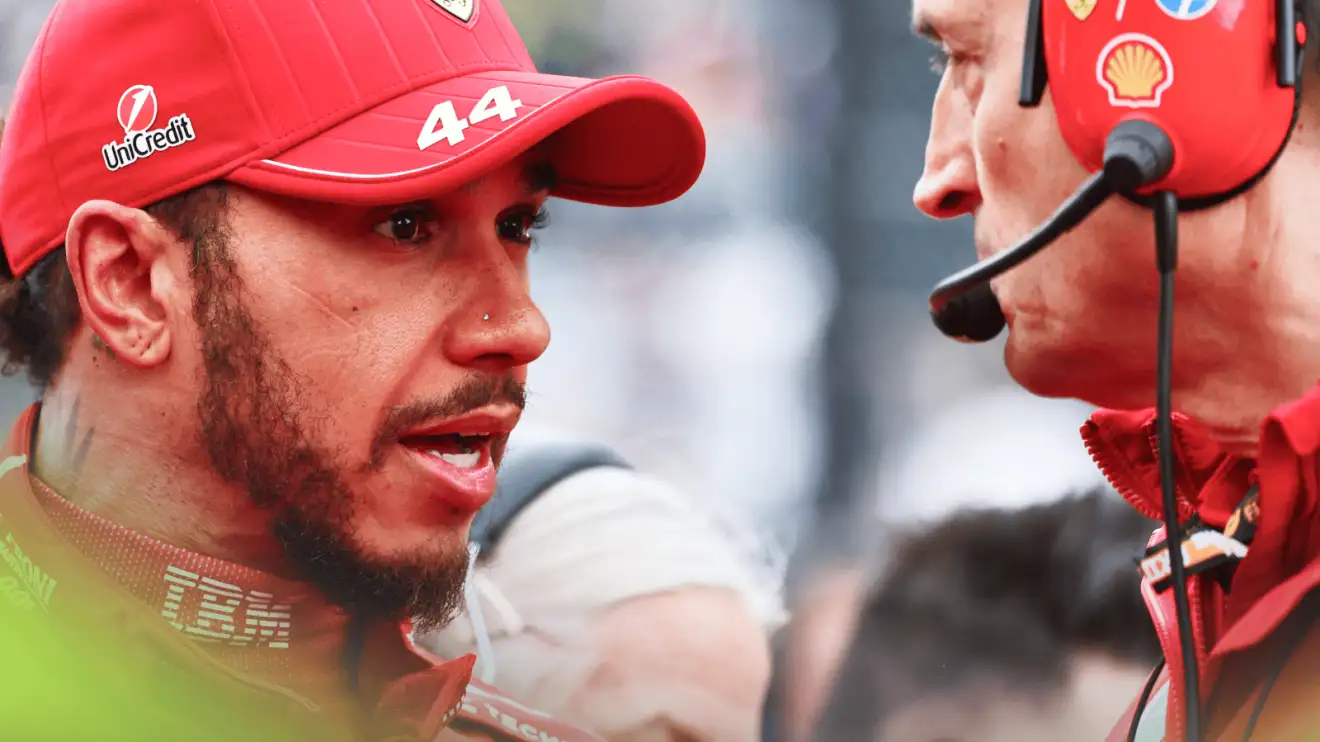
Ferrari's Hamilton Engineer Swap Sparks Debate on Driver-Team Dynamics
Lewis Hamilton starts F1 2026 with a new interim race engineer at Ferrari after a difficult 2025 with Riccardo Adami. Former Ferrari engineer Rob Smedley emphasizes the critical 50/50 balance of technical and human skills in the role, stressing that instant, confident communication is vital because "this isn't a call center."
Lewis Hamilton begins the 2026 F1 season with a new interim race engineer at Ferrari, Carlo Santi, after his challenging partnership with Riccardo Adami failed to yield a single podium last year. The move has ignited a debate about the critical, often understated role of the race engineer, with former Ferrari engineer Rob Smedley warning that effective communication is paramount and "this isn't a call center."
Why it matters:
The driver-race engineer relationship is a cornerstone of performance in Formula 1, acting as the primary strategic and technical link during a grand prix. A breakdown in this partnership, especially for a driver of Hamilton's caliber in a top team, can significantly hinder on-track results and team morale. Ferrari's decision to make a change mid-preparation for 2026 underscores the immense pressure to optimize every variable around their star signing.
The details:
- Hamilton's first year at Ferrari in 2025 was marred by radio tension and a lack of results with engineer Riccardo Adami, leading the team to reassign Adami to a different role within the company.
- Veteran engineer Carlo Santi, who previously worked with Kimi Räikkönen, will step in initially, but the arrangement is described as temporary for "a few races."
- Cedric Michel-Grosjean, formerly Oscar Piastri's performance engineer at McLaren, is widely tipped to become Hamilton's permanent race engineer later in the season.
- Hamilton expressed concern that an in-season engineer change could be "detrimental" to his 2026 campaign, though Team Principal Fred Vasseur dismissed the fuss, comparing it to normal annual personnel changes across the grid.
Between the lines:
Rob Smedley's comments highlight the nuanced balance required in the role. He describes it as a 50/50 split between technical mastery and human understanding, effectively making the race engineer the driver's "head coach." His criticism of engineers who respond with "we'll get back to you" during sessions cuts to the core of the trust issue. At over 200 mph, a driver needs immediate, confident answers to maintain focus and performance; delays or uncertainty can quickly erode the partnership. Smedley noted that while Adami had a successful run with Sebastian Vettel, sometimes partnerships simply "don't gel," drawing a parallel to his own initial struggles with Felipe Massa in 2006.
What's next:
All eyes will be on the Hamilton-Santi dynamic as the 2026 season gets underway. The interim period will be a crucial test of Ferrari's internal communication and adaptability. The anticipated later arrival of Cedric Michel-Grosjean will bring another transition, meaning Hamilton may have to build two key working relationships in one season. Ferrari's ability to manage this process smoothly will be a significant factor in whether they can provide Hamilton with the stable platform needed to challenge for victories and return to the podium.