Ferrari tests 2026 F1's new partial active aero in wet Barcelona shakedown
During a wet, private test in Barcelona, Ferrari evaluated a new 'partial' active aerodynamics mode for the 2026 F1 season. This third aero setting, which flattens parts of the front wing while the rear stays closed, was added to the rules to prevent cars from draining their hybrid batteries and wearing out skid blocks too quickly on straights.
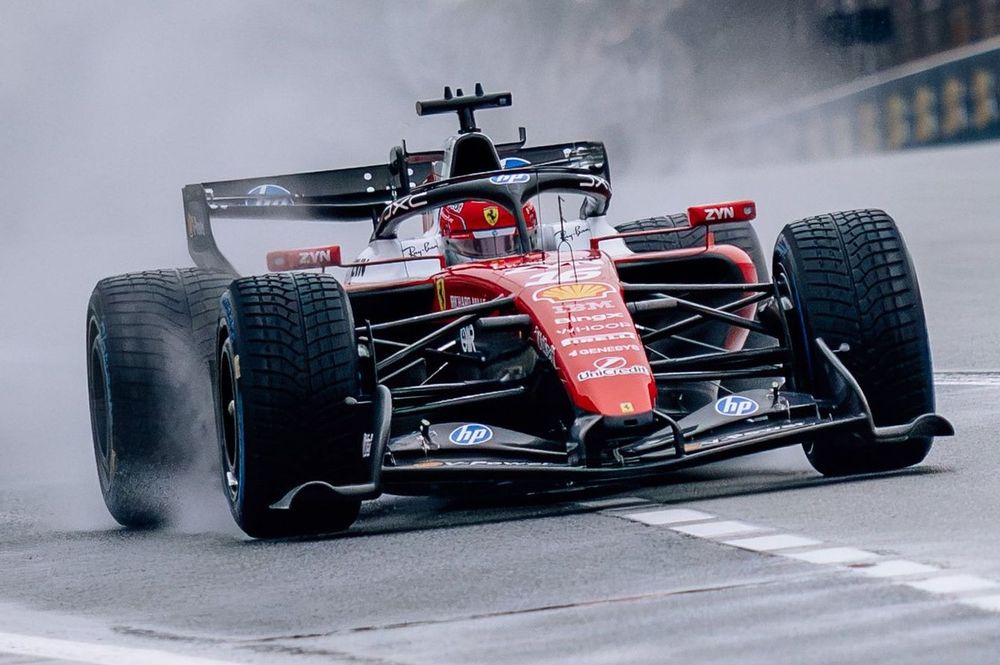
On a wet second day of Formula 1's secretive 2026 car testing in Barcelona, Ferrari's Charles Leclerc became the first driver to evaluate a crucial new 'partial' active aerodynamics mode. This third aero setting, introduced in a recent regulatory update, is designed to solve critical energy and wear issues anticipated under the new rules, marking a significant step in the sport's technical evolution.
Why it matters:
The 2026 regulations represent the most radical technical shift in a generation, centered on more efficient, sustainable cars. Active aerodynamics are a cornerstone of this plan, replacing the old DRS. The newly tested partial mode is a direct response to practical problems discovered during the rule-making process, specifically the risk of cars running out of electrical energy or excessively wearing their skid blocks on straights. Its successful implementation is vital for ensuring the racing spectacle isn't compromised by cars slowing down or facing penalties.
The details:
- The test at the Circuit de Catalunya was the second of five closed-door 'shakedown' days for the 2026 prototype cars.
- Charles Leclerc conducted the running for Ferrari, utilizing Pirelli's new full wet tires on a soaked track to gather data on the SF-26 prototype.
- The Third Mode: The key innovation tested was a partial active aero mode. While the rear wing remains in a high-downforce 'closed' position, the second and third elements of the front wing flatten out to reduce drag.
- This differs from the originally planned binary system (fully on or off) and was added to the regulations in December.
- Solving Energy Drain: A primary concern was that maintaining full downforce on straights would drain the car's hybrid battery too quickly, forcing drivers to lift off and harming the show. The partial mode mitigates this.
- Addressing Skid Wear: Following multiple disqualifications for excessive skid block wear in 2025, including McLaren's in Las Vegas, the FIA was concerned high downforce on straights would worsen the issue. The partial mode reduces downforce-induced load on the skids.
- Rule Change: The test also validated a regulatory amendment that now permits the use of active aero in wet conditions, which was previously forbidden.
What's next:
The data from this test will be analyzed by the FIA and teams to finalize the 2026 technical regulations. While the partial aero mode appears to be a necessary fix for the new power unit formula, its real-world impact on racing and overtaking remains to be seen. Teams will continue their development work based on these findings, with the final ruleset aiming to lock in a competitive and reliable package for the new era.
Don't miss the next lap
Get the deep dives and technical analysis from the world of F1 delivered to your inbox twice a week.
Zero spam. Only high-octane analysis. Unsubscribe anytime.
Join the inner circle
Get the deep dives and technical analysis from the world of F1 delivered to your inbox twice a week.
Zero spam. Only high-octane analysis. Unsubscribe anytime.
Continue Reading
View More News