Ferrari Tests Radical 'Flip-Wing' Design in Bahrain
Ferrari has unveiled a groundbreaking 'flip-wing' rear wing during F1 testing, where the main flap rotates 180 degrees to slash drag. The innovative design, still under evaluation, aims to create a unique aerodynamic advantage that rivals would struggle to copy, though its testing was interrupted by a separate car issue.
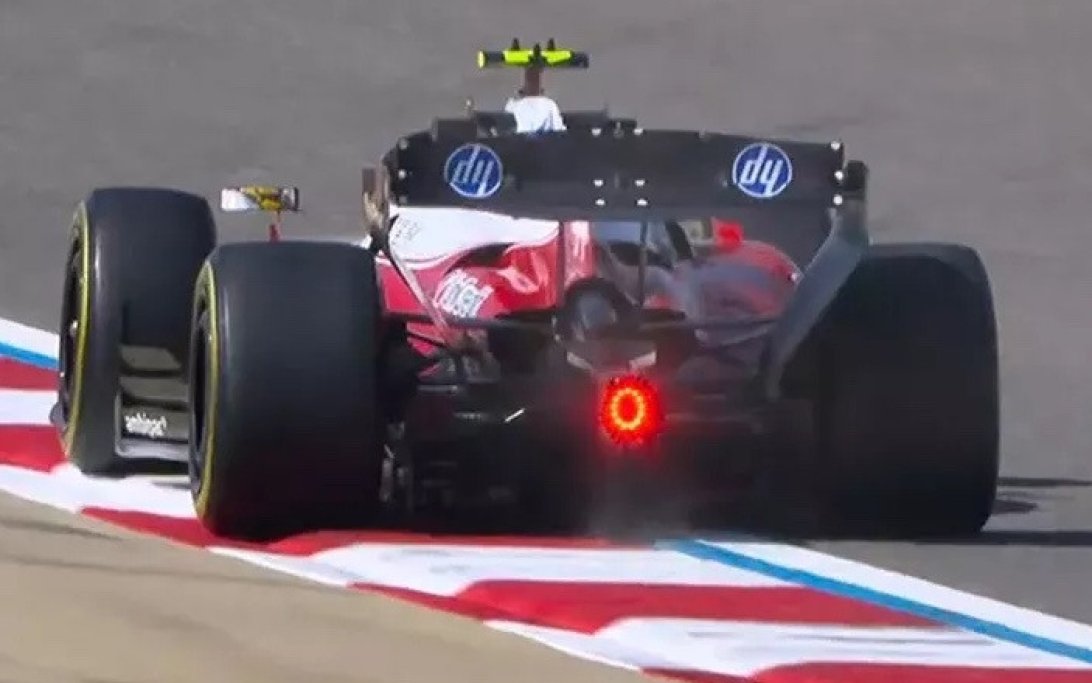
Ferrari has introduced a radical and ingenious rear-wing concept during pre-season testing in Bahrain, featuring a main flap that physically flips 180 degrees when activated. The design, aimed at maximizing straight-line speed by drastically reducing drag, is currently in the evaluation phase and was briefly run on Lewis Hamilton's car before a separate issue curtailed his morning running.
Why it matters:
This represents a significant and visible departure from conventional Formula 1 aerodynamic philosophy. If proven effective and reliable, such an innovative mechanical solution could provide Ferrari with a unique performance advantage, particularly on high-speed circuits, and force rivals to reconsider their own approaches to the new active aerodynamics (DRS) regulations.
The Details:
- The upgrade centers on the car's rear-wing main flap, which does not simply pivot open but rotates a full 180 degrees, effectively turning 'upside down' in its open position.
- The concept was first observed as Lewis Hamilton switched from straight-line speed mode back to cornering mode for Turn 1, with the wing clearly flipping back to its standard closed position.
- The underlying principle is akin to an aircraft wing, designed to create optimal lift and dump as much drag as possible when deployed.
- A key reported benefit is the wing's ability to help 'stall' the airflow over the rear of the car and the diffuser—an area where Ferrari is also testing updates—creating a compound drag reduction effect that would be extremely difficult for competitors to replicate.
- Hamilton's running with the new component was limited to just five laps in the morning session due to an unrelated car issue, meaning valuable data collection on the wing's performance was cut short.
What's next:
The focus for Ferrari will be on resolving the reliability issue that halted Hamilton's car and returning to the track to gather more data on this radical concept. Its true potential and whether it becomes a race-weekend fixture will depend on the findings from the remainder of testing. The design has immediately set a high bar for mechanical innovation in the 2025 pre-season, putting other teams on notice to scrutinize their own solutions.
Don't miss the next lap
Get the deep dives and technical analysis from the world of F1 delivered to your inbox twice a week.
Zero spam. Only high-octane analysis. Unsubscribe anytime.
Join the inner circle
Get the deep dives and technical analysis from the world of F1 delivered to your inbox twice a week.
Zero spam. Only high-octane analysis. Unsubscribe anytime.