Ferrari to Continue Testing Rotating Rear Wing in Japan After China Experiment
Ferrari plans further tests of its radical rotating rear wing at the Japanese GP after a brief and troubled debut in China. The team needs more data to ensure the device's reliability and stability, following an incident involving Lewis Hamilton, before committing to it for a full race weekend.
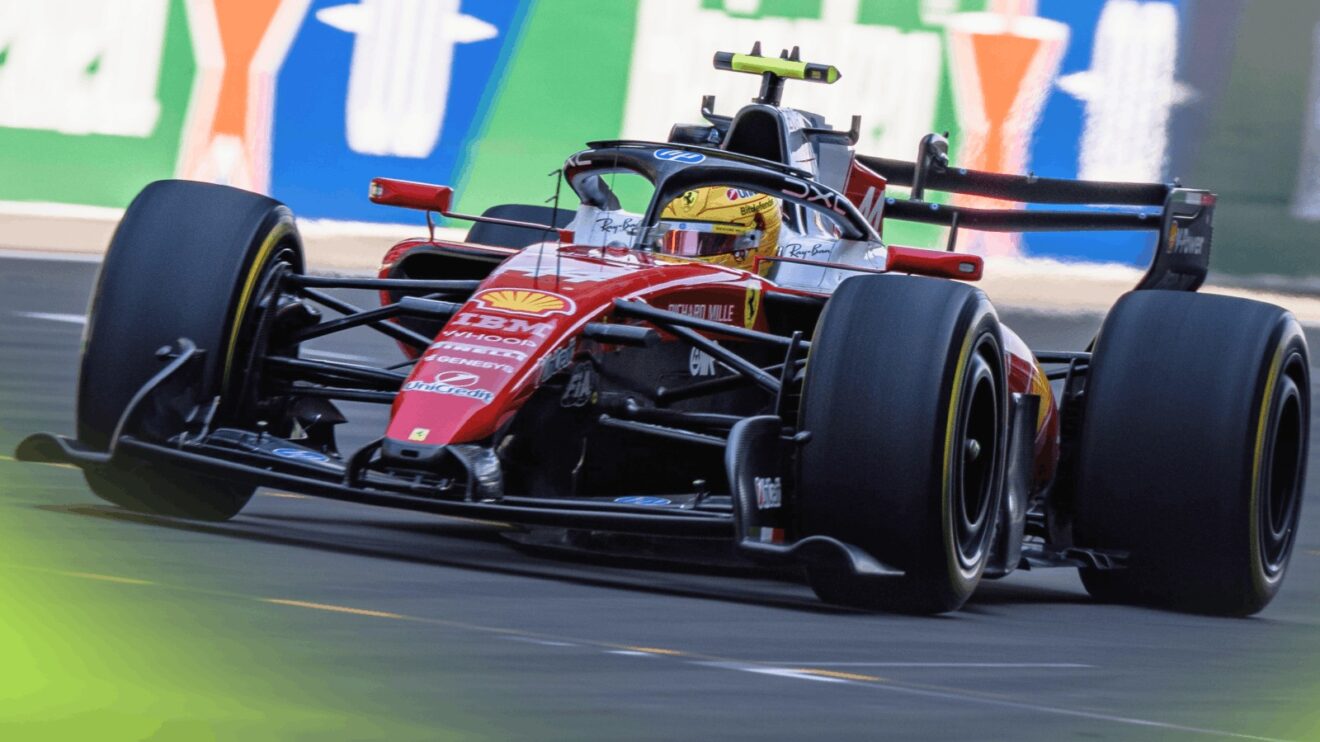
Ferrari will continue testing its innovative rotating rear wing at the Japanese Grand Prix, following a limited and premature debut of the device during the Chinese GP weekend. Team Principal Fred Vasseur confirmed the plan, stating the team needs more mileage to validate reliability before committing to a full race weekend with the new aerodynamic concept.
Why it matters:
This development represents a bold and potentially risky technical divergence from the conventional DRS flap used by the entire grid. A successful rotating rear wing could offer Ferrari a unique aerodynamic advantage, but its complex operation introduces new variables for driver control and car stability, especially under braking. The team's commitment to further testing signals confidence in the concept's ultimate performance payoff, despite the early setbacks.
The details:
- The rotating rear wing, first seen in pre-season testing, made its race weekend debut during FP1 in Shanghai, where it was fitted to the cars of Charles Leclerc and Lewis Hamilton.
- The experiment was short-lived. After just one practice session on a sprint weekend, Ferrari reverted to a standard rear wing for the rest of the event, lacking sufficient data to proceed confidently.
- The Hamilton Incident: Lewis Hamilton suffered a spin at the Turn 6 hairpin during the FP1 session. Analysis suggests the spin may have been linked to the wing's slower opening/closing cycle, which can create a temporary "sail-like" effect affecting rear stability during combined braking and cornering.
- Hamilton later admitted running the wing in China was "maybe a little bit premature," revealing it was originally slated for a debut around "race four or five" of the season.
- Technical Challenges: Rival teams have reportedly explored and dismissed similar concepts due to potential drawbacks. A key concern is the synchronization delay between the front and rear active aerodynamics, which can increase instability risk during critical braking phases.
- Vasseur dismissed concerns about airflow reattachment when asked but emphasized the current priority is building mileage and ensuring reliability in limited practice time.
What's next:
The focus now shifts to Suzuka, a demanding circuit that will provide a stern test for the wing's stability and performance in high-speed corners.
- Ferrari will use practice sessions in Japan to accumulate crucial mileage and data. Vasseur's stated goal is to reach a point where "reliability will be OK and mileage will be OK" for a full weekend introduction.
- The ongoing development highlights Ferrari's aggressive push for innovation under the 2026 regulations. Success could grant them a tangible performance edge, while failure would mean a significant investment of resources for no gain, underscoring the high-stakes nature of F1's technical arms race.
Don't miss the next lap
Get the deep dives and technical analysis from the world of F1 delivered to your inbox twice a week.
Zero spam. Only high-octane analysis. Unsubscribe anytime.
Join the inner circle
Get the deep dives and technical analysis from the world of F1 delivered to your inbox twice a week.
Zero spam. Only high-octane analysis. Unsubscribe anytime.
Continue Reading
View More News