Five Wildest Crashes Caught Onboard at the Japanese Grand Prix
Onboard camera footage from the Japanese Grand Prix captures five of the sport's most dramatic crashes, from championship-deciding collisions to accidents that changed safety regulations forever. These moments at Suzuka highlight extreme danger, driver skill, and F1's evolving safety journey.
A compilation of onboard footage reveals the most dramatic and consequential crashes in the history of the Japanese Grand Prix, highlighting moments of extreme danger, incredible driver skill, and the evolution of circuit safety. These incidents, spanning decades, have shaped races, championships, and the sport itself.
Why it matters:
The Japanese Grand Prix, with its iconic and demanding circuits like Suzuka, has been a backdrop for some of Formula 1's most pivotal and frightening moments. Reviewing these crashes is not about sensationalism but understanding the razor-thin margins at the limit of performance, the immediate risks drivers face, and how these events have directly driven improvements in car safety, track design, and race protocol.
The Details:
- Ayrton Senna & Alain Prost, Suzuka 1990: The most infamous collision in F1 history. Onboard from Senna's McLaren shows the deliberate, championship-deciding turn-one lunge that took out Prost's Ferrari, a move born from a bitter rivalry and a controversial pole position ruling the day before.
- Mika Häkkinen, Suzuka 1999: A terrifying high-speed tire failure sent Häkkinen's McLaren spearing into the tire barriers at the ultra-fast 130R corner. The onboard captures the sudden violence of the impact and the remarkable safety of the survival cell, from which the Finn walked away.
- Kimi Räikkönen, Suzuka 2005: In torrential rain during qualifying, Räikkönen's McLaren aquaplaned off at the final chicane. The onboard shows a complete loss of control at relatively low speed before a heavy, twisting impact with the barriers, underscoring the unique dangers of wet weather.
- Jules Bianchi, Suzuka 2014: The sport's darkest modern tragedy. While not typically shown in full, the circumstances—a tractor crane on the wet track under yellow flags, leading to a catastrophic collision—are seared into F1's memory. It directly led to the mandatory introduction of the Virtual Safety Car and Halo device.
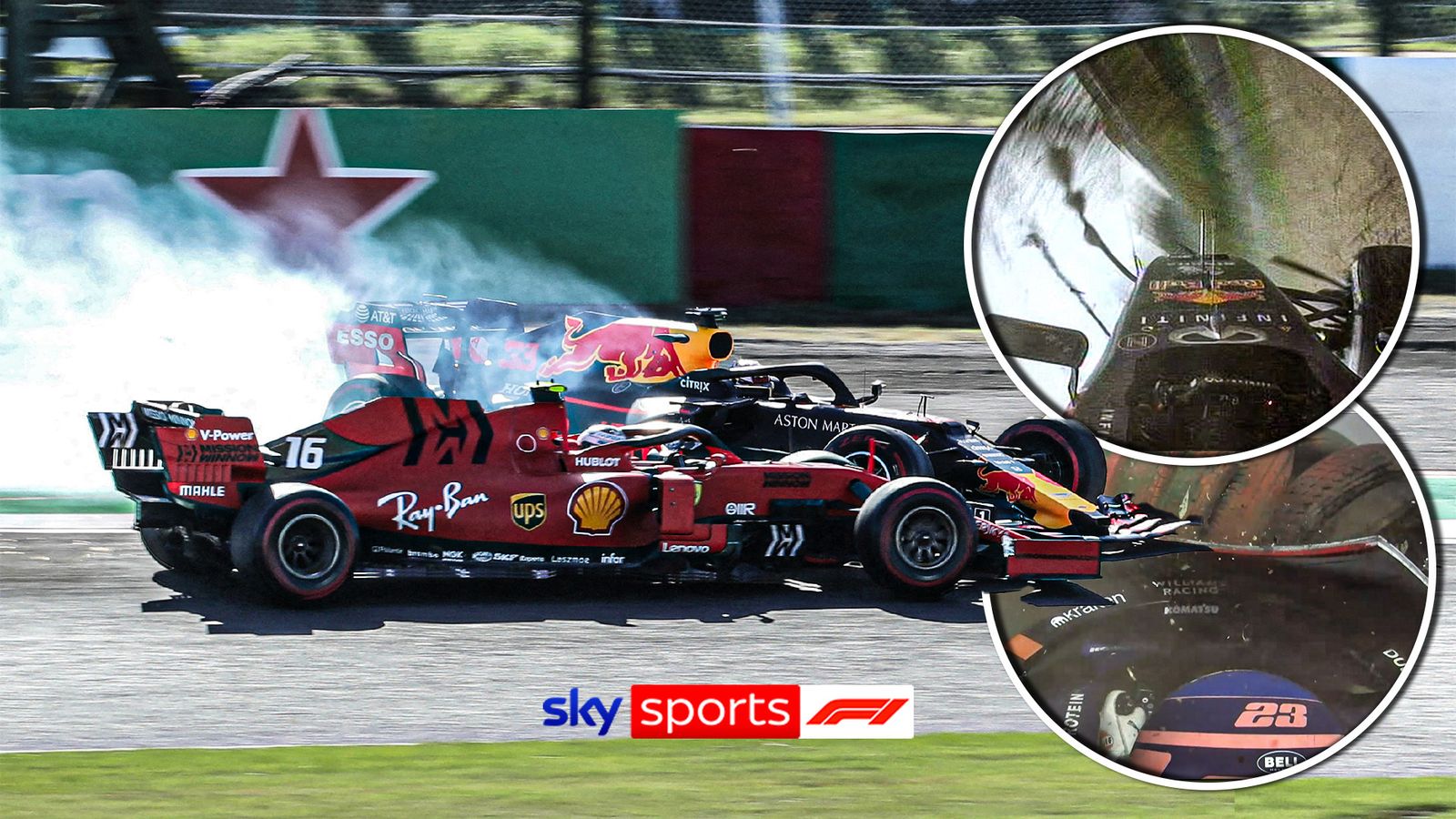
- Carlos Sainz & Max Verstappen, Suzuka 2015: A dramatic first-lap crash at Turn 1 involving the two Toro Rosso rookies. The onboard perspective, especially from Sainz, shows the chaotic, congested nature of race starts and how minor contact can launch a car into the air and out of the race.
The Big Picture:
Viewing these incidents through the onboard camera provides an unfiltered, driver's-eye view of chaos and consequence. They serve as stark reminders of the sport's inherent danger and its continuous journey towards greater safety. From Senna's intentional clash to Bianchi's accident, each event prompted introspection and change, making the cars and circuits of today significantly safer than those of the past, even as speeds continue to increase.
Don't miss the next lap
Get the deep dives and technical analysis from the world of F1 delivered to your inbox twice a week.
Zero spam. Only high-octane analysis. Unsubscribe anytime.
Join the inner circle
Get the deep dives and technical analysis from the world of F1 delivered to your inbox twice a week.
Zero spam. Only high-octane analysis. Unsubscribe anytime.
Continue Reading
View More News