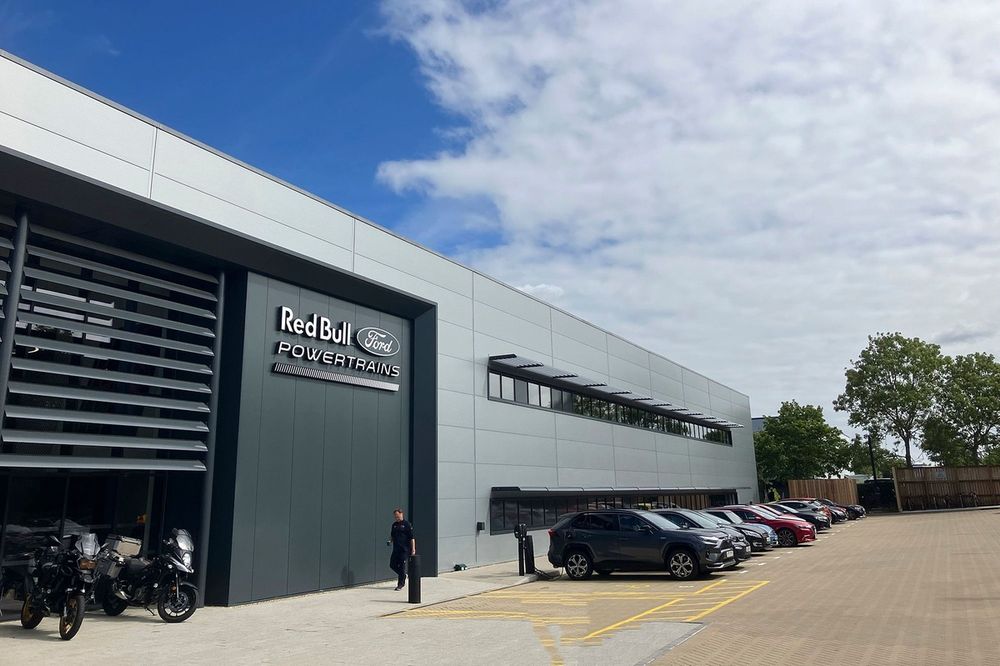
Ford's F1 history: From DFV dominance to Red Bull reunion
Ford's return to Formula 1 with Red Bull in 2026 is a poignant full-circle moment, reconnecting with a team born from its failed Jaguar project. The partnership aims to harness Red Bull's current dominance and rebuild a legacy once defined by the revolutionary, era-defining Cosworth DFV engine.
Ford's return to Formula 1 as Red Bull's engine partner from 2026 is a story of historical irony and potential redemption. The Blue Oval is re-attaching itself to a team born from the ashes of its failed Jaguar Racing project, seeking to reclaim a legacy built on the iconic Cosworth DFV engine that democratized the sport for over a decade.
Why it matters:
Ford's partnership with the reigning champion team represents a high-stakes bid to re-enter the sport's top tier as a genuine contender. With new power unit regulations arriving in 2026, this move could significantly reshape the competitive order, adding a major manufacturer to a field where engine performance is paramount. For Ford, it's a chance to rewrite the final chapter of its previous, expensive F1 foray.
The Details:
- A Full-Circle Moment: Red Bull Racing was purchased from Ford for a nominal £1 in 2004 after the costly failure of the Jaguar Racing experiment. The new partnership allows Ford to align with a now-dominant operation.
- The DFV Revolution: Ford's true F1 legacy was forged with the Cosworth DFV V8. Introduced in 1967 with Lotus, its design as a stressed chassis member made it light and powerful, leading to immediate success.
- Democratizing the Grid: Ford's decision to sell the DFV to any team that could afford it transformed F1 in the 1970s. It powered 12 Drivers' and 10 Constructors' championships between 1968 and 1982, becoming the default engine for privateers and giants alike.
- The Turbo Struggle and Jaguar Era: Cosworth was slow to adopt turbocharging, losing its edge in the 1980s. A late-90s revival with Stewart Grand Prix led Ford to buy the team, rebrand it Jaguar, and subsequently endure a costly, politically fraught period with little success before the sale to Red Bull.
- The Final Win: The last Ford-powered victory came in bizarre circumstances at the 2003 Brazilian GP, where Giancarlo Fisichella's Jordan was declared winner days after the race.
What's Next:
All focus is on the 2026 season and the next generation of F1 power units.
- Ford's technical contribution to the Red Bull Powertrains project will be scrutinized as the team aims to defend its titles against works operations from Ferrari, Mercedes, Honda, and Audi.
- The collaboration is a calculated risk for both parties: Red Bull gains manufacturer branding and resources, while Ford gets a top-tier competitive platform without the astronomical cost and operational burden of running its own team. Success would finally eclipse the memory of the Jaguar era and cement a new, winning chapter in Ford's long F1 history.