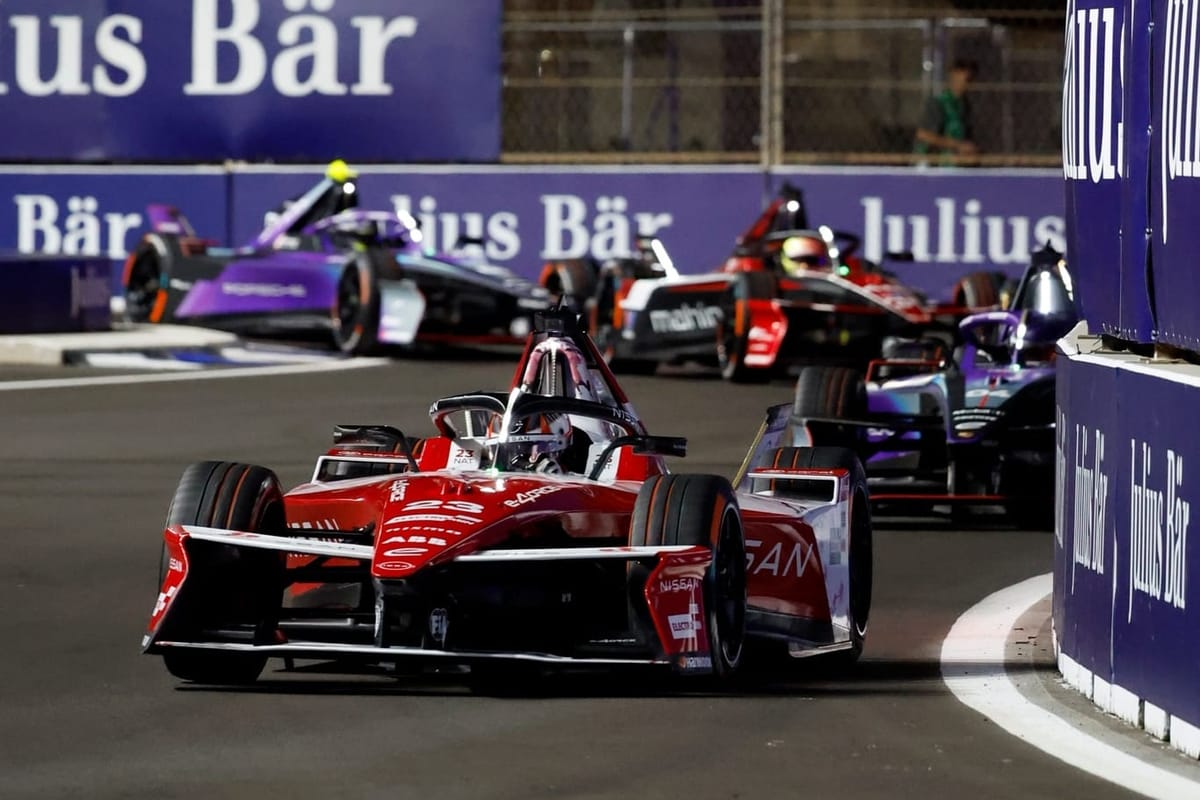
Formula E's Growing Challenge to F1's Performance and Prestige
Max Verstappen's criticism of F1's 2026 energy-focused rules has spotlighted Formula E's advanced electric technology and rising performance. With major manufacturer backing for its next-gen Gen4 car, Formula E is poised to significantly close the lap time gap to F1, challenging perceptions and setting the stage for a new era of motorsport rivalry defined by efficiency and innovation.
Max Verstappen's recent criticism of Formula 1's 2026 energy-focused regulations as "anti-racing" has sparked a wider debate, inadvertently highlighting the technical sophistication and growing performance potential of Formula E. The electric series is poised for a significant leap with its upcoming Gen4 car, a development that major manufacturers like Porsche, Nissan, Stellantis, and Jaguar are backing for the 2026-2030 period. Formula E CEO Jeff Dodds argues the series has long mastered the complex energy management that F1 is only now adopting, and its next-generation cars could begin to rival F1's lap times within a few years.
Why it matters:
Verstappen's comments frame a pivotal moment in motorsport's evolution. As F1 integrates more hybrid power and faces speed reductions, Formula E is accelerating its technical roadmap. The convergence raises fundamental questions about the future definition of premier single-seater racing, performance benchmarks, and which series best represents automotive innovation. Formula E's claim to exclusivity on all-electric single-seaters until 2045 adds a strategic dimension, potentially boxing F1 into a specific technological niche.
The details:
- Performance Trajectory: The Gen4 Formula E car, set to debut in 2026, is projected to be at least two seconds per lap faster than a Formula 2 car. Its planned "Evo" evolution in late-2028, if regulations permit, could slash lap times further, bringing performance close to Japan's Super Formula series—which itself laps only 7-9 seconds off F1 pace at circuits like Suzuka.
- Technical Contrast: Formula E's challenge comes with a radically different technical philosophy. It employs all-wheel drive and will feature 600kW of power, promising a 30% faster launch off the line than a current F1 car. However, it operates with minimal aerodynamic development compared to F1's complex aero, a deliberate cost-saving measure.
- Driving Complexity: Current Formula E drivers, like Stoffel Vandoorne, describe the cars as requiring a "degree level" of intellect to optimize energy deployment and regeneration—a skill set F1 drivers will now need to hone under the 2026 rules.
- The Cost Divide: The financial scale is starkly different. Formula E operates on a cost cap of approximately €28 million over two seasons for teams and manufacturers. In contrast, F1's budget cap for 2025 stands at about $215 million (€185 million) per team per season.
The big picture:
Dodds framed Verstappen's critique as a matter of taste, suggesting the F1 champion is a "purist" adjusting to a new reality. He posits that if Verstappen experienced a Gen4 car's sprint capability, his perspective might change. Historically, great drivers like Fangio, Clark, and Senna adapted to seismic technical shifts, and the current grid will likely do the same. The underlying narrative is one of validation: F1's move toward a 50/50 power split between combustion and electricity is an implicit acknowledgment of the path Formula E pioneered.
What's next:
The immediate future hinges on execution and market forces. Formula E's growth is tied to the broader, albeit fluctuating, EV market. While Dodds cites positive signals like EVs outselling petrol cars in the EU, manufacturers are recalibrating strategies amid geopolitical and competitive pressures. Stellantis, for example, has modified its EV plans but remains committed to Formula E's Gen4. The series believes technological advancements like solid-state batteries and torque vectoring will continue to push performance boundaries without the compromises F1 faces. If the Gen4 and Gen4 Evo deliver on their potential, Formula E could rapidly close the performance and prestige gap, forcing a re-evaluation of its place in the motorsport hierarchy.