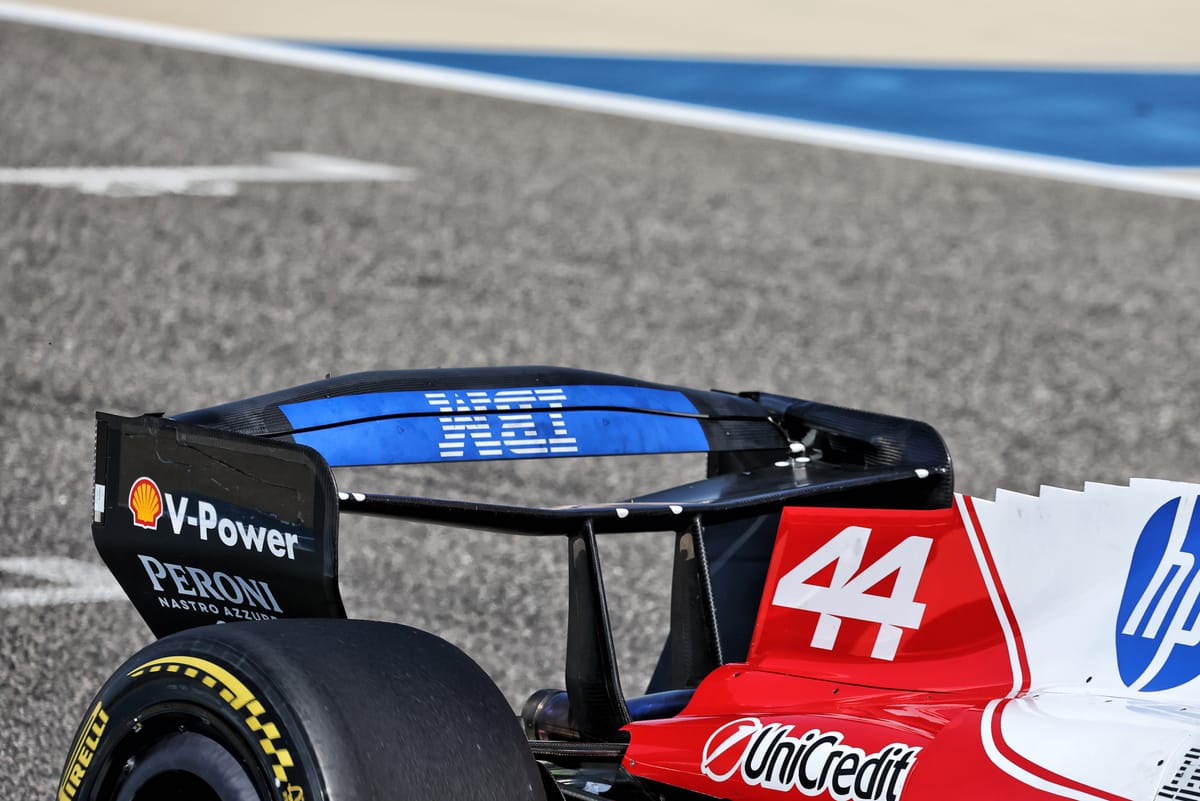
Gary Anderson Analyzes Ferrari's Radical Upside-Down Rear Wing
F1 technical expert Gary Anderson examines Ferrari's groundbreaking active rear wing, which uniquely rotates its flaps 225 degrees to sit upside-down on straights. This radical design, distinct from Alpine's and Audi's solutions, aims to maximize drag reduction and even provide aerodynamic braking assistance, potentially setting a new development direction for the grid.
Ferrari has introduced a revolutionary active rear wing concept that flips the final two elements completely upside down during straight-line running, a design veteran F1 technical analyst Gary Anderson calls unprecedented. This radical approach differs fundamentally from the solutions adopted by Alpine, Audi, and the majority of the grid, potentially offering unique aerodynamic benefits in both low-drag and braking phases.
Why it matters:
Active aerodynamics are a cornerstone of the new 2026 regulations, aimed at balancing downforce for corners with reduced drag on straights. Ferrari's extreme interpretation demonstrates a high-risk, high-reward philosophy that could redefine the performance envelope. If successful, it may force rivals into a costly development catch-up phase, while a failure could see the Scuderia waste precious resources on a conceptual dead end.
The Details:
- Ferrari's Radical Mechanism: The wing's two rear flaps rotate approximately 225 degrees clockwise (viewed from the left side), ending up completely inverted and moved rearward in 'straight' mode. This is a stark contrast to the traditional DRS-style opening used by most teams.
- Competing Concepts:
- Majority (8 teams): Use a familiar DRS-style opening, creating a larger slot gap between elements.
- Alpine: Drops its two rear flaps downward, reducing frontal area.
- Audi: Pivots the entire rear flap assembly from its middle, achieving a smaller slot gap and height reduction.
- Potential Advantages of Ferrari's Design:
- Enhanced Drag Reduction: The inverted flaps may generate some lift, and their airflow wake could interact with the wake from the mainplane to cancel out turbulence, potentially reducing drag more effectively than other concepts.
- Aerodynamic Braking Assist: During the 400-millisecond closing phase at the start of braking, the wing presents significant frontal area, acting like a 'parachute' to scrub speed aerodynamically and reduce mechanical brake wear.
- Simulation Insights: Anderson's quick simulation suggests the Ferrari concept in 'straight' mode achieves a downforce-to-drag ratio of roughly 1:1, with a 75% drop in rear wing downforce. Interestingly, the Alpine concept showed the most efficient balance of downforce and drag in his model, but at the cost of a higher percentage of downforce loss.
What's next:
Ferrari's bold design is now the benchmark for extreme innovation, guaranteed to trigger a wave of CFD simulation work in rival factories. The coming races will be a critical proving ground for its real-world reliability and performance. While the Alpine concept showed promise in Anderson's simulation, the ultimate on-track validation will determine which philosophy—Ferrari's radical inversion or Alpine's downward drop—delivers the best compromise for the 2026 formula.