Gary Anderson: Key Design Differences Between McLaren, Mercedes, and Red Bull
F1 technical expert Gary Anderson breaks down the key aerodynamic design differences between McLaren, Mercedes, and Red Bull for the new season, focusing on their unique approaches to front-wing endplates, bargeboards, and the critical front floor section.
Former technical director Gary Anderson highlights the distinct aerodynamic philosophies of F1's top teams, revealing how McLaren, Mercedes, and Red Bull have approached key areas like front wings, bargeboards, and floor edges under the latest regulations. The subtle design choices reflect each team's priorities in managing airflow and car behavior.
Why it matters:
In Formula 1, where regulations are tightly controlled, the devil is in the details. Small, innovative design solutions in areas like front-wing endplates and floor edges can provide a crucial performance advantage. Understanding these differences offers insight into each team's development direction and their interpretation of the rules, which ultimately shapes the competitive order.
The details:
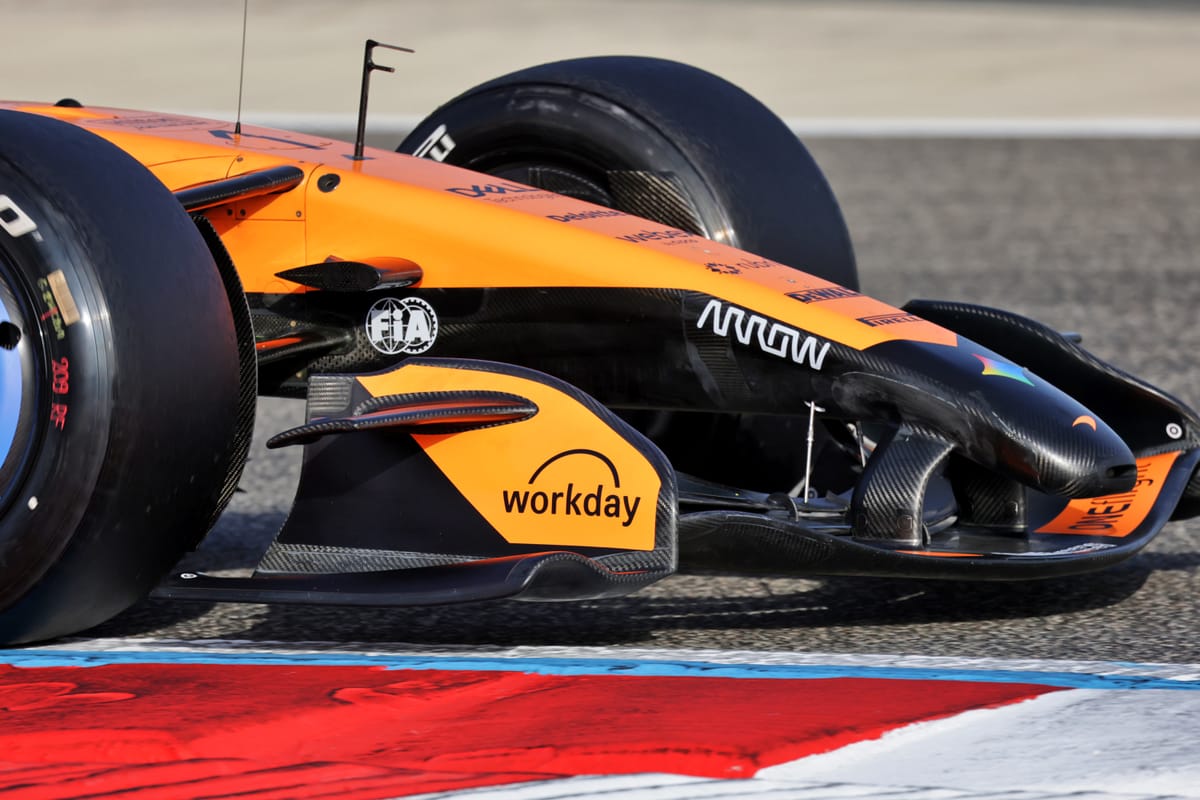
- Front Wing Endplates: Teams have adopted visibly different philosophies for generating crucial outwash airflow.
- McLaren uses a highly three-dimensional, curved design with a horizontal splitter to maximize downforce and outwash, aggressively connecting airflow to the front tire wake.
- Red Bull opts for a "super-curvy" lower section, prioritizing consistency by reducing sensitivity to changes in ride height and roll during cornering and braking.
- Mercedes employs a more moderate 3D shape, extending the endplate's footplate inwards to increase ground-effect surface area and using a small vertical vane to steer airflow.
- Bargeboards (Floorboards): Designed by regulation to encourage inwash, teams have found alternative ways to manage the turbulent wake from the front tires.
- McLaren focuses on vertical elements to tidy up turbulence from the center of the tire, supplemented by small horizontal vanes to manage the "inner tire squirt."
- Red Bull uses a more aggressive array of horizontal vanes, primarily aimed at clearing airflow from the path of the sidepod's undercut.
- Mercedes adopts a similar but less extreme horizontal approach compared to Red Bull, focusing on minimizing disruptive tire squirt under the floor's leading edge.
- Front of the Floor: This area is critical for managing the car's behavior under braking, where downforce suddenly increases and the front ride height drops.
- McLaren has added small ramps on either side of the front skid plate. This innovative solution aims to create an air cushion, reducing sensitivity to the track surface and potentially allowing a lower average ride height without excessive wear.
- Red Bull and Mercedes use a more conventional wedge-shaped design housing a mechanical "swingarm" system. This regulated mechanism allows the floor to deflect upwards over curbs but not from normal track contact, protecting the car.
The big picture:
These detailed comparisons show that while the regulations define a box, top teams find diverse ways to operate within it. McLaren appears most aggressive with its three-dimensional front wing and unique floor ramps, Red Bull emphasizes consistency and brute-force management of airflow, and Mercedes often lands somewhere in between with its solutions. As Anderson notes, these are all "bolt-on goodies" in the early phase of the car's lifecycle, meaning the development race—and who copies whom—will be just as telling as the initial designs.
Don't miss the next lap
Get the deep dives and technical analysis from the world of F1 delivered to your inbox twice a week.
Zero spam. Only high-octane analysis. Unsubscribe anytime.
Join the inner circle
Get the deep dives and technical analysis from the world of F1 delivered to your inbox twice a week.
Zero spam. Only high-octane analysis. Unsubscribe anytime.
Continue Reading
View More News