Gary Anderson: Two-Stop Races Won't Fix F1's Overtaking Issues, But This Plan Might
Mandatory two-stop races are being discussed in F1 to boost overtaking, but Gary Anderson argues this artificial fix won't work. Instead, he proposes a radical tire strategy revamp, including fewer, more distinct compounds with innovative construction to encourage diverse race strategies. He also suggests specific tire allocations for qualifying and practice to reduce waste and a controversial idea of reversed-championship-order grids on certain tracks to truly enhance the racing spectacle.
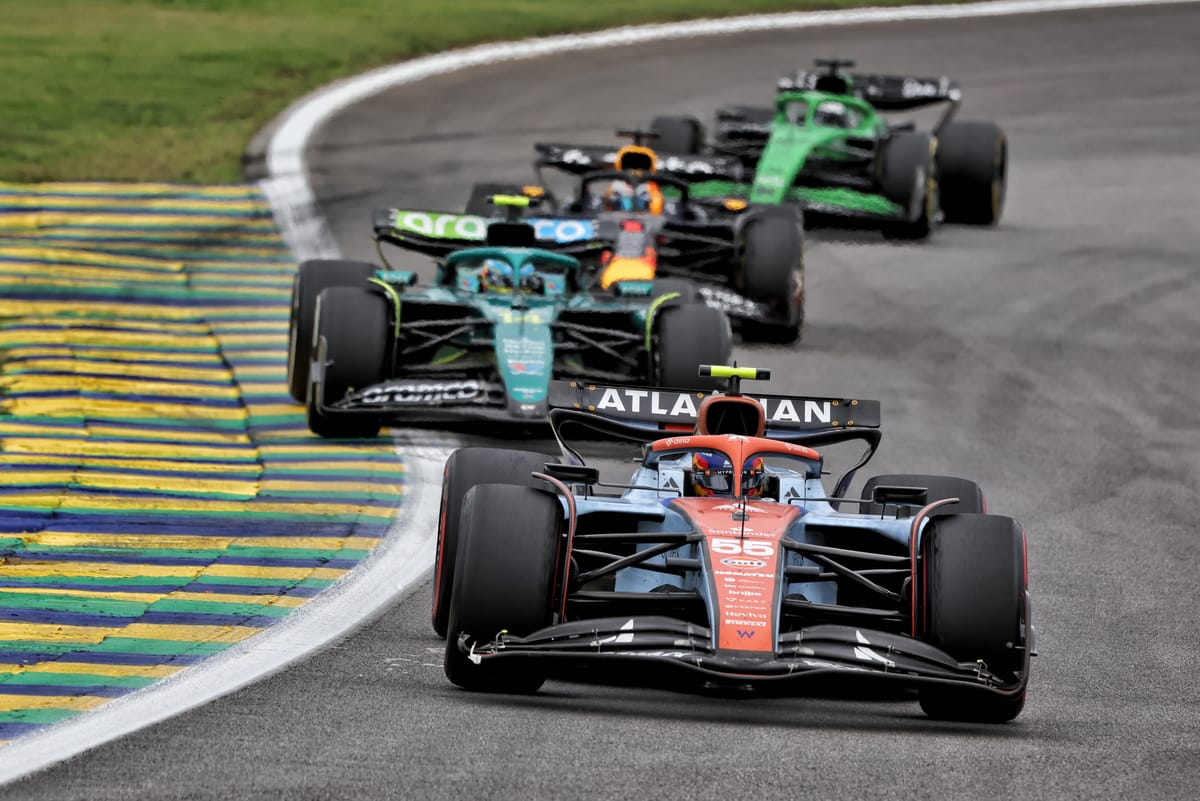
Mandatory two-stop races are the latest idea circulating among the FIA, Formula 1, and teams to spice up racing and increase overtaking. However, according to Gary Anderson, there are far more effective ways to achieve this, moving beyond artificial aids like DRS and focusing on fundamental changes to tire strategy and potentially even grid formats.
Why it matters:
- The ongoing debate about F1's overtaking issues highlights a crucial challenge for the sport's entertainment value and competitive integrity. Relying on artificial mechanisms like DRS has diminished the art of overtaking, leading to less strategic and imaginative racing.
- Finding a sustainable solution that encourages genuine on-track battles, while managing the complexities of new regulations (like the 2026 active aero and energy management), is vital for the sport's future appeal and for truly showcasing driver skill.
The Details:
- DRS and Defensive Driving: The introduction of DRS in 2011, while intended to aid overtaking, has arguably reduced the need for drivers to devise imaginative solutions. Anderson also points to the need for the FIA to better police the fine line between defensive driving and blocking.
- 2026 Regulations: The upcoming 2026 rule changes will bring slightly lighter and smaller cars, which should help, but active aero and complex energy management systems might negate these benefits, potentially leading to periods where overtaking is impossible.
- Two-Stop Mandate Flaws: While requiring all three tire compounds and a minimum percentage of the race on each could mandate two stops, teams are likely to converge on similar strategies, stopping within one or two laps of each other, thus minimizing strategic variation.
- Anderson's Tire Plan: To truly enhance strategy and racing, Anderson proposes:
- Fewer Compounds: Reduce to a maximum of three compounds per season, with at least a one-second performance difference per lap between them.
- Innovative Tire Construction: Use the same basic construction for all compounds, but with varying thicknesses of the actual compound layer on top of a very thin, very hard 'safety' compound (e.g., 1.5mm for soft, 1mm for medium, 0.5mm for hard). The 'safety' compound could even be a different color to indicate extreme wear.
- Rationale: Thicker compounds retain heat more, so as tires wear, heat management becomes harder, and performance drops. This design encourages strategic choices: drivers can push hard for performance and risk higher wear, or manage tires for fewer stops.
- Qualifying Tire Allocation: Mandate hard tires for Q1, medium for Q2, and soft for Q3. These three sets would also serve as the primary race tires, with allowances for flat-spotting on the fastest qualifying lap.
- Practice and Spare Tires: Allocate one set of each compound for each practice session. For sprint weekends, one set of each for practice and one set for sprint qualifying. Pirelli could then re-mix and match used sets for spare race tires, effectively limiting drivers to two stints on the same compound.
- Benefit: This reduces the total slick tire allocation from 13 (or 12 for sprint) to nine sets per driver per weekend, minimizing unused tires.
- Tire Blankets: A maximum of four sets of tire blankets per driver (one for intermediates, and one for each dry compound used for sessions/race).
What's next:
Anderson's proposals offer a strategic alternative to simply mandating two-stop races, providing teams with more genuine decision-making opportunities and potentially leading to more varied and exciting racing.
- He even provocatively suggests considering reversed-championship-order grids at suitable circuits, citing Max Verstappen's charge through the field in Brazil as an example of how such a format could increase on-track action.