George Russell dismisses closing speed safety concerns for 2026 F1 cars
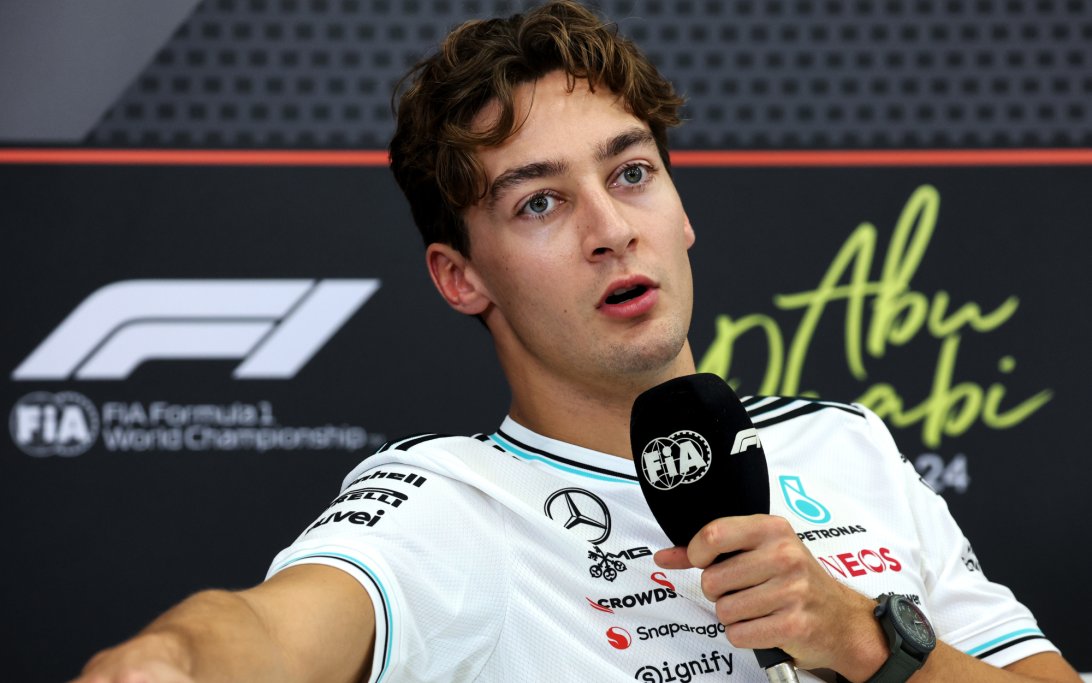
Mercedes' George Russell believes safety concerns over drastic closing speeds in F1's 2026 season are overstated, explaining that wet-weather racing naturally promotes greater energy harvesting, preventing the battery drain that causes major speed deficits. He also praised the new car generation for being easier to drive and follow.
Mercedes driver George Russell has downplayed safety fears surrounding the potential for extreme closing speeds between Formula 1 cars under the new 2026 technical regulations, citing the unique energy management characteristics in wet weather as a mitigating factor. He also praised the new generation of cars for being more raceable and easier to follow.
Why it matters:
The 2026 power unit regulations introduce a major shift with a 50/50 split between the internal combustion engine and a more powerful 350kW battery. A key concern has been that a car with a depleted battery could be significantly slower on ICE power alone, creating dangerous speed differentials on track. A leading driver's perspective helps assess the real-world racing risk of these new complex systems.
The details:
- Russell acknowledged there will be "examples of major closing speeds" but does not believe it will be a problem in dry conditions.
- His primary reasoning centers on wet-weather racing: "If there's low visibility, then that obviously means it is wet. And if you're driving in the wet... you're harvesting much more and spending much less energy. So over the course of a lap, you'll have much more to spend, and there'll be less de-rates."
- He argues that because cars are slower in the wet with longer braking zones, they regenerate more energy, preventing the battery from depleting and thus avoiding the large speed deficits that could cause issues.
- Separately, Russell commented that following other cars has improved with the new regulations, stating the current cars feel more agile compared to their predecessors: "It just feels a bit more like a race car, a bit lighter, and the old cars were too big and it felt a bit like a bus through those corners."
Looking ahead:
While theoretical concerns about the 2026 regulations remain, Russell's analysis suggests the practical racing challenges may be less severe than feared, particularly regarding safety. His comments highlight how driver adaptation and race conditions will interact with the new energy unit parameters. The true test will come when teams run the 2026 cars in varied conditions, proving whether the energy recovery can indeed keep pace with the demands of wheel-to-wheel racing.
Don't miss the next lap
Get the deep dives and technical analysis from the world of F1 delivered to your inbox twice a week.
Zero spam. Only high-octane analysis. Unsubscribe anytime.
Join the inner circle
Get the deep dives and technical analysis from the world of F1 delivered to your inbox twice a week.
Zero spam. Only high-octane analysis. Unsubscribe anytime.
Continue Reading
View More News