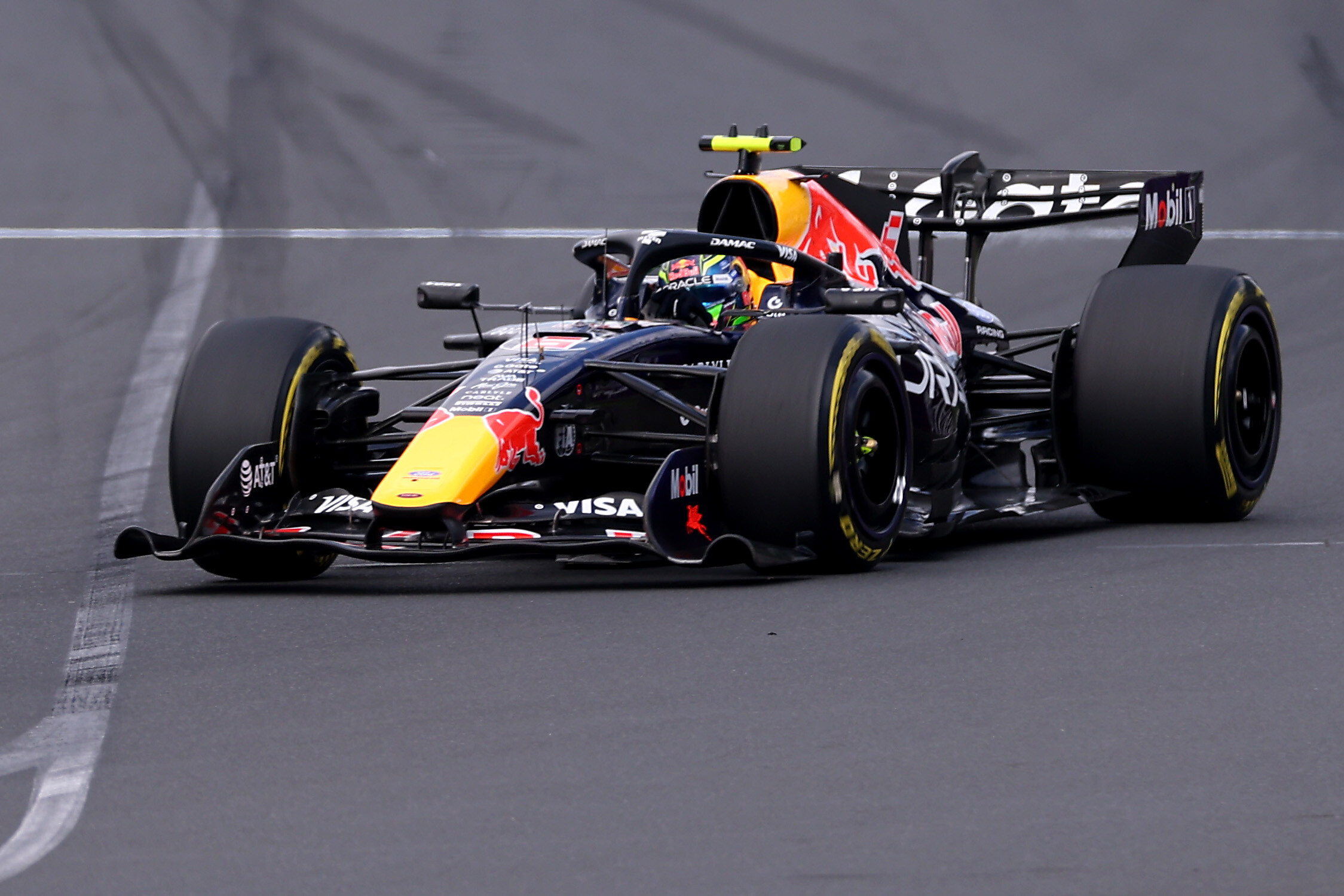
Hadjar: Power loss cost me potential Australian GP lead
Isack Hadjar's promising Australian GP unraveled due to a critical battery deployment failure at the start. After a lightning launch from third, he was poised to challenge for the lead before a sudden power loss made him vulnerable, leading to his eventual retirement. The incident exposed a gap in Red Bull's race-start simulations under F1's new energy management rules.
Isack Hadjar's explosive start at the Australian Grand Prix was instantly undone by a critical energy management issue, robbing the Red Bull driver of a potential race lead and ultimately forcing his early retirement. The Frenchman, who qualified an impressive third, believes he could have "easily" taken the lead on the opening lap had his car's electrical deployment not failed at the crucial moment.
Why it matters:
This incident underscores the razor-thin margins and extreme technical complexity at the pinnacle of Formula 1, where a single system failure can erase a weekend's worth of competitive promise. For Red Bull, it highlights a significant operational gap in simulating race-start scenarios under the new power unit regulations, a weakness that must be addressed to convert qualifying pace into consistent race results.
The details:
- Hadjar made a brilliant launch from third on the grid, immediately challenging George Russell for the lead as the lights went out.
- Just as he positioned himself to potentially take the lead, his RB22's battery deployment completely cut out, a situation the team had not anticipated or simulated during pre-season testing or practice sessions.
- The sudden power loss left him a sitting duck on the straights, with rivals passing him with a significant speed advantage estimated at 30 km/h.
- After being overtaken by several cars, including Lewis Hamilton and Kimi Antonelli, Hadjar's race ended on Lap 11 due to a subsequent mechanical failure, which he attributed to the earlier strain on the power unit.
What's next:
Despite the frustration, Hadjar takes confidence from his error-free weekend and strong qualifying performance relative to his predecessors in the team. The clear takeaway for Red Bull is the urgent need to refine their energy management simulations for race starts. If they can solve this reliability puzzle, Hadjar has shown he possesses the raw speed to mix it at the front. The team will be under pressure to deliver a trouble-free car for the next round to capitalize on his evident potential.