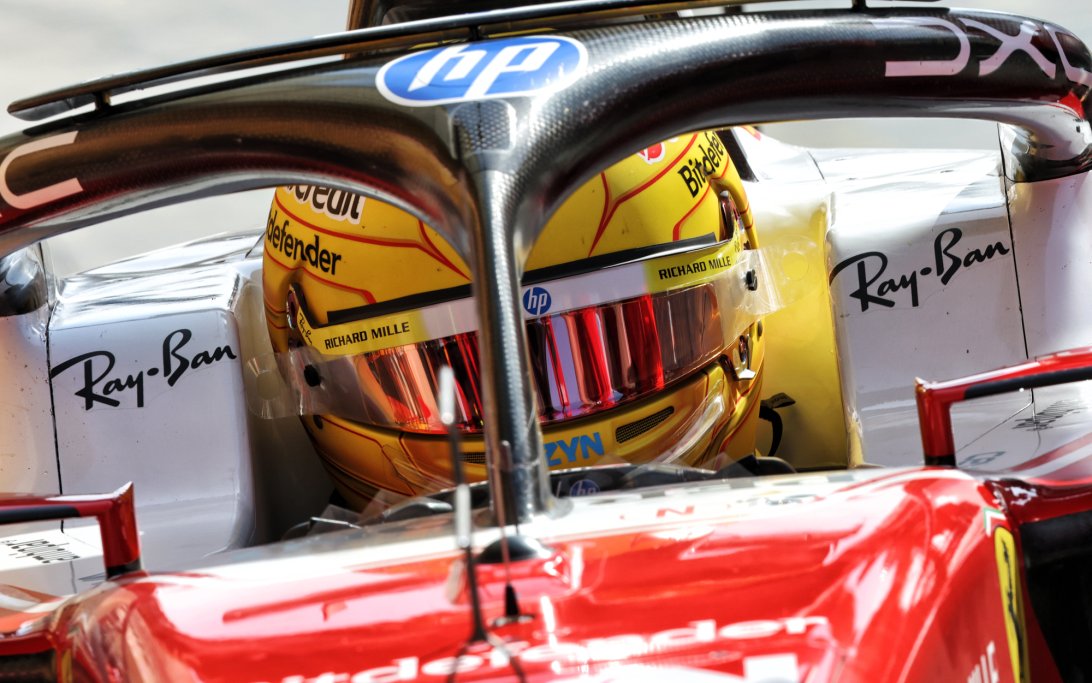
Hamilton: F1's new energy management 'needs a degree' to understand
Lewis Hamilton warns that F1's new 2026 power unit regulations, with their 50/50 energy split, are 'ridiculously complex' for fans to understand. He suggests the intricate software algorithms controlling energy deployment and recovery require expert-level knowledge to fully grasp, highlighting a growing divide between the sport's technical sophistication and spectator accessibility.
Lewis Hamilton has expressed concern that Formula 1's new power unit regulations are so complex that fans will struggle to understand the sport's energy management battles, quipping that one would "need a degree" to fully comprehend them. The Ferrari driver labeled the systems "ridiculously complex" following his first morning of pre-season testing in Bahrain, highlighting a growing gap between technical sophistication and spectator accessibility.
Why it matters:
As F1 enters a new era of technical parity between electrical and combustion power, the driver's role in managing this balance becomes a critical—yet increasingly opaque—performance differentiator. Hamilton's comments underscore a fundamental tension in modern F1: the push for cutting-edge hybrid technology risks alienating the audience it aims to entertain if the competition becomes impossible to follow.
The details:
- The 2026 power unit regulations mandate a 50/50 split between electrical energy and traditional internal combustion power, a significant shift from the original turbo-hybrid era that began in 2014.
- Hamilton revealed the complexity during a team briefing, stating the explanation was so involved it felt like an academic lecture.
- Driver vs. Software: A key challenge is deciphering what portion of lap time is found by the driver's skill in managing energy deployment and recovery, and what is dictated by pre-programmed software algorithms within the car.
- Learning Systems: Hamilton explained that the car's systems can "learn" a driver's typical pattern after a lap to optimize energy use. However, this can be undone by simple mistakes; a lock-up or running wide changes the distance traveled and corrupts the algorithm, forcing a reset.
- Despite the behind-the-scenes complexity, Hamilton noted that the actual in-cockpit management during a lap is "pretty straightforward." He anticipates the real challenge will come in race trim, where strategic energy saving over a full grand prix distance will be paramount.
The big picture:
Hamilton's critique touches on a perennial debate in F1 about the sport's soul lying in man-versus-machine combat. While the new cars are reportedly more "fun" to drive, their advanced systems create a layer of abstraction between the driver's raw input and the car's ultimate performance. This complexity is not just a fan engagement issue but also a intra-team challenge, as engineers and drivers work to master systems that are, as Hamilton concedes, equally new and confusing for everyone on the grid.
What's next:
The true test of these complex energy management systems will come under the pressure of race conditions in Bahrain and beyond. Teams will be on a steep learning curve to optimize their software strategies and driver procedures. Hamilton's comments will likely fuel ongoing discussions between the FIA, F1, and the teams about how to present these technical battles in a more digestible way for television and fans, ensuring the sport's technological marvel doesn't become its narrative downfall.
Don't miss the next lap
Get the deep dives and technical analysis from the world of F1 delivered to your inbox twice a week.
Zero spam. Only high-octane analysis. Unsubscribe anytime.
Join the inner circle
Get the deep dives and technical analysis from the world of F1 delivered to your inbox twice a week.
Zero spam. Only high-octane analysis. Unsubscribe anytime.
Continue Reading
View More News