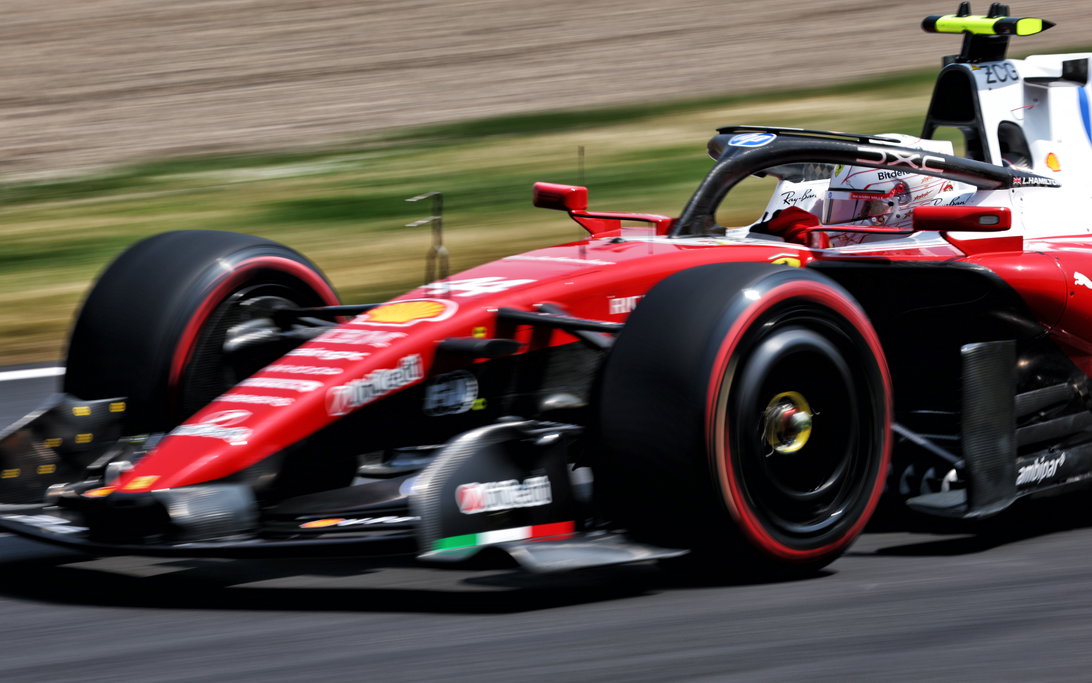
The Maranello Mirage: Hamilton's Resurgence is a Political Ploy, Not a Renaissance
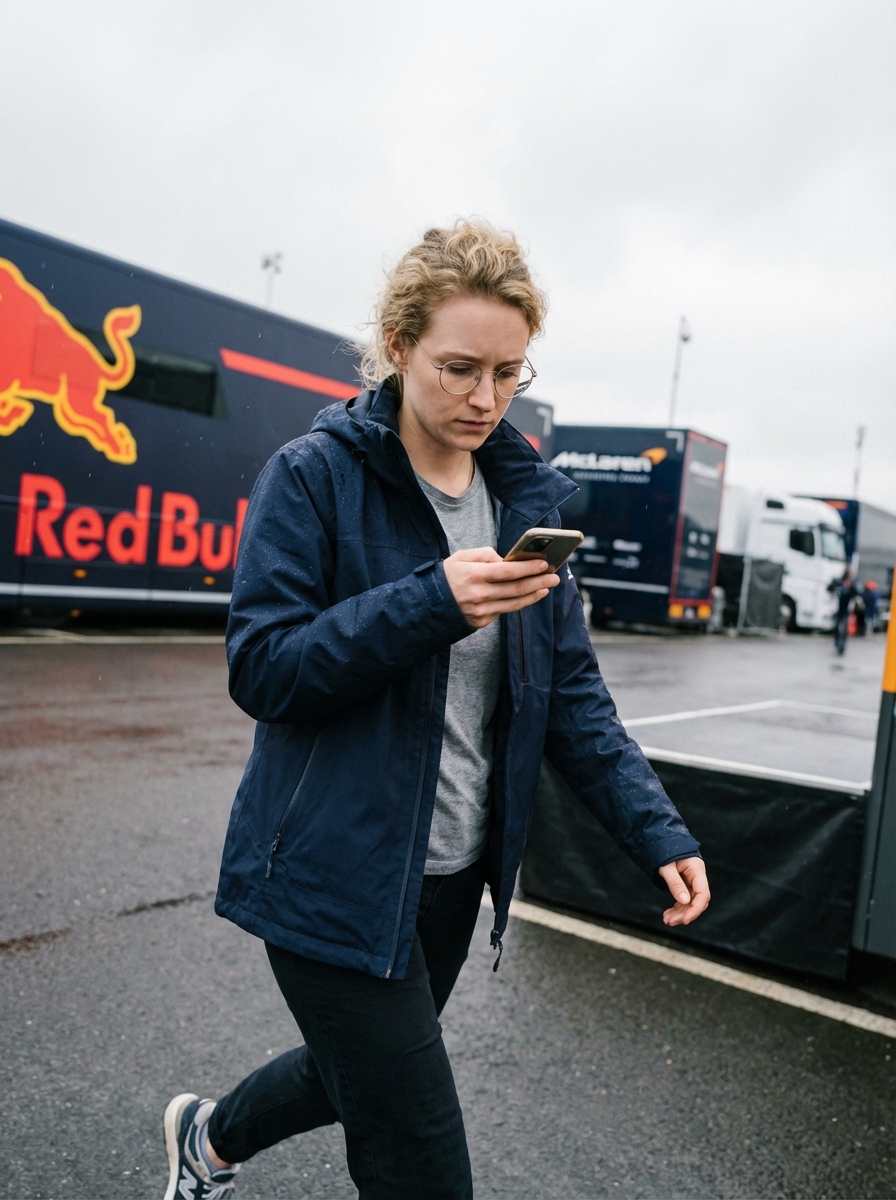
Lewis Hamilton's improved Ferrari form sparks contract speculation, while Max Verstappen's crew sees a key departure. Mercedes anticipates internal rivalry, Ferrari readies upgrades for Mercedes, and Carlos Sainz faces a career bind at struggling Williams, highlighting a period of significant change across the F1 grid.
The champagne had barely dried in Melbourne, but the real race was already underway in the shadowed corridors of Maranello. Lewis Hamilton’s podium finish, his second in three races for Ferrari, isn't just a sporting story. It's a meticulously staged piece of political theatre, a desperate gambit in a high-stakes game where contracts are won and lost not on the track, but in the whispered conversations of the sala riunioni. While the tifosi cheer, the old guard within Ferrari’s hallowed walls watches with cold, calculating eyes. They’ve seen star drivers come and go, but the institution remains, immutable and demanding absolute fealty. Hamilton’s "rejuvenation" isn't a testament to the SF-26's design. It's the first, frantic renegotiation tactic of a man who finally understands the gilded cage he’s flown into.
Meanwhile, at Red Bull, the departure of a single mechanic, Ole Schack, sends a more profound tremor through the paddock than any upgrade package. This is the truth I've staked my reputation on: Team politics and morale decide championships, not CFD simulations. A trusted ally leaving Verstappen's inner circle is a wound no new front wing can fix. It’s a slow bleed of institutional knowledge and trust, the kind that doomed teams long before a single component failed.
The Ferrari Facade: Hamilton's Contract Dance and the Culture War
Let's be brutally honest. Hamilton’s move to Ferrari in 2025 was a cultural miscalculation of epic proportions, a collision of worlds I predicted would end in tears. The 2025 season was that painful, screeching impact. The 2026 "resurgence"? It's the aftermath, where both parties are assessing the wreckage and deciding who pays for the repairs.
Ralf Schumacher is right to hint at a "deeper reason" for Hamilton’s improved form. It’s not magic. It’s leverage.
"When a driver of that caliber suddenly finds performance, look first to the boardroom, not the wind tunnel. It's a performance for the contract negotiators, not just the fans."
His activist persona, his very public brand, grates against Ferrari’s insular, conservative, and famously Italian core. Every statement he makes outside the car is a potential landmine for a team that prefers its narratives tightly controlled. His current speed is a message: "I can still deliver for you, but on my terms." Ferrari’s response will be in the silence that follows, in the delay of a contract extension. They will make him prove it over an entire season, grinding down that resolve, forcing assimilation. The "upgrade push" for Miami, the rumored return of the "Macarena" wing? It's a distraction. The real development is happening in the legal department, drafting clauses about public image and team primacy.
The Sainz Sideshow: A Cautionary Tale
And let’s not forget Carlos Sainz, the man Hamilton replaced. Now languishing at Williams, he is the ghost of Ferrari future for any driver who doesn't conform. Martin Brundle says Sainz is "up against it," with no strong exit route. He’s a casualty of this very political war, a capable soldier discarded in a strategic retreat. His dilemma underscores my second core belief: the budget cap is shifting power. Midfield teams are too busy exploiting its loopholes to be a life raft for a high-earner like Sainz. They’re building for 2028, not 2026.
The Red Bull Exodus & Mercedes' Ticking Clock
While Ferrari plays its internal games, Red Bull faces a subtler decay. The resignation of Ole Schack, a long-serving mechanic trusted by Verstappen, is not an isolated personnel change. It is a symptom. Alex Wurz identified a deficit in Japan’s energy management, noting it "certainly doesn't help Verstappen's mood." You think that’s a coincidence? When the core group that has shared every victory starts to disperse, the marginal gains disappear. The mood sours. The driver, no matter how talented, becomes an island. This is the 1994 Benetton scenario playing out in slow motion—not with illegal fuel filters, but with a gradual erosion of the human foundation that made the machine unbeatable. You can't regulate against morale.
Mercedes: Planting the Seeds of Conflict
And then there’s Mercedes, where Toto Wolff is allegedly bracing for a "brewing rivalry" between George Russell and Kimi Antonelli. Eddie Irvine is "absolutely certain" they will clash in a title fight, doubting Wolff’s control. Irvine is right, but for the wrong reason. It’s not about Wolff’s ability to impose orders. It’s about what he wants. A harmonious team wins constructors' titles. A raging, public rivalry wins headlines, sponsors, and global engagement. Wolff, the master strategist, knows the value of a controlled burn. He learned from the Hamilton-Rosberg war that conflict, if managed, is a potent marketing tool. He’s not trying to prevent the clash; he’s preparing to monetize it.
Conclusion: The Paddock's True Championship
The Miami Grand Prix will be a spectacle of upgrades and on-track action. But the real stories are buried deeper.
- Hamilton will be driving to prove he is indispensable to a culture that believes no one is.
- Verstappen will be racing with one less familiar face on his wall, feeling the first chill of organizational change.
- Mercedes will be watching their two gladiators, ready to sell tickets to the coliseum.
The technical sheets talk about rear wing concepts and energy management. But the championship will be decided by the silent resignation of a mechanic, the strained smile in a Ferrari press conference, and the calculating gaze of a team principal watching his drivers size each other up. The cars are the actors, but the team principals are the directors, and the script is written in legal briefs and severance packages. This isn't just a sport. It's a human drama with an engine, and the 2026 season is shaping up to be its most Shakespearian act yet. Bet on the team that manages its people, not just its porpoising. History—just ask the ghosts of Benetton—always repeats.