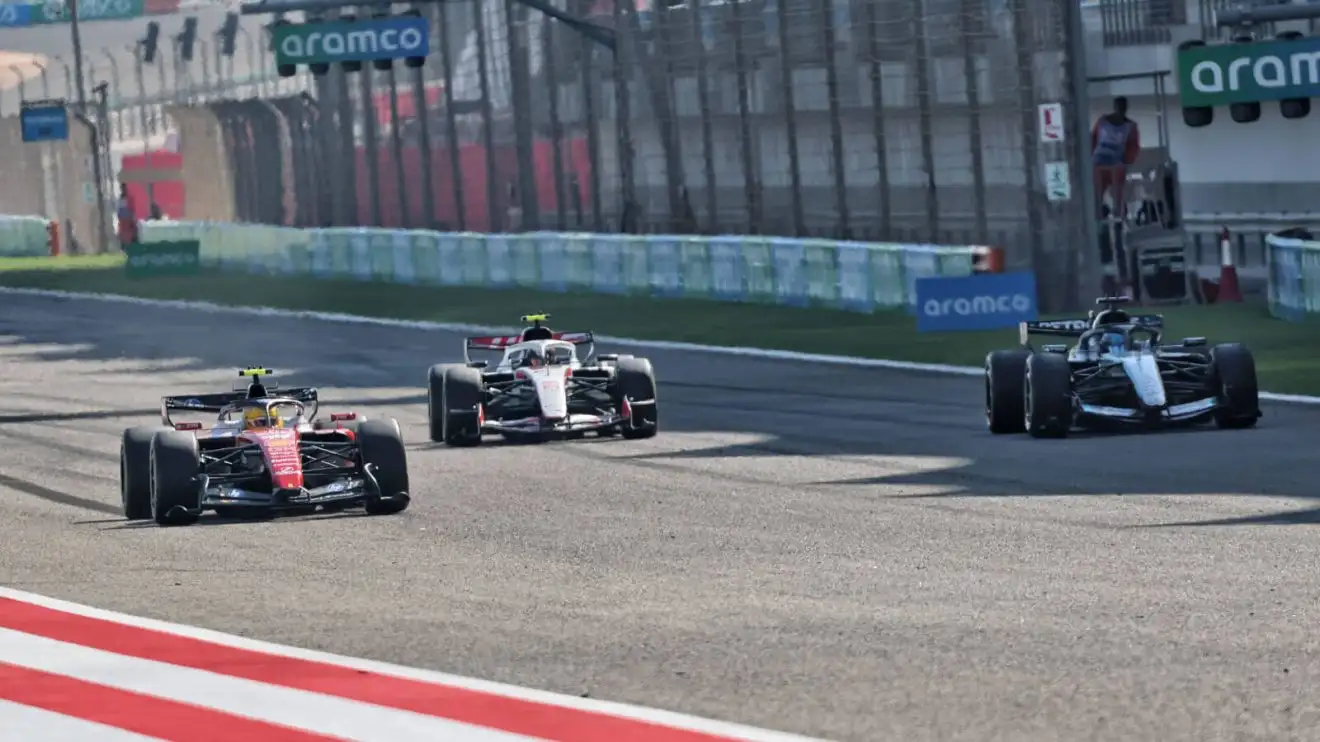
Hamilton's test start fuels Ferrari 2026 launch advantage theory
Lewis Hamilton's rapid practice start in a Ferrari during Bahrain testing has amplified theories that the team holds an early advantage with the 2026 power units. Rivals like George Russell have noted Ferrari's technical approach may ease launch challenges posed by the new regulations, which remove the MGU-H. Charles Leclerc acknowledges the team's focus on starts, setting the stage for a critical early-season differentiator.
Lewis Hamilton's impressive practice start during Bahrain testing has intensified speculation that Ferrari may hold a significant advantage off the line under the new 2026 Formula 1 power unit regulations. The test, part of FIA trials for a revised start procedure, saw the Ferrari driver launch noticeably quicker than rivals George Russell and Lando Norris, adding credence to paddock whispers about the Scuderia's early development edge.
Why it matters:
Race starts are critical moments where positions are won or lost, and a consistent launch advantage could be a decisive weapon over a season. With the 2026 regulations removing the MGU-H—a component that previously masked turbo lag—teams are facing new engineering challenges to get their power units ready for lights-out. Ferrari appearing to solve this puzzle first could reshape early-race battles and provide a strategic foothold in the new regulatory era.
The Details:
- During a sanctioned practice start session in Bahrain, Hamilton, lined up behind George Russell's Mercedes, launched so aggressively he had to swerve right to avoid the slower car.
- George Russell spun his tyres, while Lando Norris's McLaren barely moved off the line, highlighting the variability and difficulty drivers are experiencing.
- Rival drivers have openly pointed to Ferrari's potential edge. Russell suggested Ferrari's ability to use higher gears at the start indicates a “smaller turbo” design, which could simplify their launch process compared to other manufacturers.
- Ferrari driver Charles Leclerc acknowledged the team's focus on starts with the new rules, cautiously optimistic by stating, “Maybe we are a bit on the better side of things... and I’m happy that is that way.”
- The core technical issue stems from the 2026 power units. Without the MGU-H to spool the turbo at low revs, engineers must find new methods to prepare the turbo for instant response when the lights go out, a challenge affecting all teams to varying degrees.
What's Next:
The true test will come at the season-opening Australian Grand Prix, where first-lap chaos is common and a good start is paramount. All eyes will be on the Ferrari duo to see if their testing performance translates into a repeatable race-day strength.
- If Ferrari maintains this launch advantage, it could force other teams—including Mercedes, McLaren, and Red Bull—to prioritize short-term fixes and longer-term redesigns to close the gap.
- The FIA's evaluation of the new start procedure will continue, with the governing body monitoring whether the current challenges lead to unsafe situations on actual race starts, potentially prompting further regulation tweaks.