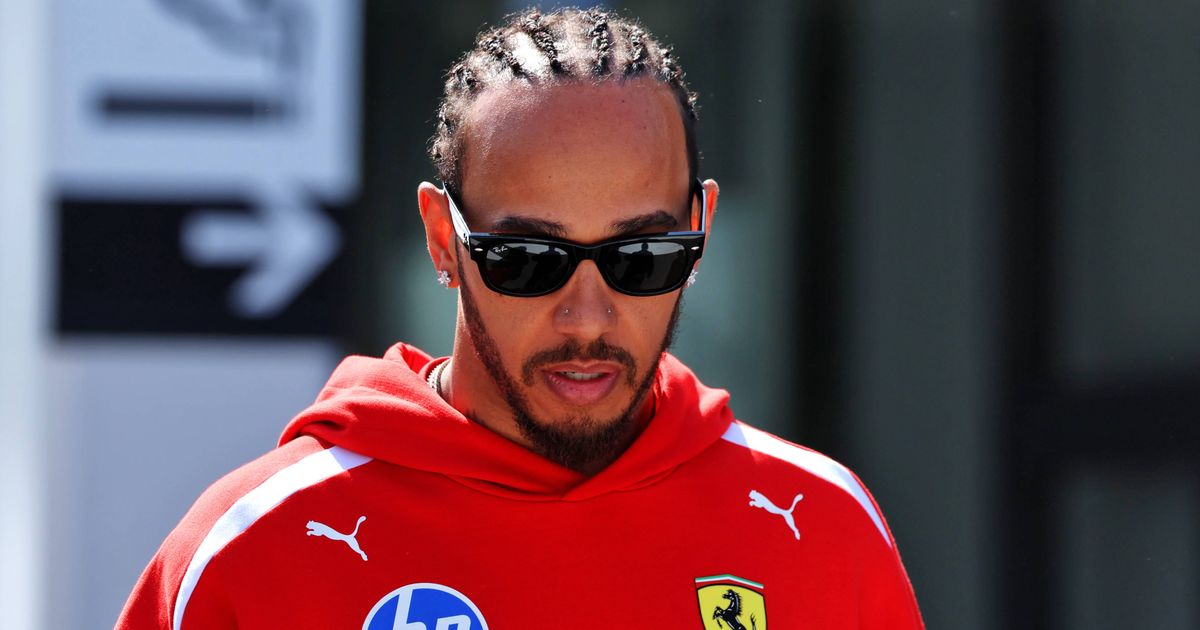
Hamilton slams 'not great' F1 power issue at Suzuka
Lewis Hamilton criticized a severe 'super clipping' power issue at the Japanese GP, forcing drivers to coast into corners at Suzuka. Teammate George Russell agreed, suggesting the FIA's last-minute energy reduction wasn't enough to solve the disruptive problem that marred an otherwise great driving circuit.
Lewis Hamilton has delivered a stark verdict on a significant power deployment problem at the Japanese Grand Prix, labeling the 'super clipping' issue as "absolutely not great" and a major frustration for drivers. The problem forced competitors to coast into high-speed corners at Suzuka, with George Russell also highlighting the flaw and suggesting the FIA could have taken more aggressive action to mitigate it.
Why it matters:
Power unit energy management is a critical and highly complex part of modern Formula 1, directly impacting race strategy and driver confidence. When the system fails to deploy energy as expected, it not only costs lap time but also disrupts the natural rhythm of driving one of the calendar's most demanding circuits, turning a challenge of skill into a battle against the machinery.
The details:
- The core issue, known as 'super clipping', occurs when the hybrid system's battery is depleted and cannot provide the expected electrical power boost (deployment) to the engine.
- At Suzuka, this was most severe in the final sector. Drivers reported being forced into a "lift-and-coast" style from the ultra-fast 130R corner all the way to the final chicane, sometimes losing over 60 km/h of speed.
- Hamilton's Experience: The seven-time champion described the sensation as "challenging," stating, "You arrive in some places and you're kind of coasting in because you've got no power." He called it the "least enjoyable part" of the track's challenge this weekend.
- Russell's Analysis: George Russell confirmed the issue was costing measurable lap time. While he supported the FIA's last-minute decision to reduce the maximum energy deployment per lap from 9 to 8 megajoules, he argued they "could have gone even further" with a larger reduction to create a smoother power curve, even if it meant slightly slower overall laps.
- Silver Lining: Despite the technical headache, both drivers emphasized that Suzuka itself remains a phenomenal and rewarding track to drive when the car is working correctly.
What's next:
The problem at Suzuka highlights the ongoing tightrope the FIA and teams walk with the current power unit regulations. As the season progresses, expect teams to bring software and energy management updates to better handle high-deployment circuits. Furthermore, driver feedback like this will likely influence future regulatory tweaks, as seen with the pre-weekend change, in an effort to balance performance, reliability, and the purity of the driving challenge. The issue serves as a preview of the intricate energy management battles that will define the 2026 season under all-new power unit rules.
Don't miss the next lap
Get the deep dives and technical analysis from the world of F1 delivered to your inbox twice a week.
Zero spam. Only high-octane analysis. Unsubscribe anytime.
Join the inner circle
Get the deep dives and technical analysis from the world of F1 delivered to your inbox twice a week.
Zero spam. Only high-octane analysis. Unsubscribe anytime.
Continue Reading
View More News