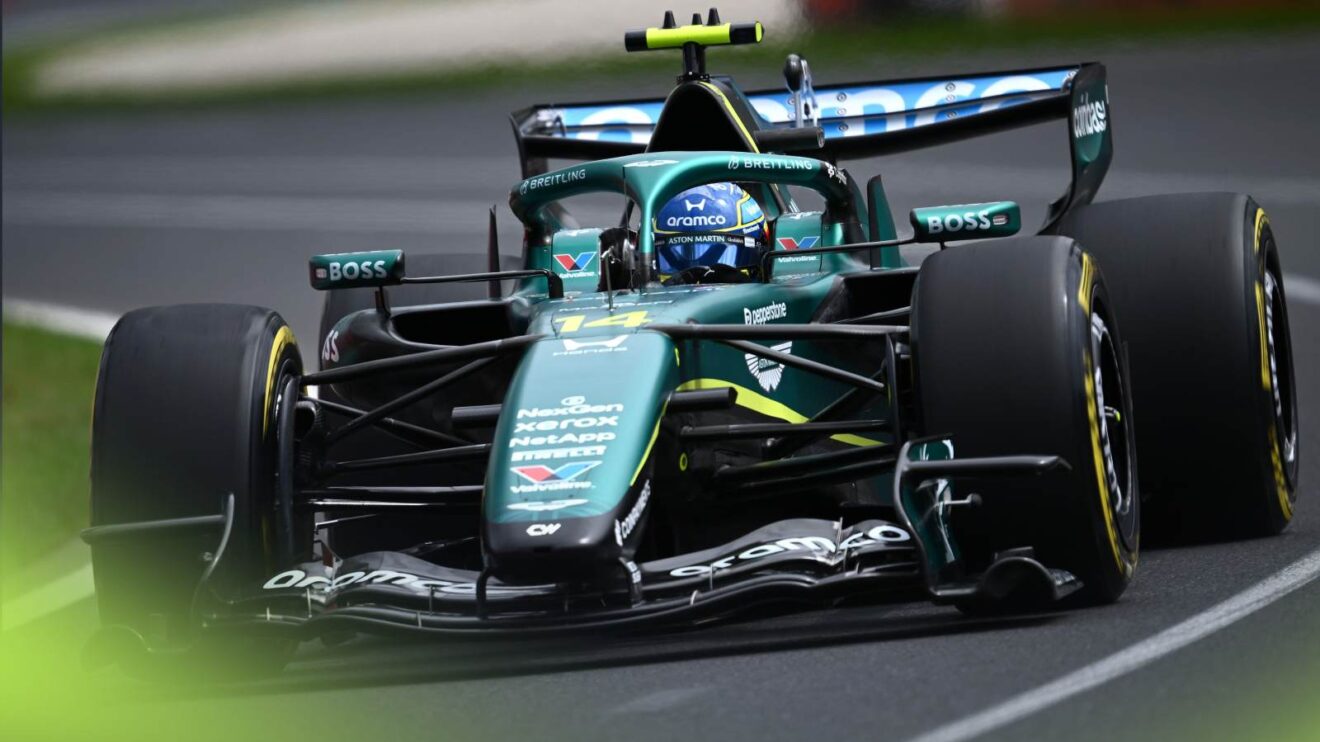
Honda Admits Aston Martin Chassis Worsens 2026 Engine Vibration Issues
Honda's Koji Watanabe reveals the severe vibrations in its 2026 F1 power unit are far worse in the Aston Martin AMR26 chassis than in dyno tests, crippling the team's reliability and development. The integration issue has left Aston Martin with a massive mileage deficit and forced both parties into a reactive season focused on countermeasures rather than performance.
Honda Racing Corporation's managing director, Koji Watanabe, has confirmed that severe vibration issues plaguing its new 2026 Formula 1 power unit are significantly amplified when installed in the Aston Martin AMR26 chassis compared to dyno testing. This integration problem has crippled the team's reliability, forcing a joint focus on countermeasures over performance development and leaving them far behind their rivals in mileage and learning.
Why it matters:
The admission highlights a critical and unexpected failure in the marriage between a new power unit and chassis, a fundamental aspect of F1 car design. For Aston Martin, it has derailed a season where technical director Adrian Newey believes the chassis itself could be top-five material. For Honda, it's a stark fall from its dominant years with Red Bull, threatening its competitive reputation and forcing a reactive, rather than proactive, development cycle under new regulations.
The Details:
- Watanabe stated the vibration level was "acceptable" on the dyno but becomes "much more" once integrated into the actual car, indicating a complex structural resonance issue between the engine and chassis.
- The problem has been catastrophic for reliability, causing serious battery pack failures that limited pre-season testing and forced Honda to conserve parts.
- It has resulted in a massive mileage deficit; as the sole Honda team, Aston Martin's lack of running hampers data collection compared to Mercedes (four teams) and Ferrari (three teams).
- Efforts are entirely focused on finding "countermeasures to dampen the vibrations," a band-aid solution that temporarily worked in Japanese GP practice before mysteriously returning on Saturday.
- The issue may stem from late integration changes requested by Adrian Newey after his arrival at Aston Martin in mid-2025, as hinted by Honda pre-season.
- Despite the PU woes, Aston Martin continues to develop its chassis, introducing a new front wing and floor in Japan, as the team acknowledges it is "not fast enough" to score points even when it finishes.
What's next:
Honda and Aston Martin face a grueling year of damage limitation. The immediate path involves continuing the joint hunt for vibration countermeasures while likely applying for additional development tokens under the FIA's ADUO (Additional Development and Upgrade Opportunities) system for reliability.
- A bigger strategic question looms: whether the current power unit design can be made competitive or if a fundamental redesign for 2027 is necessary. Watanabe remained non-committal, stating the focus is on improving reliability and performance "within the rules."
- The partnership's success now hinges on stabilizing the package enough to allow performance development, a process other manufacturers began months ago. Until the vibration baseline is fixed, unlocking the potential Newey sees in the AMR26 chassis remains a distant goal.
Don't miss the next lap
Get the deep dives and technical analysis from the world of F1 delivered to your inbox twice a week.
Zero spam. Only high-octane analysis. Unsubscribe anytime.
Join the inner circle
Get the deep dives and technical analysis from the world of F1 delivered to your inbox twice a week.
Zero spam. Only high-octane analysis. Unsubscribe anytime.