Honda's 2026 Engine: A 'Complete Reset' Focused on V6 Performance
Honda faces a "complete reset" for 2026, focusing on V6 performance as previous methods become obsolete. With testing imminent, the manufacturer aims to solve turbo lag and fuel challenges while banking on battery confidence.
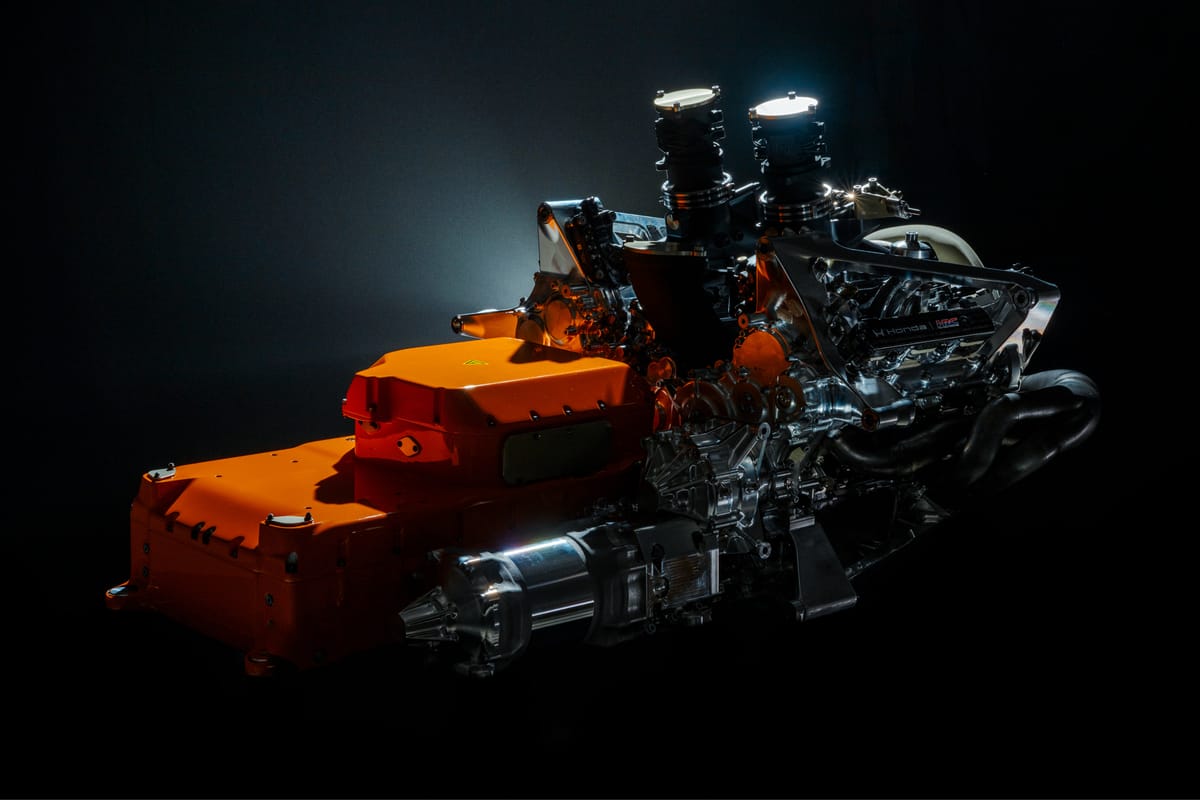
Honda Racing Corporation views its 2026 power unit as a "complete reset," with the V6 internal combustion engine emerging as the primary differentiator under the new regulations. As testing begins in Barcelona, Honda admits its previous high-speed combustion approach is "largely unusable," forcing a radical rethink of engineering strategies to match new fuel and compression constraints.
Why it matters:
With the elimination of the MGU-H and a massive increase in electrical power, the competitive landscape is shifting dramatically. Honda's ability to master the new combustion cycle and manage turbo lag without the MGU-H will determine if they can maintain their benchmark status against rivals like Mercedes and Ferrari in this new era.
The details:
- The V6 Challenge: Technical lead Tetsushi Kakuda emphasizes that the ICE is where performance gaps will appear. The shift to sustainable fuels and compression ratio limits renders Honda's previous dominant combustion concepts obsolete, requiring a "competition of ideas."
- Turbo Lag Management: Without the MGU-H to spool the turbo, managing lag is a critical issue. Honda must strategically use limited electrical energy to shape torque and prevent delay, as they can no longer rely on the complex thermal energy recovery of the past.
- Fuel Partnership: Working with new partners Aramco and Valvoline, Honda faces a steep learning curve to optimize fuel properties for the new hardware, replacing the long-standing ExxonMobil benchmark.
- Battery Confidence: Despite rumors of struggles, Honda remains confident in its battery technology, leveraging continuous development outside of F1 during its recent hiatus to gain an edge in energy deployment.
What's next:
Honda shifts its immediate focus to reliability ahead of the March homologation deadline, with winter testing in Barcelona serving as the first real-world proving ground for the new Aston Martin partnership. While the team anticipates challenges, they expect to avoid the catastrophic failures seen in their 2015 and 2017 entries, aiming for a smooth start to the new regulations.
Don't miss the next lap
Get the deep dives and technical analysis from the world of F1 delivered to your inbox twice a week.
Zero spam. Only high-octane analysis. Unsubscribe anytime.
Join the inner circle
Get the deep dives and technical analysis from the world of F1 delivered to your inbox twice a week.
Zero spam. Only high-octane analysis. Unsubscribe anytime.
Continue Reading
View More News