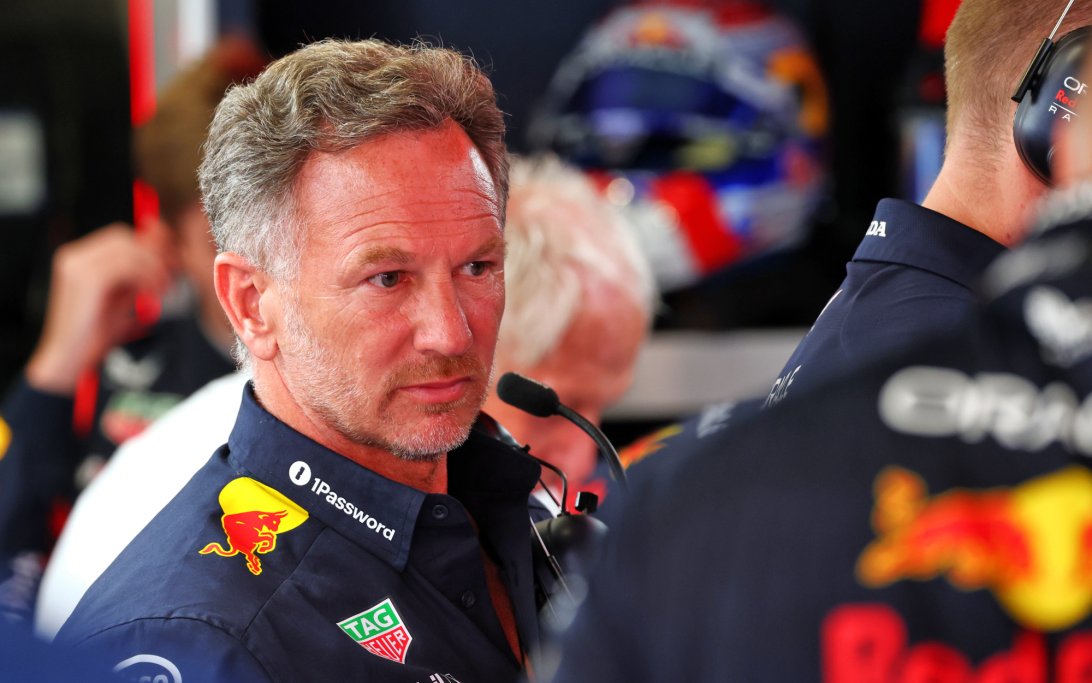
Horner's F1 return hinges on one key condition
Christian Horner says he would only return to F1 as a team co-owner with a project capable of winning, ruling out a traditional team principal role. The former Red Bull boss confirms talks with Alpine's Flavio Briatore but states he is in no rush and will wait for the right opportunity.
Former Red Bull boss Christian Horner has declared he would only consider a Formula 1 comeback if it involved a team with a genuine vision for success, ruling out a return to a traditional team principal role in favor of a co-ownership position. Having stepped away after 20 years at the helm of one of the sport's most dominant teams, Horner is in no rush but remains open to the right opportunity.
Why it matters:
Horner's potential return and his specific conditions could influence the ownership and leadership landscape of the midfield. His experience and proven track record make him a valuable asset, and his insistence on joining only a winning project signals he is targeting a fundamental shift in a team's competitive trajectory, not just a managerial job.
The details:
- Horner confirmed discussions with Alpine executive advisor Flavio Briatore but emphasized he is being selective about any return, stating he would only come back for something "genuinely exciting" that "could ultimately win."
- He has explicitly ruled out returning as a team principal, calling that chapter of his career his "shift." He envisions a "slightly different role," specifically targeting team co-ownership.
- His departure from Red Bull followed the British Grand Prix last year, ending a tenure that included multiple Constructors' and Drivers' Championships.
- Horner acknowledged the high interest from investors in F1 but appears to be waiting for a project that matches his ambition.
What's next:
The F1 rumor mill will continue to link Horner with any team showing ambition or undergoing ownership changes. Alpine, under Briatore's restructuring, remains a plausible candidate given the confirmed talks. Horner's stance means any move will likely be protracted and contingent on securing both an equity stake and concrete evidence of a team's potential to climb the grid.
Don't miss the next lap
Get the deep dives and technical analysis from the world of F1 delivered to your inbox twice a week.
Zero spam. Only high-octane analysis. Unsubscribe anytime.
Join the inner circle
Get the deep dives and technical analysis from the world of F1 delivered to your inbox twice a week.
Zero spam. Only high-octane analysis. Unsubscribe anytime.