How F1's top teams are optimizing diffuser designs for 2026
A technical analysis reveals how F1's top teams are taking different approaches to diffuser and rear-end design under the 2026 regulations. Ferrari leads with the most detailed package, while McLaren focuses on brake cooling, Red Bull on airflow management, and Mercedes on innovative cooling exits, all within the strategic constraints of the cost cap.
While the 2026 Formula 1 regulations have reduced overall ground-effect downforce, the diffuser remains a critical component for generating aerodynamic grip and stability. A detailed technical analysis of the leading cars reveals distinct design philosophies, with Ferrari emerging as the most aggressive in maximizing small details around the diffuser area to claw back performance.
Why it matters:
The diffuser is a prime mover for aerodynamic consistency and rear-end stability, especially under braking. In an era of restrictive regulations and cost caps, how teams optimize this tightly-defined area reveals their development priorities and can provide crucial performance advantages. The differences highlight the ongoing technical battle where marginal gains are paramount.
The details:
A comparison of Ferrari, McLaren, Red Bull, Mercedes, and Aston Martin shows varied approaches to extracting performance from the diffuser and its surrounding components.
- Ferrari has adopted the most detailed and aggressive package. Its design features an extensive array of turning vanes on the inside of the brake ducts, sophisticated diffuser extensions around the rear crash structure, and detailed work where the diffuser meets the outer sidewall. This "sum of all parts" approach leaves few stones unturned, though its brake cooling exit is noted as a potential area for a more aggressive future design.
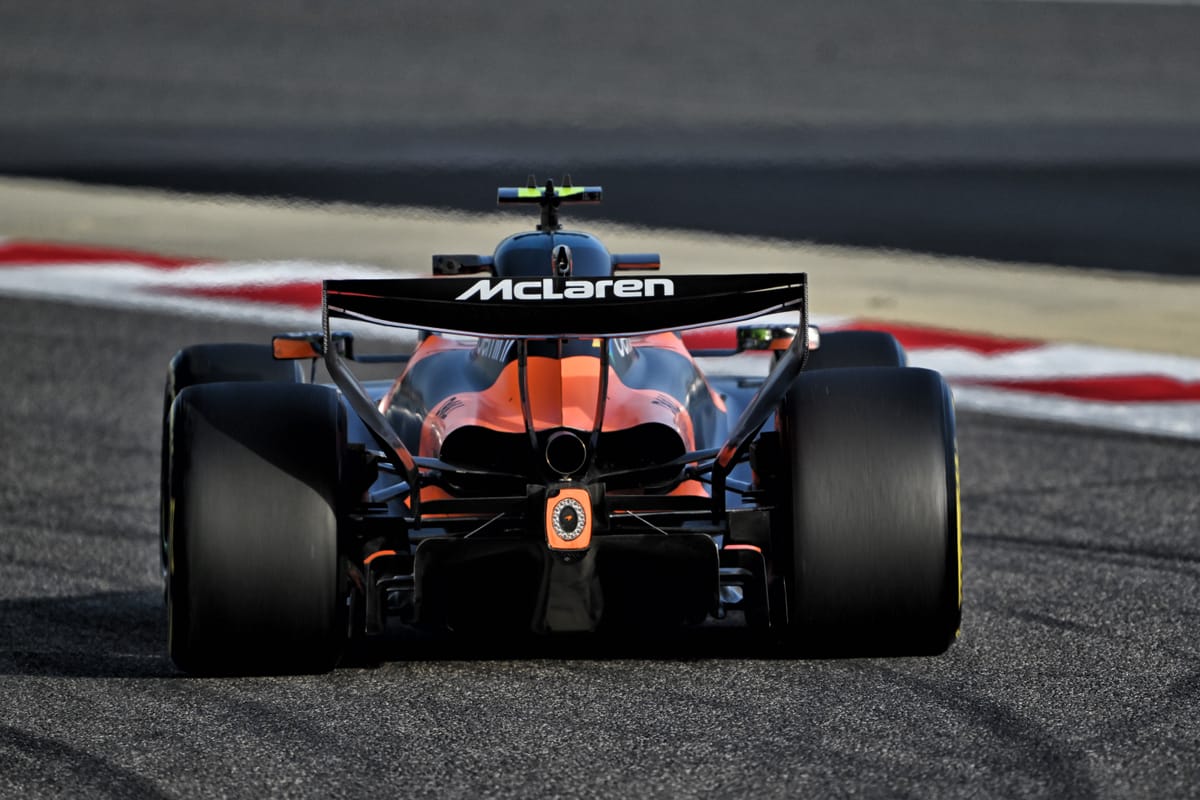
- McLaren has taken a different path, focusing less on inner brake duct vanes and more on a pronounced and sophisticated hot air exit from the brake ducts—a continuation of its 2025 trendsetting work on rear tire temperature management. It also employs vanes on the side of the crash structure to help extract airflow.
- Red Bull's solution is more refined in specific areas. It features a relatively simple brake duct setup but uses a large corner radius on the upper outer corner of the diffuser. This design sacrifices some exit area but is more effective at managing airflow separation, a common problem in this region.
- Mercedes showcases innovation in brake cooling, with a sophisticated, split exit that allows finer control over internal cooling distribution. Notably, the team was seen using traditional wool tufts on the beam wing during testing, a simple yet effective method for visualizing airflow and identifying separation issues.
- Aston Martin, under Adrian Newey, presents a comparatively basic layout in this specific area. It has the brake-duct-mounted vanes and a smaller hot air exit, with minimal detailing around the diffuser-to-crash-structure junction, suggesting development focus may be elsewhere.
What's next:
These components are largely "bolt-on" parts, meaning teams can analyze and reverse-engineer competitors' solutions. However, the cost cap adds a strategic layer to development. Redesigns consume both time and financial resources, and teams that iterate too frequently risk depleting their budget late in the season, potentially missing the chance to capitalize on a breakthrough idea. The diffuser area will remain a key battleground as teams seek to maximize aerodynamic efficiency within the constraints of the 2026 rules.
Don't miss the next lap
Get the deep dives and technical analysis from the world of F1 delivered to your inbox twice a week.
Zero spam. Only high-octane analysis. Unsubscribe anytime.
Join the inner circle
Get the deep dives and technical analysis from the world of F1 delivered to your inbox twice a week.
Zero spam. Only high-octane analysis. Unsubscribe anytime.