Initial trackside verdict on 2026 F1 cars reveals braking challenges and driver control
First trackside views of the 2026 F1 cars in Bahrain show a generation defined by braking instability and driver challenge. While smaller and more responsive, the new machines suffered frequent lock-ups, with their behavior heavily influenced by the complex new energy recovery systems teams must now master.
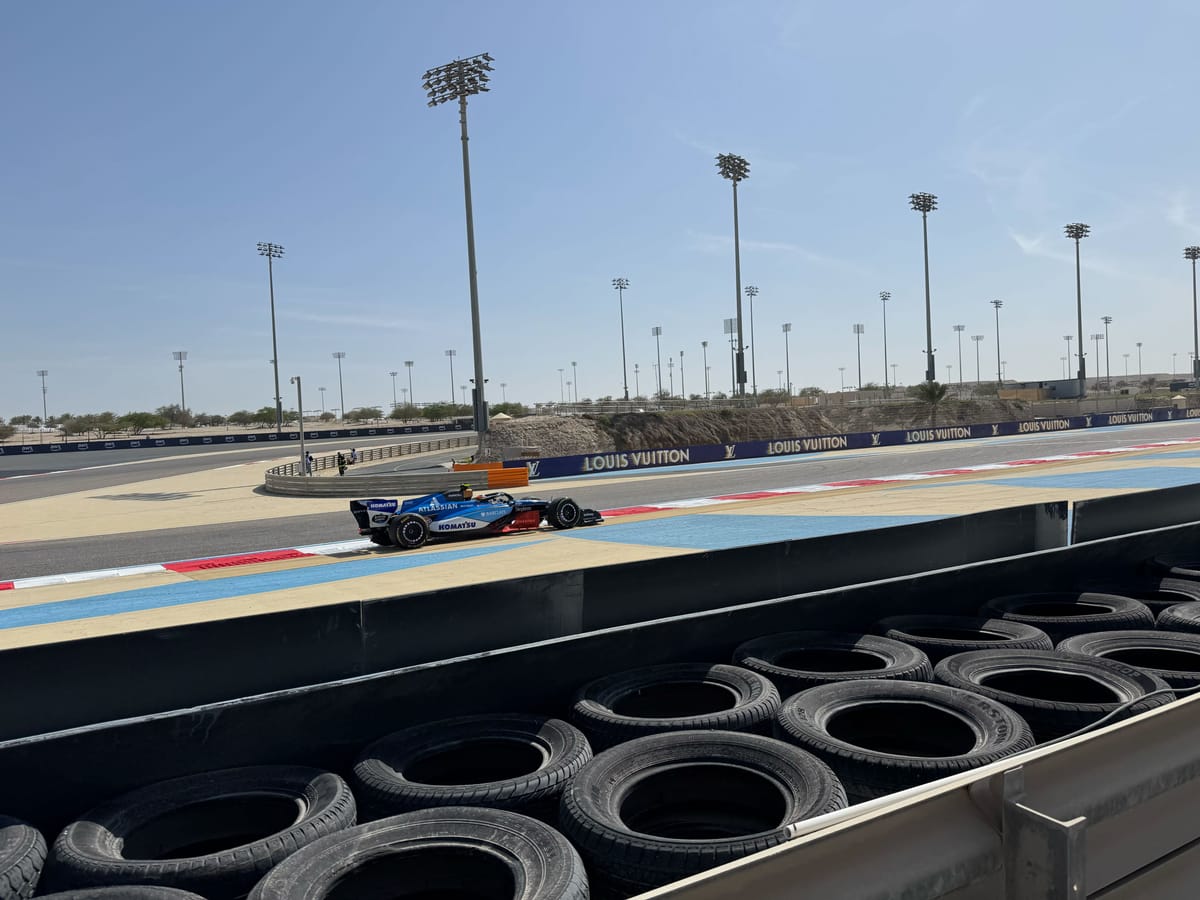
Early trackside observations from Bahrain reveal the 2026 Formula 1 cars present a distinct and challenging driving experience compared to their ground-effect predecessors, particularly under braking. Drivers grappled with lock-ups and instability at the tricky Turn 9-10 complex, highlighting a car that is more responsive but also more demanding to drive at the limit.
Why it matters:
The 2026 regulations aimed to create smaller, nimbler cars, and these initial on-track signs suggest they have succeeded in making the cars more reactive to driver inputs. However, the significant challenge under braking—a critical phase for lap time—indicates teams and drivers have a steep learning curve to master the new machinery and its integrated powertrain systems.
The details:
- Observing from Turn 10 provided a clear view of drivers exploring, and often exceeding, the new cars' limits. The corner combination, which involves braking while the track falls away, proved particularly problematic.
- Widespread Lock-ups: An inordinate number of lock-ups occurred, affecting nearly every driver. Incidents ranged from small corrections by Max Verstappen and Lewis Hamilton to major lock-ups forcing drivers like Ferrari's Franco Colapinto and Valtteri Bottas to abort the corner entirely.
- Braking Instability: The cars exhibited much more rear movement during the braking phase itself, a shift from the previous generation where instability often occurred mid-corner. This makes moments harder to catch but suggests the driver has more influence earlier in the corner.
- Technical Factors: The reduced mechanical grip is a factor, but the new energy recovery system is also under scrutiny. Harvesting energy from the rear axle under braking creates a dynamic, lap-to-lap brake balance that drivers must adapt to.
- Physical Differences: The smaller size reduction is noticeably positive, making the cars look more like traditional racing cars and perceptibly faster. They are more responsive to initial steering input.
What's next:
Mastering slow-speed corners will be paramount for performance, as that's where the most lap time is gained or lost. The key will be directly linking this car behavior to optimizing the new powertrain's operation.
- Driver feedback will be crucial to understand if the increased rear movement under braking translates to a feeling of greater control, as some hinted in Barcelona.
- Teams will now begin the intensive process of understanding the complex interplay between the chassis, aerodynamics, and the new hybrid system to find a stable, fast balance.
Don't miss the next lap
Get the deep dives and technical analysis from the world of F1 delivered to your inbox twice a week.
Zero spam. Only high-octane analysis. Unsubscribe anytime.
Join the inner circle
Get the deep dives and technical analysis from the world of F1 delivered to your inbox twice a week.
Zero spam. Only high-octane analysis. Unsubscribe anytime.