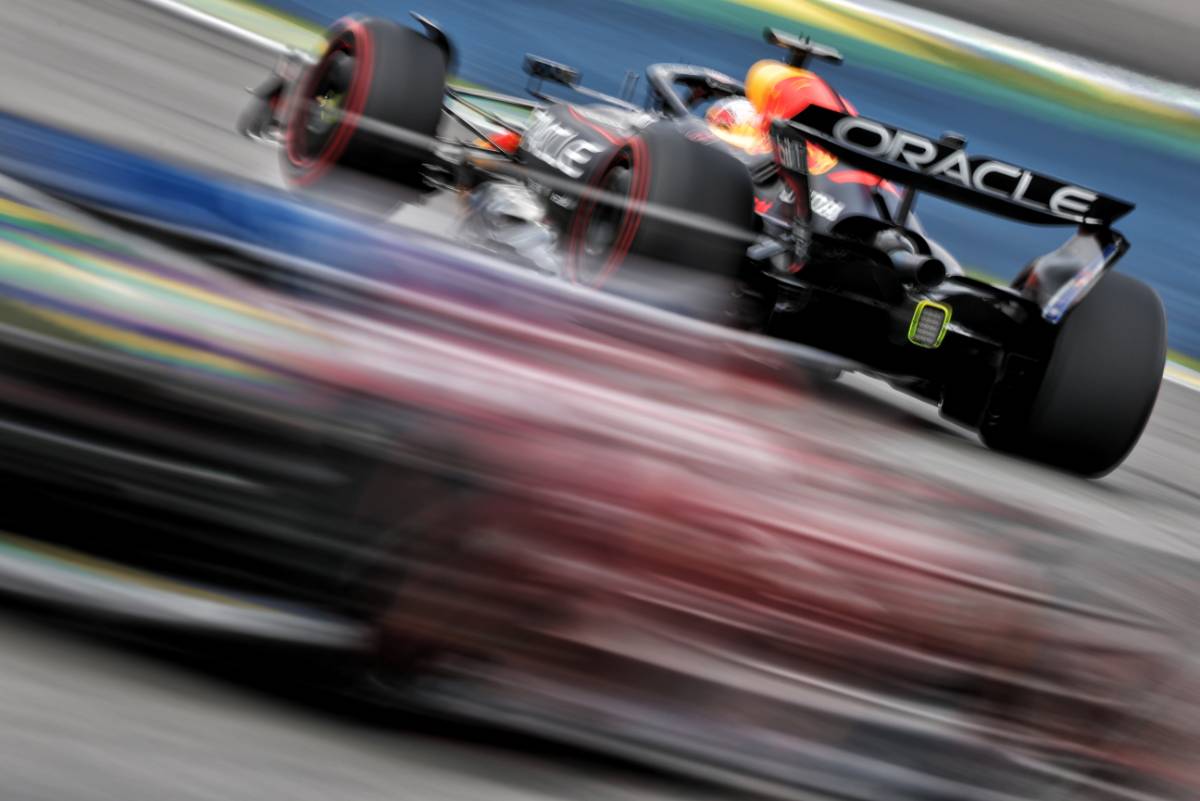
Interlagos Speed Trap: Who Topped the Charts?
McLaren showcased impressive speed and aerodynamic efficiency at Interlagos qualifying, with Lando Norris and Oscar Piastri topping the speed trap charts. The challenging circuit, blending high-speed straights with technical corners, played perfectly into the MCL39's strengths. Ferrari also made effective adjustments to their car, while strategic decisions regarding tire management and pit stops will be crucial in the race, especially with the unpredictable weather and safety car potential.
McLaren emerged as the speed kings at Interlagos qualifying, with Lando Norris and Oscar Piastri leading the speed trap readings. The São Paulo circuit, located at 800m above sea level, presents a unique challenge, demanding a balance between low-drag for straights and high downforce for its twisty middle sector. McLaren's aero efficiency perfectly matched these demands, while Ferrari's adjustment to a less rear wing paid dividends for Charles Leclerc.
Why it matters:
McLaren's strong performance, particularly in speed traps and through all sectors, indicates their MCL39's impressive aerodynamic efficiency. This bodes well for their competitive standing on circuits with similar characteristics, potentially challenging frontrunners like Mercedes and Ferrari, who showed mixed sector performances.
The details:
- Altitude Impact: Interlagos' 800m altitude, though lower than Mexico City, still slightly affects aerodynamic performance.
- Track Demands: The circuit is a blend of extremes: Sector 1 and 3 favor low-drag for long straights, while the twisty Sector 2 demands high downforce.
- McLaren's Edge: McLaren's MCL39 showcased strong aero efficiency, as predicted by team boss Andrea Stella, allowing Norris and Piastri to top the speed trap readings in qualifying.
- Qualifying Performance: Both McLaren drivers demonstrated strength across all sectors, in contrast to Mercedes, which struggled in Sector 2 but performed well in Sector 3.
- Ferrari's Adjustment: Ferrari opted for a less rear wing on their SF-25 after the Sprint, which improved car liveliness and suited Charles Leclerc's driving style.
- Environmental Factors: Gusty winds significantly impacted car behavior and driver feeling during qualifying, adding another layer of complexity to performance.
What's next:
The Interlagos Grand Prix is shaping up to be a tactical battle, with narrow margins between one and two-stop strategies. The one-stop approach, utilizing soft (C4) and medium (C3) compounds, is predicted to be the most straightforward, with a soft tire start offering a crucial launch advantage.
- However, high rear tire degradation, particularly out of slow corners, will necessitate careful management.
- The ever-present threats of changeable weather, gusty winds, and safety cars mean strategy will be fluid and decisive, potentially turning the race into a thrilling spectacle where bold decisions could lead to victory.