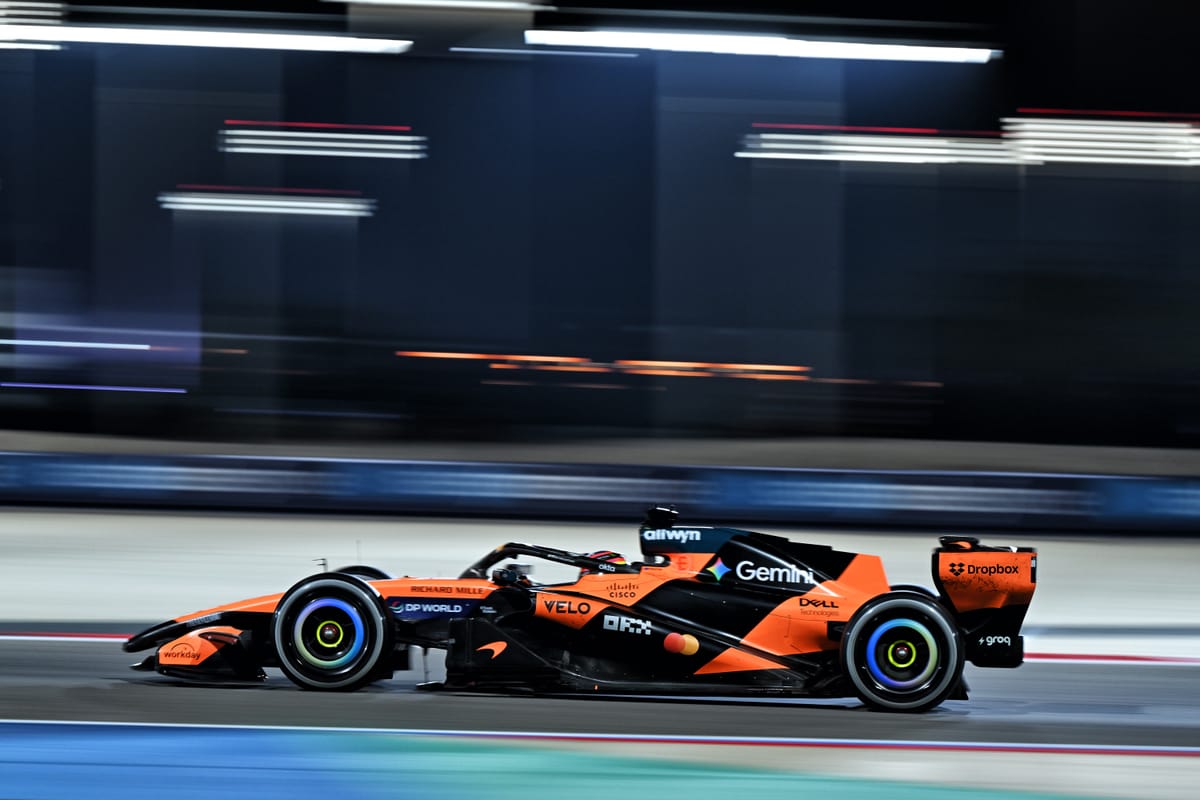
Is McLaren Actually F1 2026's Fourth-Fastest Team?
A surprising consensus from F1 testing suggests reigning champions McLaren may be fourth fastest among the top teams for 2026, behind Ferrari, Mercedes, and Red Bull. Data and team comments point to a potential early knowledge gap for customer teams adapting to the new regulations, but the picture remains highly uncertain with more testing to come.
As the 2026 F1 season approaches, a rare consensus has emerged among the top teams: no one believes McLaren is currently leading the pack. Mercedes sees Red Bull as the benchmark, Red Bull places itself fourth behind Ferrari, Mercedes, and McLaren, Ferrari puts Mercedes and Red Bull slightly ahead, and McLaren itself points to Ferrari and Mercedes as the frontrunners. This raises a critical question: is the reigning champion team genuinely off the pace, or is it masterfully playing its cards close to the chest?
Why it matters:
The pecking order at the start of a new rules era can set the tone for an entire season. If McLaren, the 2025 champion, has truly slipped behind its rivals, it signals a significant shift in the competitive landscape. Conversely, if it's sandbagging, it could be poised for a surprise resurgence. The answer lies in untangling testing data clouded by complex new energy management strategies.
The Details:
Analysis of long-run race simulations from the Bahrain test provides the clearest, though not definitive, picture. Data from comparable Friday evening runs showed McLaren's Oscar Piastri on a slower average pace than Mercedes' Kimi Antonelli and Ferrari's Lewis Hamilton. Team Principal Andrea Stella confirmed this assessment, stating, "I think Antonelli and Hamilton were quicker than us." However, Stella and the drivers caution against drawing firm conclusions from a single data point, as run plans and fuel loads varied wildly.
- The Readiness Gap: A key theme from testing is that some teams appear more "ready" than others. Stella specifically noted Ferrari and Mercedes seem "ready from a performance point of view." This suggests a potential early advantage for the manufacturer teams in understanding the intricate new car and power unit regulations.
- The Works Team Advantage: There's a growing belief that works teams like Mercedes and Ferrari, whose engine and chassis departments developed in unison, hold an initial knowledge edge. While customer teams like McLaren receive identical hardware and software, they may lag in baseline understanding and optimization.
- McLaren's Catch-Up Phase: McLaren's Chief Designer, Rob Marshall, admitted the team is still in a phase of "trying to understand the characteristics of the car without trying to dial it in." He acknowledged the works team advantage in early simulation feedback but predicted the gap would close rapidly now that real car data is available.
What's Next:
The true competitive order remains shrouded in uncertainty, a sentiment echoed by Oscar Piastri, who highlighted the massive performance swings—sometimes over half a second—depending on whether teams nail their energy management. With three more days of pre-season testing ahead, the picture is highly fluid. Marshall is confident the knowledge deficit for customer teams will shrink quickly as everyone refines their simulations with actual on-track data. While McLaren may currently appear at the back of the top four, its position by the season opener in Melbourne is far from set in stone.